



Direct-to-consumer ecommerce sales in the US hit $239.75 billion last year [Source: Emarketer]. Brands that sell directly now own the margin, the data, and the relationship.
Shopify for DTC websites has become the default operating system for brands that want to build that kind of business from the ground up, or shift away from marketplaces.
Why is Shopify built for DTC websites?
Shopify was built with B2C selling in mind from day one. You get a hosted, scalable storefront with checkout, payments, analytics, and fulfillment tools bundled together.
For DTC, that means you are launching on infrastructure that already understands how direct selling works.
The bigger reason DTC brands migrate to Shopify? Ownership.
Every order on a marketplace like Amazon leaves customer data behind. On Shopify, first-party data flows directly to you. You know who bought it, when, what, and how often. You can build email sequences, loyalty programs, and personalization around that data without asking a platform's permission.
Shopify's app ecosystem extends this advantage. Tools for subscriptions, post-purchase upsells, SMS recovery, and loyalty rewards integrate natively.
How to scale an Amazon brand to a Shopify DTC store?
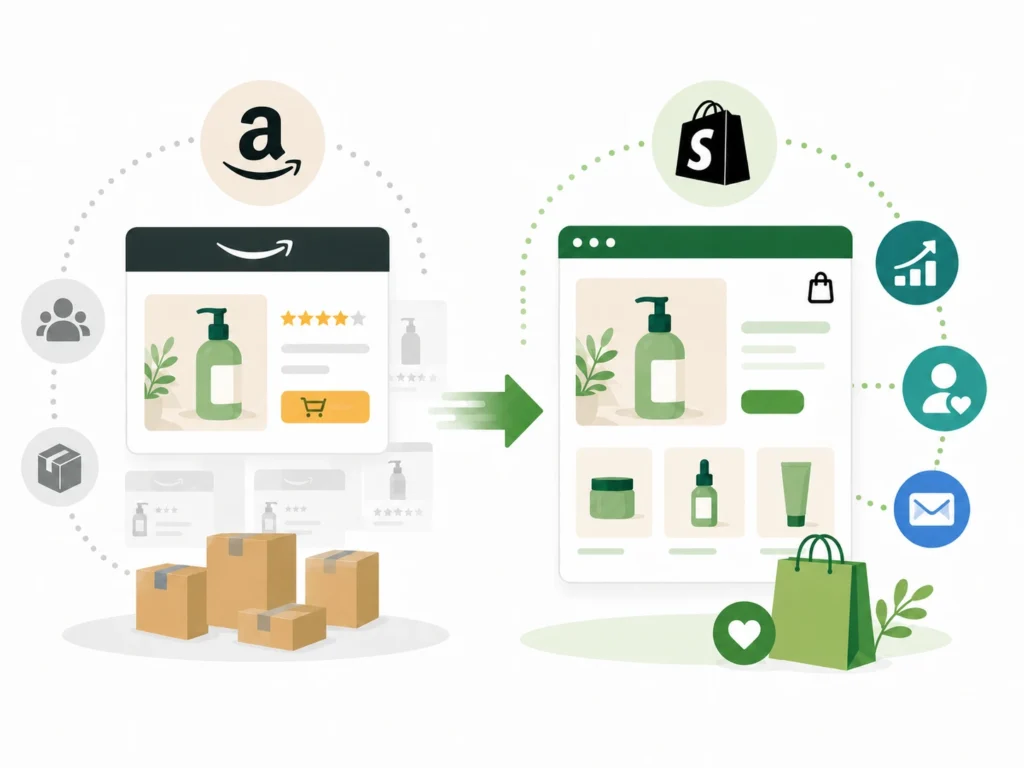
Scaling an Amazon brand to Shopify DTC is one of the highest-leverage moves a product seller can make right now.
The first thing that changes is the margin. Amazon charges referral fees, fulfillment fees, and advertising costs that can push total selling costs to 30-50% of revenue.
A Shopify DTC store cuts those intermediary costs significantly. The same product sold directly can carry 20-30 points more gross margin.
The second thing that changes is the data. Amazon sellers operate with aggregate data and no customer email list. Every Shopify DTC order generates a customer profile you own. You can email, retarget, and build loyalty flows around that customer for years.
Many Amazon sellers run both channels simultaneously. Once you connect Shopify to Amazon through the Marketplace Connect app, you can sync inventory, orders, and catalog from one dashboard.
Here’s one practical step many sellers miss that I have experienced.
> Before launching the DTC store, make sure your brand identity can carry a standalone site.
Amazon product listings focus on features and ratings. A Shopify DTC store needs a brand story, lifestyle visuals, and a homepage that communicates who the product is for in the first five seconds.
Strong brand work is what separates an Amazon catalog clone from a store that customers actually trust.
Shopify B2B vs DTC: Key differences that affect your build
| Aspect | DTC Shopify Store | B2B Shopify Store |
|---|---|---|
| Target customer | Individual consumers buying for personal use | Businesses, wholesalers, distributors, or professional buyers |
| Store architecture | Built around a simple product discovery and purchase journey | Built around account-based buying, bulk ordering, and repeat purchasing |
| Pricing | Public pricing visible to everyone | Customer-specific pricing, custom price lists, or negotiated rates |
| Checkout flow | Streamlined for one-time or repeat consumer purchases | May include minimum order quantities, draft orders, payment terms, and approval workflows |
| Personalization | Product recommendations, upsells, loyalty programs, and email/SMS flows | Personalized catalogs, company-specific prices, account permissions, and order history |
| Design focus | Lifestyle visuals, editorial layouts, reviews, social proof, and brand storytelling | Fast product search, quantity selectors, reorder options, and account-level navigation |
| Feature requirements | Upsells, bundles, subscriptions, loyalty, reviews, and abandoned cart recovery | Company profiles, custom price lists, MOQ, bulk ordering, draft orders, and B2B login access |
| Best user experience | Quick, emotional, brand-led shopping experience | Efficient, practical, account-led buying experience |
| Store setup recommendation | Works well as a standalone public storefront | Often works better as a separate wholesale/B2B storefront or gated portal |
| When combining both | Can work if the audience overlap is small and the UX is carefully planned | Combining B2B and DTC in one theme can confuse both audiences and reduce usability |
| Best approach | Use Shopify Markets for geographic or regional DTC segmentation | Use a separate URL, login flow, or Shopify Plus B2B setup for professional buyers |
Shopify Plus DTC: Methodology and best practices for website design & development
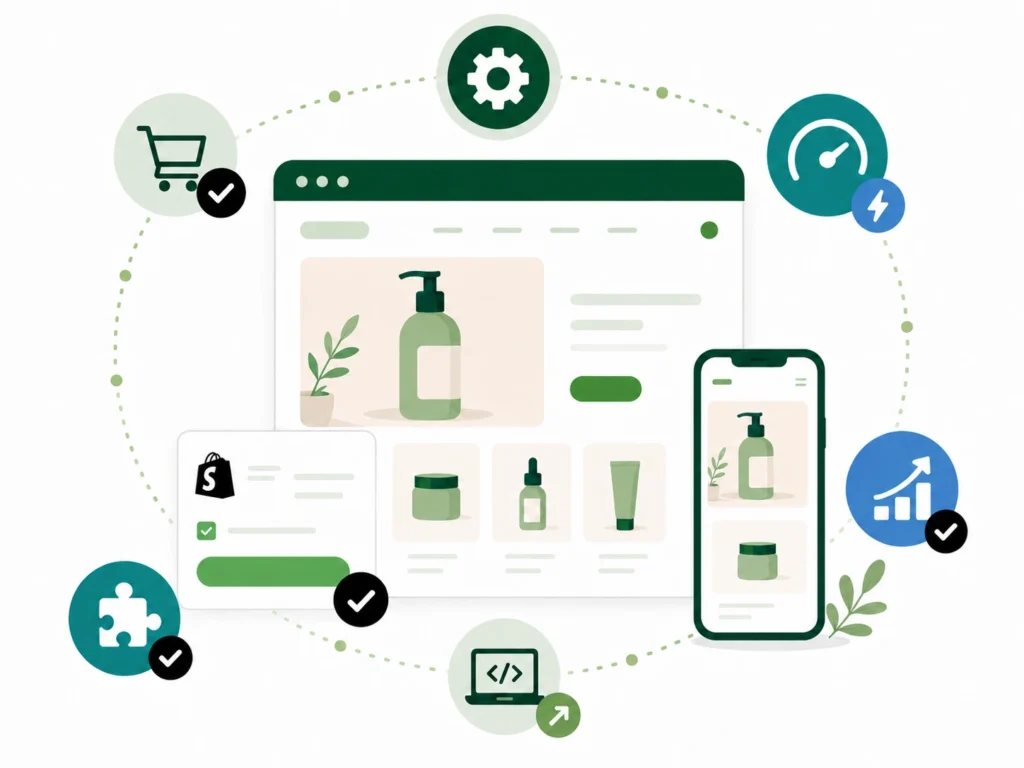
Use Shopify Plus features that improve revenue
Shopify Plus gives DTC brands advanced tools that standard Shopify plans do not offer. But the goal is not to use every Plus feature. The goal is to understand which features directly improve checkout, AOV, speed, and customer experience.
Checkout extensibility
Checkout extensibility is one of the biggest advantages of Shopify Plus. With Checkout Blocks and Shopify Functions, brands can add upsell banners, custom fields, and conditional checkout logic without heavily depending on custom code.
For DTC brands focused on increasing average order value, checkout and post-purchase upsells should be a serious part of the build strategy.
Theme-based store vs headless store
Many DTC brands overthink the headless decision. For stores under $5M in annual revenue, a well-built Liquid theme with a fast, mobile-first layout is usually a better choice than a complex headless setup.
Shopify’s Hydrogen and Oxygen framework is powerful, but it needs a dedicated engineering team to maintain. For most growing DTC brands, a premium custom theme, lean development, and strong performance optimization is the smarter path.
Mobile-first store design
Mobile-first design is no longer optional. A large share of Shopify traffic now comes from mobile, so every key buying action should be easy on a small screen.
High-converting Shopify stores usually include sticky add-to-cart buttons, one-thumb checkout flows, swipe-friendly product galleries, and clean mobile product pages.
Speed and performance optimization
Store speed affects both SEO and conversion. Every extra second of load time can hurt the buying experience and reduce sales.
Keep the theme lightweight, reduce unnecessary JavaScript, compress images, and regularly remove apps that are slowing down the storefront.
Full-service DTC digital marketing for Shopify e-commerce
I experienced one major thing last year. DTC brands that treat paid ads, email, SEO, and CRO as separate workflows lost revenue.
The margin pressure in direct selling makes channel efficiency a survival requirement, not a nice-to-have.
A full-service DTC digital marketing approach on Shopify means integrating all growth channels around a single data layer. Here is what that looks like in practice.
Paid acquisition on Google and Meta drives top-of-funnel traffic. For DTC brands on Shopify, Google Shopping campaigns run by a well-structured product catalog perform consistently across most categories.
Meta retargeting helps owners to attract shoppers who browsed but did not buy.
Email and SMS are where DTC brands retain the margin they spent to acquire. A post-purchase flow that delivers value is the single highest channel for the best ROI return that most stores are not running properly.
I normally connect Klaviyo with Shopify customer data and make this automation accessible without a developer.
Shopify's URL structure and collection architecture are SEO-friendly when set up correctly. Blog content, collection page optimization, and structured data schema all help owners over time. For stores that want to migrate, this matters a lot.
Small improvements in checkout completion rate, add-to-cart rate, and returning customer rate will multiply your returns.
What Shopify for DTC websites looks like in 2026
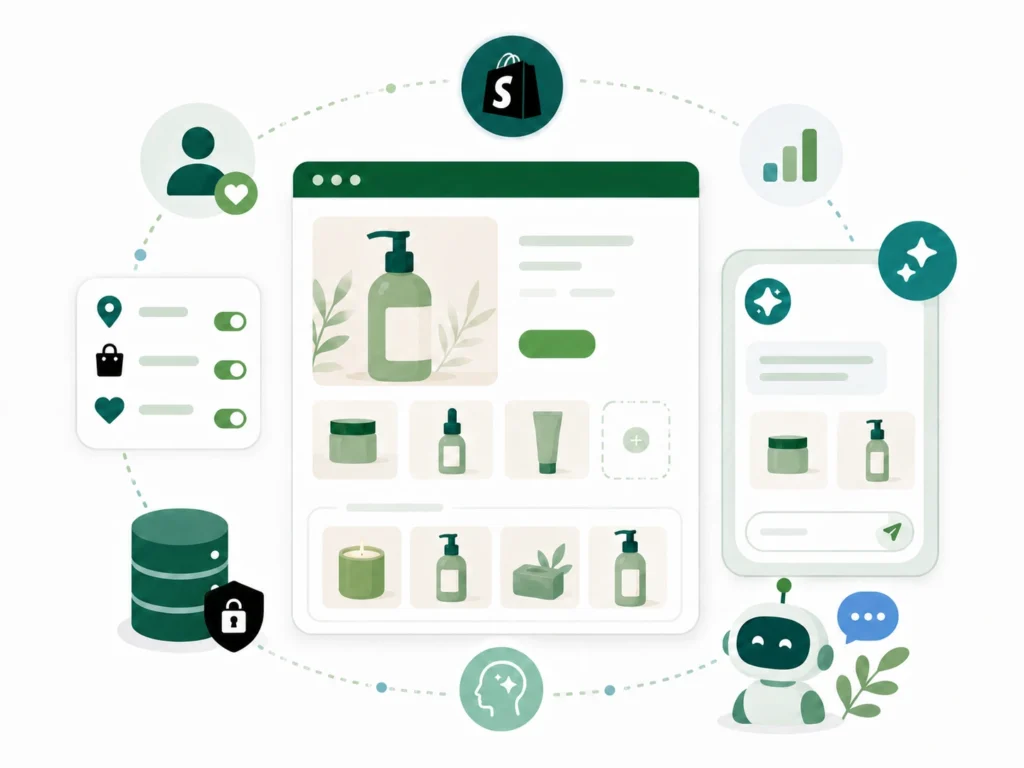
AI-driven personalization has definitely become important in 2026. Shopify's native recommendation engine, Shopify Magic $ Sidekick, and third-party tools now surface personalized product suggestions that lift AOV by 15-30% across well-configured stores.
For DTC brands, personalization also helps with loyalty. Shoppers who run a store understand that their preferences return more often than agencies.
Third-party cookies are disappearing, and because of that, DTC brands are building quiz flows, preference centers, and sign-up incentives that capture customers. Brands running these campaigns own data that no marketplace can replicate.
Agentic commerce is emerging as the next DTC surface. Shopify's Spring 2026 Edition introduced Catalog API. This helps developers build an end-to-end agentic experience without approvals.
DTC brands that optimize for AI discovery now, through structured product data, will capture early share in this channel before competition intensifies.
Building your DTC brand on Shopify in 2026: Where to start
Shopify for DTC websites works best when the foundation is right. Audit your brand identity, product photography, and core positioning first. A DTC site that converts is built around a clear value proposition.
Choose a theme that matches your current revenue stage. Invest in custom design when the business needs it. Build your marketing channels in sequence: organic and email first, then paid. Connect Shopify to any existing marketplace channels to maintain sales while the DTC store grows.
The brands that scale on Shopify DTC are the ones with the best customer experience, the cleanest checkout, and a full-funnel marketing system that helps to increase your ROI.
FAQs
1. What is Shopify for DTC websites?
Shopify for DTC means using the Shopify platform to sell directly to end consumers through a brand-owned online store, without relying on marketplaces. It gives brands control over pricing, customer data, and the purchase experience.
2. How do I scale an Amazon brand to Shopify DTC?
Start by connecting both platforms using Shopify Marketplace Connect to sync inventory and orders. Build a Shopify storefront with original lifestyle content, a setup to capture emails, and a post-purchase flow. Gradually shift ad spend toward driving traffic to the store as the DTC channel builds its own customer base.
3. What is the difference between Shopify B2B and DTC?
DTC Shopify stores serve individual consumers with public pricing, streamlined checkout, and personalization features. B2B Shopify setups use customer-specific price lists and minimum order quantities. Shopify Plus supports both setups.
4. Do I need Shopify Plus for a DTC website?
Shopify Plus is not required to launch a DTC store, but it unlocks checkout extensibility, Shopify Functions, and B2B features that DTC brands need. Most stores should start on a standard Shopify plan and upgrade when annual revenue increases.
5. What does a full-service DTC digital marketing agency do on Shopify?
A full-service agency handles design, development, SEO, paid acquisition, email and SMS automation, and CRO as an integrated system. A good agency ties all growth activities together to build on Shopify's analytics infrastructure.
6. What DTC trends should Shopify brands focus on in 2026?
The biggest trends in 2026 are AI-powered personalization, third-party data collection, agentic commerce through AI platforms, mobile-first checkout optimization, and subscription or bundling models for recurring revenue. Focus on two or three of these and execute them well before adding more.

About the author
Vineet Nair
Vineet is an experienced content strategist with expertise in the ecommerce domain and a keen interest in Shopify. He aims to help Shopify merchants thrive in this competitive environment with technical solutions and thoughtfully structured content.