
Blog
Gather knowledge about the latest insights, updates, tips, and tricks in the Ecommerce industry.
5 Min • 20 March 2026
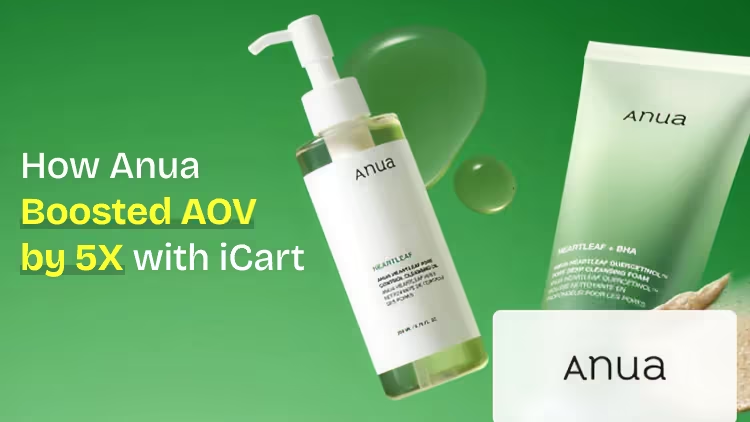
How Anua Unlocked 5X AOV Growth with iCart’s Smart Cart Features
delivery customization Challenges Solutions drive results Scale business delivery customization Challenges Solutions drive results Scale business delivery customization Challenges Solutions drive results Scale business delivery customization Challenges Solutions drive results Scale business Anua is a globally recognized Korean skincare brand known for its minimalist philosophy and focus on gentle yet effective formulations. Built on the idea of simplifying skincare routines, Anua develops products that deliver visible results while avoiding harsh or irritating components, making them suitable for sensitive skin types. Initially using a traditional full cart experience, Anua transitioned to iCart’s side cart solution in August 2025, to create a more seamless and engaging shopping journey. This shift allowed customers to easily explore complementary skincare products without disrupting their browsing flow, making it more intuitive to discover items that fit into a complete routine. By surfacing relevant recommendations directly within the cart, the brand enhanced product visibility across its range. Challenges Before implementing iCart’s side cart solution, Anua faced limitations with their existing full cart experience, which created friction in the customer journey. The traditional cart setup redirected users away from product pages, interrupting their browsing flow and reducing opportunities to explore additional products. As a skincare brand built around routines rather than single-item purchases, this made it difficult to effectively showcase complementary products and encourage customers to build complete regimens. Additionally, the lack of in-cart personalization and strategic upsell opportunities meant that customers were often unaware of related products that could enhance their skincare results. This limited the brand’s ability to increase average order value (AOV) and fully leverage its diverse product range. Anua needed a more dynamic and intuitive cart experience that could seamlessly introduce relevant recommendations while maintaining a smooth and engaging shopping journey. ❌ Cart Value Barriers Low average order value (AOV) due to single-item focus Most customers completed purchases with one primary product instead of building multi-step routines. Cart abandonment near shipping thresholds Customers were not clearly informed or motivated to reach free shipping or discount thresholds. Missed savings opportunities Customers were unaware of potential value in purchasing bundled routines or multiple complementary products. ❌ Absence of Progress-Based Incentives No free shipping or discount progress bar Customers were not motivated to increase their cart value due to lack of visible incentives. Missing tiered rewards system There were no structured milestones (e.g., “Spend more to unlock offers”), reducing upsell opportunities. ❌ Ineffective Cart UI/UX (Pre-Side Cart) Full-page cart disrupted shopping flowCustomers had to leave their browsing journey, increasing friction and drop-offs. No quick add/remove functionality Users couldn’t easily modify their cart or add suggested products without navigating away. Solution To overcome these challenges, Anua implemented iCart’s side cart solution to transform their traditional cart into a high-converting, interactive experience. By replacing the full-page cart with a seamless side cart, the brand ensured that customers could continue browsing while viewing their cart, significantly reducing friction in the shopping journey. Additionally, features like product recommendations & progress bars for free shipping and discounts motivated customers to increase their cart value. By combining personalization, incentive-driven messaging, and a user-friendly interface, Anua successfully turned their cart into a powerful revenue-driving touchpoint rather than just a checkout step. To maximize their cart effectiveness, they implemented two powerful features: ✅ Progress Bar with Multi-Reward Incentives Implemented a tiered progress bar to encourage higher cart value Customers are guided with a clear message like “Add $3.10 to unlock secret offer,” motivating them to continue adding products. Generated over $5M+ in revenue through incentive-driven cart progression Used product-based rewards to align with customer intent Instead of generic discounts, Anua incentivized purchases with relevant skincare items like Dark Spot Pads and mini serums. Built visual motivation for routine expansion As customers add products, they can clearly track progress toward unlocking multiple rewards, encouraging them to build a complete skincare routine. ✅ Product Recommendations Implemented “Frequently Bought Together” recommendations Customers adding a single product (e.g., toner) are shown complementary items like serums, moisturizers, or pads to complete their routine. Generated over 275K revenue through in-cart recommendations Encouraged full skincare regimen building Instead of isolated purchases, the cart suggests step-by-step product combinations aligned with common skincare routines. Increased product discovery at the final stage By surfacing relevant items directly in the cart, Anua ensured customers explore more of their catalog without leaving the checkout flow. Results Achieved in Last 180 Days 22932 Total Store Orders 45101 Total iCart Orders 5X iCart Generated AOV 65.70% Upsell Affected Conversion Rate These improvements reflect a clear shift in customer behavior on Anua’s store. Cart abandonment reduced as shoppers discovered complementary skincare products and felt encouraged to build complete routines. Engagement also increased, with customers interacting more with in-cart recommendations and exploring relevant product pairings. Results & Impact And...Results is Our Main Clarification By implementing iCart’s cart drawer, product recommendations, and progress bar, Anua transformed its cart into a high-performing conversion touchpoint. Shopping Experience Enhancement The improved cart experience encouraged customers to discover complementary products and understand the value of sustainable beauty routines. For instance, the clear presentation of subscription savings alongside one-time purchase options helped customers make more informed decisions about their long-term hair care needs. As Anua continues to optimize its cart experience, the brand is closely monitoring: Routine-based purchasing behavior - tracking how customers move from single items to multi-step regimens Engagement with in-cart recommendations - measuring interaction with suggested products Cart value progression - analyzing how incentives influence higher spending [related_cases_slider] Ready to Write Your Success Story? Try icart App Join successful businesses like Anua and Master your delivery scheduling Delight customers with precise timing Grow your special occasion orders Expand your delivery reach
Read Blog
3 Min • 5 June 2026
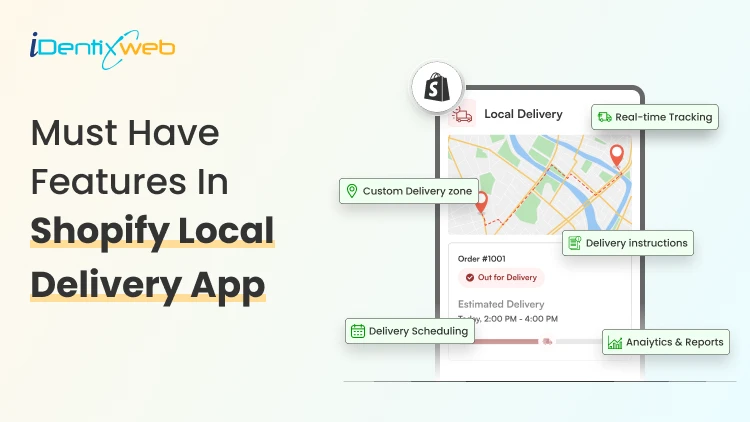
Shopify Delivery Route Planner: How to Manage Local Deliveries Faster
A Shopify delivery route planner can be the difference between a calm delivery day and a stressful one. If you run a local Shopify store, you already know the feeling: orders pile up, drivers leave late, customers call asking where their package is, and fuel costs keep climbing. The good news? A smart route planner solves most of these problems in one go. In this guide, you will learn what a Shopify delivery route planner does, why it matters for your store, how to set it up, the best practices to follow, and the top apps you can pick from. By the end, you will know exactly how to manage your local deliveries faster and with less stress. What Is a Shopify Delivery Route Planner? A Shopify delivery route planner is a tool or app that connects with your Shopify store, pulls in your local orders, and arranges them into the fastest, most fuel-friendly driving route for your drivers. Instead of typing addresses into Google Maps one by one, the planner does it in seconds and sends the route straight to your driver's phone. Think of it as a smart assistant that sits between your Shopify admin and your delivery van. It looks at every order, considers traffic, delivery windows, and driver schedules, then builds a route that saves time and money. Why Local Shopify Merchants Need a Route Planner Local delivery sounds simple until you try doing 20 stops a day with one driver. Suddenly, missed addresses, wrong-order doorsteps, and angry customer DMs become your morning routine. Here is why a Shopify delivery route planner is worth the spend. 1. Last mile delivery is the most expensive part of shipping Studies show last mile delivery can eat up more than half of your total shipping cost. A route planner cuts the time drivers spend on the road, which directly lowers your fuel and labor bill. Let Customers Choose Their Delivery Date Before You Plan Routes Route planning becomes much easier when customers select their preferred delivery date and time slot before they checkout. Instead of manually organizing delivery requests, merchants can collect delivery preferences upfront and build routes around confirmed schedules. Apps like Delivery Date & Pickup Stellar allow customers to choose delivery dates, time slots, local delivery, or store pickup options directly on the storefront, helping merchants create more predictable delivery routes. Losing orders because buyers want flexible delivery? A simple calendar at checkout fixes that.
8 Min • 4 June 2026
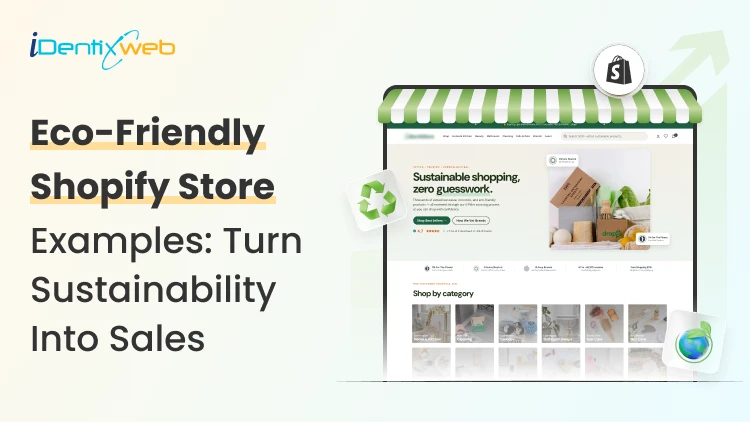
Shopify Eco-Friendly Store Examples: Turn Sustainability Into Sales in 2026
A shopper lands on your store, reads "sustainable" in your headline. They then see materials or shipping processes that are clearly not sustainable. They bounce. I've watched these kill conversions on otherwise beautiful stores. A Shopify eco-friendly store works when the values show up everywhere a customer looks: This has to be the products, the packaging, the checkout, and the shipping email. Not just the About page. The brands below get this right, and I'll break down exactly which Shopify features they lean on so you can copy the parts that fit your store. Here's a TL;DR if you are scanning: The best Shopify eco-friendly stores pair a clear sustainability story with operational proof. They use recycled or low-waste packaging, offer eco-friendly delivery options like carbon-neutral shipping, sell genuinely sustainable products, and back claims with visible certifications. Values plus receipts. The real question: What makes Shopify eco-friendly stores convert? Plenty of stores slap "eco" on the logo and call it done. Buyers in this niche are sceptical, and for good reason. Greenwashing trained them to look harder. Three things separate a store that sells from a store that just looks green. First, specificity: "made from 100% recycled ocean plastic" beats "environmentally conscious materials" every time. Second, proof you can see: certifications, carbon labels, and material breakdowns on the product page. Third, consistency across the funnel, so the sustainability promise survives all the way to the unboxing. Shopify gives you the tools for all three. The trick is knowing which ones to turn on. If you're still figuring out how to build a Shopify store from scratch, get the foundation right before layering in sustainability features. 9 Shopify eco-driendly store examples worth studying I picked these for variety across product categories, and because each one does something specific, you can borrow. Allbirds: Carbon Labels as a Selling Point Allbirds prints a carbon footprint number on every product, the way food packaging shows calories. It reframes the whole purchase. The shoe isn't just comfortable, it's accountable. The lesson for your Shopify eco-friendly store: turn an invisible value into a visible number. You can do this with Shopify product metafields to store a carbon figure, then surface it on the product template. Tentree: Built-In Purchase Incentive Tentree plants ten trees per order. Customers register their items to track the trees they funded. It's a loyalty loop disguised as a mission. The structure matters here. A repeatable post-purchase reason to come back is worth more than a one-time discount. Pela: Compostable Products, Honest Limits Pela sells compostable phone cases and openly explains what "compostable" does and doesn't mean. That honesty builds trust faster than overclaiming. Package Free Shop: Zero-Waste as the Whole Identity Package Free built the entire brand around eliminating waste. Their packaging features and sustainability eco-friendly options aren't a section of the site; they're the product. Worth studying if your differentiation is operational rather than product-based. United By Blue: One Concrete Promise For every product sold, United By Blue removes a pound of trash from oceans and waterways. One clear, countable promise. Customers know exactly what their money does. Cariuma: Material Transparency Cariuma breaks down every material in its sneakers and the sourcing behind it. The product pages read like a spec sheet for conscience. It works because it respects the buyer's intelligence. Grove Collaborative: Subscription Meets Sustainability Grove runs a refill and subscription model for household goods. Recurring revenue plus reduced packaging waste. For consumable eco products, this model is hard to beat. A Shopify subscription app makes it straightforward to set up your business. Bombas: Give-Back Built Into Every Sale Bombas donates an item for each one purchased. The give-back is the brand, not a campaign. Customers repeat the story for you, which lowers your acquisition cost. Finisterre: Repair Over Replace Finisterre offers repairs and resale to keep gear out of landfills. Selling longevity instead of churn is a bold position, and it deepens loyalty in a way discounts can't. Eco-Friendly Products Shopify Stores Can Sell Profitably You don't need to manufacture your own line to run a credible store. The categories that move well right now span clean beauty, compostable home goods, ethical apparel, reusable kitchen items, and sustainable pet products. Here's a full list of the 10 best eco-friendly products to sell if you're sourcing rather than making. If you're sourcing rather than making, vet suppliers hard. Ask for material certifications in writing. Ask where raw materials come from. A supplier who can't answer is a red flag you'll pay for later in refund requests and bad reviews. Shopify Packaging and Sustainability Eco-Friendly Options Packaging is where most "green" stores quietly break their promise. Shopify itself runs sustainability programs you can plug into. Shopify's Sustainability Fund and its carbon-offset commitments give you a platform-level story to reference, and the Shop app surfaces eco-friendly merchants to shoppers who filter for them. On your end, the packaging features and sustainability eco-friendly options come from how you fulfill, not from a single setting. A few moves that hold up: Switch to recycled, recyclable, or compostable mailers and inserts, then photograph them for your product and FAQ pages. Add a packaging note at checkout using checkout UI extensions or order-confirmation content so customers know what's coming. Skip the filler. Right-sized boxes cut both waste and shipping costs, which protects your margin while serving the mission. Show the packaging in your product photography. An unboxing that matches the promise turns first-time buyers into reviewers. Eco-friendly delivery options Shopify merchants can offer Shipping is the carbon-heavy part of ecommerce, and it's also where you can offer a visible green choice at checkout. Shopify Shipping with carbon offsets built in. Shopify purchases offsets for every order fulfilled through Shopify Shipping at no extra cost to you. You can advertise carbon-neutral delivery honestly. That's a real claim backed by the platform. Understanding how to manage shipping and delivery across your Shopify store is the first step to configuring this correctly. Third-party apps for expanded options. Apps like EcoCart Green Protection let customers add carbon-neutral shipping at checkout. Sustainable returns apps cut the waste from reverse logistics, which becomes a real problem once your volume grows. Slower delivery tiers as a nudge. Offer a "low-carbon" delivery option at checkout. Many eco-conscious shoppers will pick it gladly if the price reflects the savings. Visibility at the point of decision. A carbon-neutral badge on the cart page converts better than a paragraph buried in your shipping policy. Turn Shopify sustainability into repeat sales Values get the first sale. Systems get the second. The brands above all built a reason to return: tree tracking, give-back counts, refill subscriptions, and repair services. Use Shopify's native tools to reinforce the loop. Shopify Email can send a post-purchase note showing the impact of the order. A loyalty app can reward customers for choosing the low-carbon shipping tier or returning packaging. Shopify Flow can automate a thank-you with the customer's running impact total after each order. The point is to make sustainability feel like an ongoing relationship. That's what converts a values-driven shopper into a repeat buyer. A Shopify eco friendly store earns trust by proving its claims at every step, from the product page through the packaging to the delivery confirmation. Pick the two or three tactics above that fit your products and ship them this month. FAQs 1. What makes a Shopify eco friendly store different from a regular store? A Shopify eco friendly store pairs sustainability messaging with operational proof across every touchpoint. They show customers certified products, recycled packaging, carbon-neutral shipping options, and transparent material sourcing. 2. Can I add eco-friendly delivery options to Shopify without using Shopify Shipping? Yes. Apps like EcoCart let customers opt into carbon-neutral shipping at checkout, even if you use third-party carriers. 3. How do I display eco-friendly product information on my Shopify store? Use Shopify product metafields to store material type, certifications, carbon footprint, and end-of-life details. Then display these fields on your product template so buyers see proof before adding to cart. 4. What are the best eco-friendly products Shopify stores are selling right now? Clean beauty, compostable home goods, ethical apparel, reusable kitchen items, and sustainable pet products consistently move well. Niche down within these categories and ensure your suppliers can provide material certifications in writing. 5. How does Shopify packaging relate to sustainability for my eco friendly store? Packaging is where most "green" stores lose credibility. If your product is sustainable but arrives in virgin plastic, customers notice and review it. Switch to recycled or compostable materials, photograph them for your FAQ and product pages, and add a packaging note to order confirmations. 6. Do customers actually choose eco-friendly delivery options when offered? Yes. If you make the choice visible at the point of decision. A carbon-neutral badge on the cart page, paired with a slower delivery tier at a lower price, converts well with eco-conscious shoppers.
8 Min • 26 May 2026
“What Shopify Apps is This Website Using?” (4 Free Methods That Actually Work)
Every store owner, including myself when I started on Shopify, has asked themselves, "What Shopify apps is this website using?” when they see a storefront. Competitor app audits are part of my day job, and I've tested almost every free method out there. Some do the work instantly, while others take time. You'll get the four free methods I actually trust, in order from easiest to most thorough. No fluff. No paid tools required. Quick TL;DR if you're in a rush: Use a free Shopify app detector tool (paste URL, done) Install a Chrome extension for one-click checks View page source and search for "shopify://apps/" Use DevTools to catch late-loading apps Spot apps by what you see on the storefront Now the full breakdown. Why should you check the apps a competitor store uses? Three reasons make competitor app research worth your time as a new store owner. First, it saves you from the install-uninstall cycle. Most new merchants test 20+ apps before settling on a stack. Knowing what already works in your niche cuts that down fast. Want a tech stack for your store? Here’s a complete breakdown of building a Shopify tech stack in 2026. Second, detecting Shopify apps reveals strategy. If five of your top competitors run Klaviyo, ReCharge, and Loox together, you just got the solution for a 7-figure store in your category. Third, the free Shopify app finder methods cost you nothing. Skipping competitor research because it feels costly is a mistake. My top methods to find what Shopify apps a website is using Method 1: Use a free Shopify app detector tool The fastest way to find the answer to ‘Shopify apps is this website using?’ is a free online detector. You paste the URL, the tool scans the page source, and you get a list of installed apps in seconds. Here are the four free options I rotate between. Shopscan ShopScan covers over 2,000 apps in its database and works as both a website and a Chrome extension. Accuracy is high, and the dashboard shows you the theme alongside the apps. This app is free with no signup. Koala inspector Koala Inspector has been around for years and remains one of the most reliable free Shopify app checkers. It catches reviews, apps, page builders, and email tools consistently. You can check out its free tier for basic competitor research. PIPIADS Shopify app detector PIPIADS uses AI to parse the source code and identify apps. This is a great app for quick one-off checks when you don't want to install anything. Instant Shopify app detector A newer entry with a clean interface and fast scan times. Best for visual learners who want a neat output. How to use any of them: Open the detector Paste the Shopify store URL Click "Detect" or "Scan" Review the app list Pros: Zero learning curve and works on any device. Cons: Limited to what's exposed in the public source code, so private apps stay hidden. My pick: ShopScan for daily research and Koala Inspector for deep dives. Method 2: Install a free browser extension Online detectors work fine, but browser extensions work faster. I check 30 to 50 competitor stores a week. Pasting URLs one by one is difficult for me. A Chrome extension turns this into a few-second job. Top free extensions I recommend: Koala Inspector Chrome Extension Same data as the web version, but one click away while you browse. Install, pin the icon, and click whenever you land on a Shopify store. ShopScan Extension Detect Shopify apps, themes, payment methods, and analytics tools in one pass. Great for full tech-stack audits. Wappalyzer Not Shopify-specific, but Wappalyzer reads the entire tech stack of any site, including Shopify apps. Useful as a backup when other detectors miss something. Setup is straightforward: Add the extension from the Chrome Web Store Pin it to your browser bar Visit any Shopify store Click the extension icon If you do competitor analysis even once a month, install one. This will save you hours of work. Method 3: Check the page source manually (Free + no tool needed) Every Shopify app that runs on the storefront leaves a tag in the page source. Once you know where to look, you can find Shopify apps in under a minute with nothing installed. Here's the exact process I use when I want a second opinion on what a detector found. Step 1: Right-click anywhere on the store's page and select "View Page Source." Keyboard shortcut: Ctrl+U on Windows, Cmd+Option+U on Mac. Step 2: Hit Ctrl+F (Cmd+F on Mac) to open the search bar inside the source code. Step 3: Search for this exact string: BEGIN app block: shopify://apps/ The app name sits right after /apps/. For example, shopify://apps/judgeme tells you the store runs Judge.me for reviews. Why I love the manual method: it never lies. Detector tools sometimes misread or skip apps. The page source shows you the exact Shopify apps a website is using. Method 4: Use DevTools to catch apps that load late Some apps don't show up in the static page source. They load after the page renders through lazy-loaded scripts. Detectors and View Source both miss them. Browser DevTools catches everything. Here's the quick version: Open the Shopify store Press F12 or right-click and choose "Inspect" Click the "Network" tab Reload the page (Ctrl+R or Cmd+R) Watch the requests roll in You'll see every script, image, and API call the page fires. Filter by domain or by the "JS" type to narrow the noise. This method is best for tech-curious merchants who want zero blind spots. I have written a complete breakdown of Shopify spy tools for a complete competitor research for merchants who wants to do more than detecting apps. The limitations of free methods to detect Shopify apps No free Shopify app finder is perfect. Set the right expectation before you start. Custom-built private apps stay invisible. Big brands often pay developers to build internal apps that never appear in the Shopify App Store. Detectors can't find what's not labeled. Backend-only apps (shipping rules, accounting integrations, fulfillment tools) don't load on the storefront. None of the four methods above will surface them. Some stores deliberately make their source code unclear on purpose. Also, in heavily customized themes, it's difficult to detect apps. Detection accuracy across free tools sits around 70 to 80 percent on average. Stack two or three methods together to get the most accurate results. A trustworthy competitor audit always combines a detector tool, a manual page source check, and visual observation. Skip any one of the three, and you'll miss something. How to Actually Use This Info (Not Just Copy a Competitor) Detecting apps is the easy part. Using the data well is where most new merchants slip. A few rules I live by after years of running competitor audits: Build a swipe file. Pick 5 to 10 leading stores in your niche. Run a Shopify app checker on each. Drop the results into a Google Sheet. Patterns will jump out within an hour. Look for overlap. If eight out of ten top stores in your category use Klaviyo, you've found a signal. If one store uses some obscure pop-up tool, ignore it. Test one app at a time. Installing five new apps in a week destroys your ability to measure what's actually working. Install one app, measure for two weeks, then decide. Read the reviews before you install. App detectors tell you what competitors use. They don't tell you which apps are well-supported, well-priced, or worth your money. Always check Shopify App Store reviews first. Match the app to your stage. A store doing $500 a month doesn't need an enterprise loyalty platform. Pick apps that fit your current revenue. The biggest competitor analysis lesson I can share: Apps amplify what's already working. They never fix what isn't. Wrapping Up You now have four free ways to answer the question every new merchant asks: what Shopify apps is this website using? Quick recap: Free Shopify app detector tools (ShopScan, Koala Inspector, PIPIADS, Instant) Chrome extensions for one-click checks View Page Source and search for "shopify://apps/" DevTools Network tab for late-loading apps Pick one method today. Open a competitor store you've been eyeing. Run a quick scan. Screenshot the results. You'll learn more about your niche in 10 minutes than you will from any course. FAQs 1. How to find out what Shopify apps a website is using? Any Shopify store's apps can be detected for free using tools like ShopScan, Koala Inspector, or PIPIADS, or by viewing the page source and searching for shopify://apps/. 2. Which is the best Shopify competitor research tool? For app detection specifically, Koala Inspector and ShopScan are the best tools. For full competitor research that goes beyond apps (traffic, ads, products, themes), pairing a Shopify app checker with SimilarWeb gives you a complete picture without spending a dollar. 3. Which are the best Shopify app finder tools? The top free Shopify app finder tools right now are ShopScan, Koala Inspector, PIPIADS, and Instant's Shopify App Detector.
Bhavesha Ghatode
8 Min • 12 November 2024
2496 Views
Bhavesha Ghatode
8 Min • 8 November 2024
2465 Views
Bhavesha Ghatode
14 Min • 6 November 2024
2292 Views
Bhavesha Ghatode
9 Min • 30 October 2024
2793 Views
Bhavesha Ghatode
8 Min • 28 October 2024
4443 Views
Bhavesha Ghatode
9 Min • 25 October 2024
2485 Views

Bhavesha Ghatode
8 Min • 22 October 2024
2682 Views
Bhavesha Ghatode
7 Min • 18 October 2024
2520 Views
Bhavesha Ghatode
8 Min • 15 October 2024
2807 Views
Bhavesha Ghatode
7 Min • 10 October 2024
2874 Views
Bhavesha Ghatode
9 Min • 4 October 2024
2675 Views

Bhavesha Ghatode
8 Min • 1 October 2024
3270 Views