





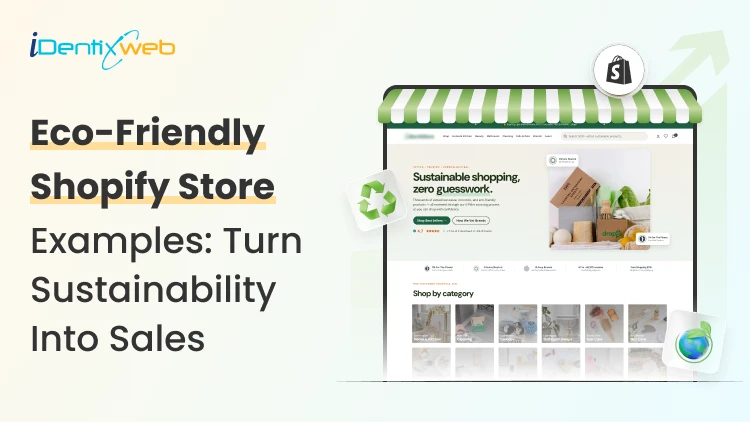
A shopper lands on your store, reads "sustainable" in your headline. They then see materials or shipping processes that are clearly not sustainable. They bounce. I've watched these kill conversions on otherwise beautiful stores.
A Shopify eco-friendly store works when the values show up everywhere a customer looks:
This has to be the products, the packaging, the checkout, and the shipping email. Not just the About page. The brands below get this right, and I'll break down exactly which Shopify features they lean on so you can copy the parts that fit your store.
Here's a TL;DR if you are scanning:
The best Shopify eco-friendly stores pair a clear sustainability story with operational proof. They use recycled or low-waste packaging, offer eco-friendly delivery options like carbon-neutral shipping, sell genuinely sustainable products, and back claims with visible certifications. Values plus receipts.
The real question: What makes Shopify eco-friendly stores convert?
Plenty of stores slap "eco" on the logo and call it done. Buyers in this niche are sceptical, and for good reason. Greenwashing trained them to look harder.
Three things separate a store that sells from a store that just looks green.
- First, specificity: "made from 100% recycled ocean plastic" beats "environmentally conscious materials" every time.
- Second, proof you can see: certifications, carbon labels, and material breakdowns on the product page.
- Third, consistency across the funnel, so the sustainability promise survives all the way to the unboxing.
Shopify gives you the tools for all three. The trick is knowing which ones to turn on. If you're still figuring out how to build a Shopify store from scratch, get the foundation right before layering in sustainability features.
9 Shopify eco-driendly store examples worth studying
I picked these for variety across product categories, and because each one does something specific, you can borrow.
Allbirds: Carbon Labels as a Selling Point
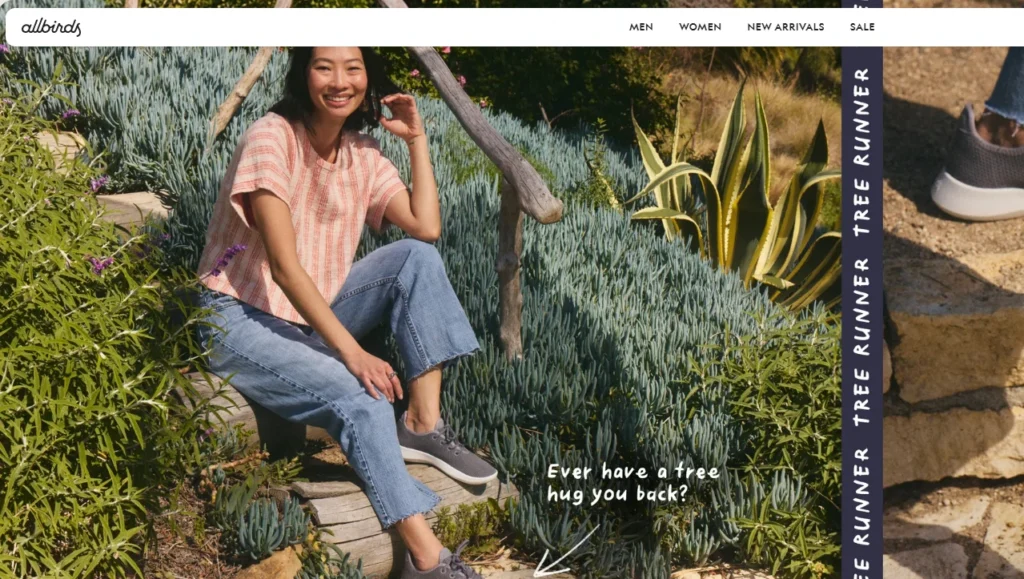
Allbirds prints a carbon footprint number on every product, the way food packaging shows calories. It reframes the whole purchase. The shoe isn't just comfortable, it's accountable.
The lesson for your Shopify eco-friendly store: turn an invisible value into a visible number. You can do this with Shopify product metafields to store a carbon figure, then surface it on the product template.
Tentree: Built-In Purchase Incentive
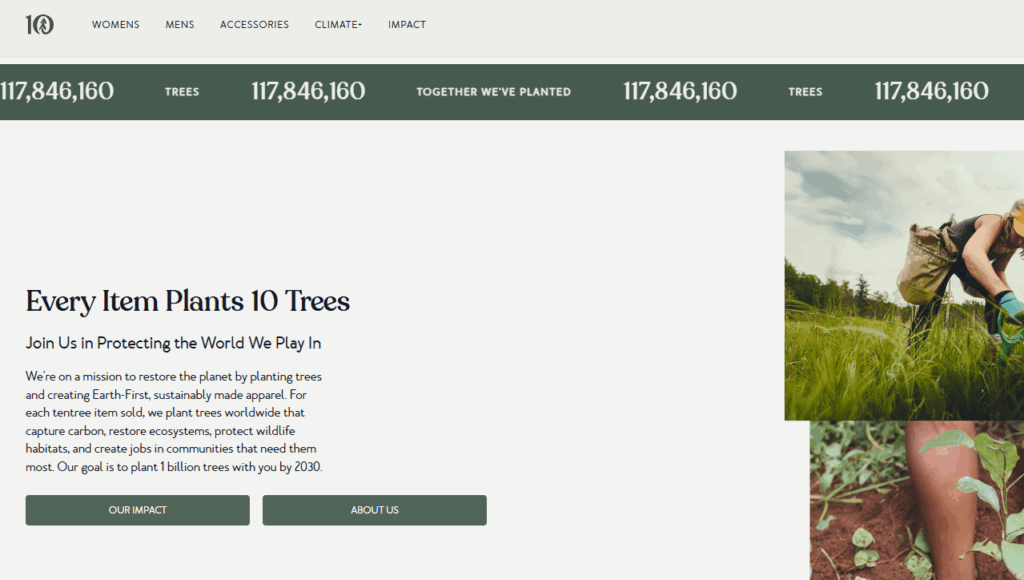
Tentree plants ten trees per order. Customers register their items to track the trees they funded. It's a loyalty loop disguised as a mission.
The structure matters here. A repeatable post-purchase reason to come back is worth more than a one-time discount.
Pela: Compostable Products, Honest Limits
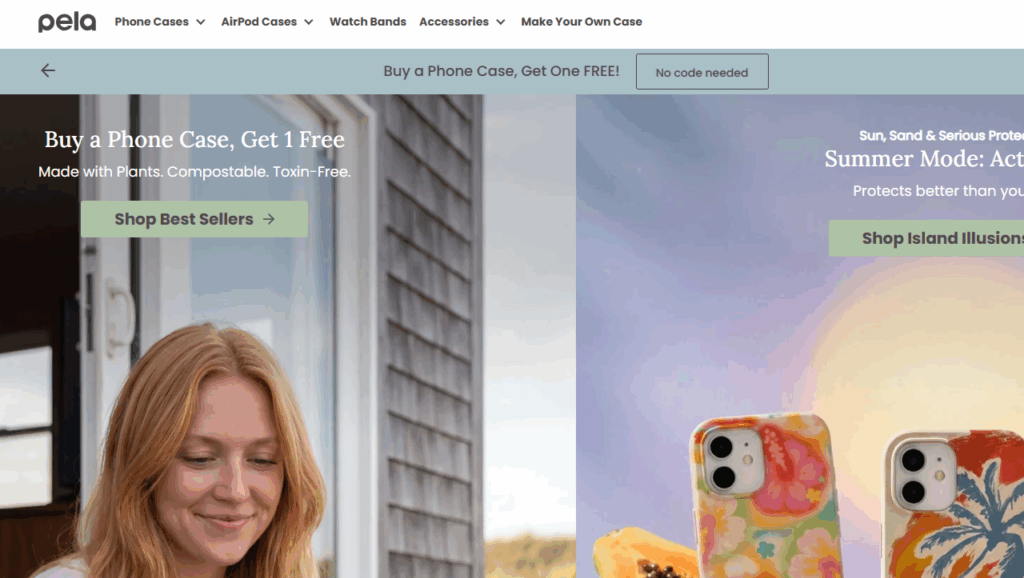
Pela sells compostable phone cases and openly explains what "compostable" does and doesn't mean. That honesty builds trust faster than overclaiming.
Package Free Shop: Zero-Waste as the Whole Identity
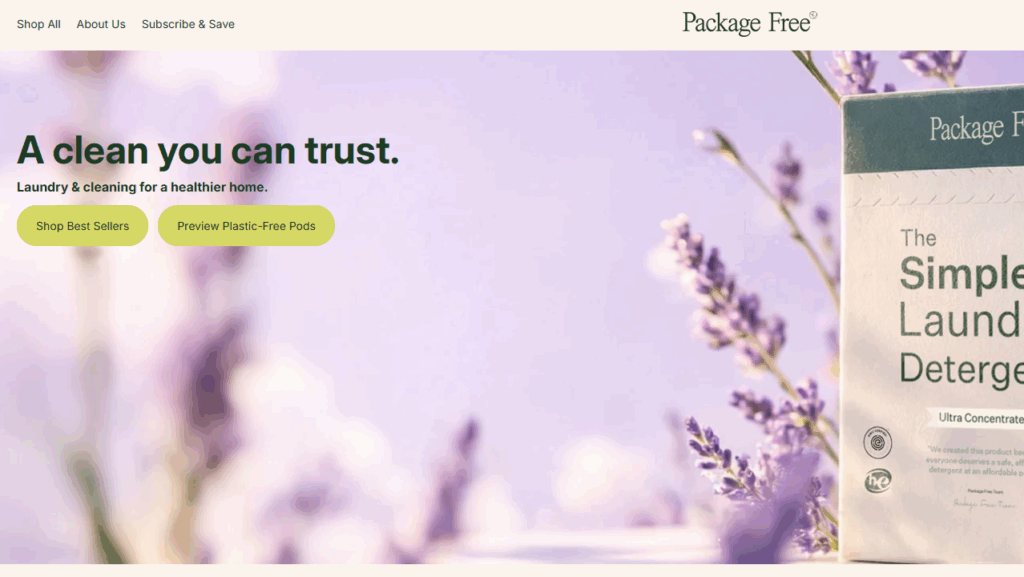
Package Free built the entire brand around eliminating waste. Their packaging features and sustainability eco-friendly options aren't a section of the site; they're the product. Worth studying if your differentiation is operational rather than product-based.
United By Blue: One Concrete Promise
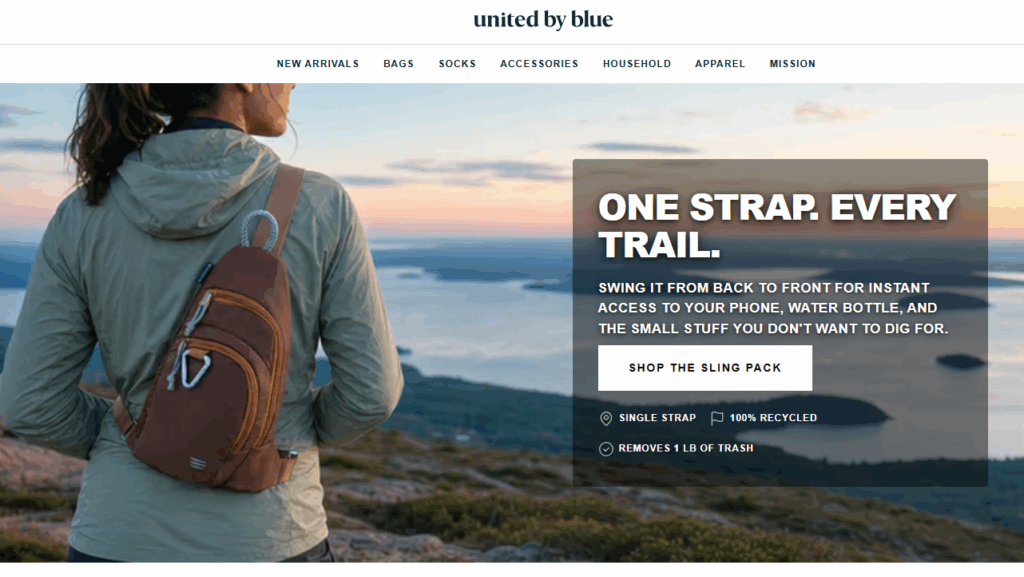
For every product sold, United By Blue removes a pound of trash from oceans and waterways. One clear, countable promise. Customers know exactly what their money does.
Cariuma: Material Transparency
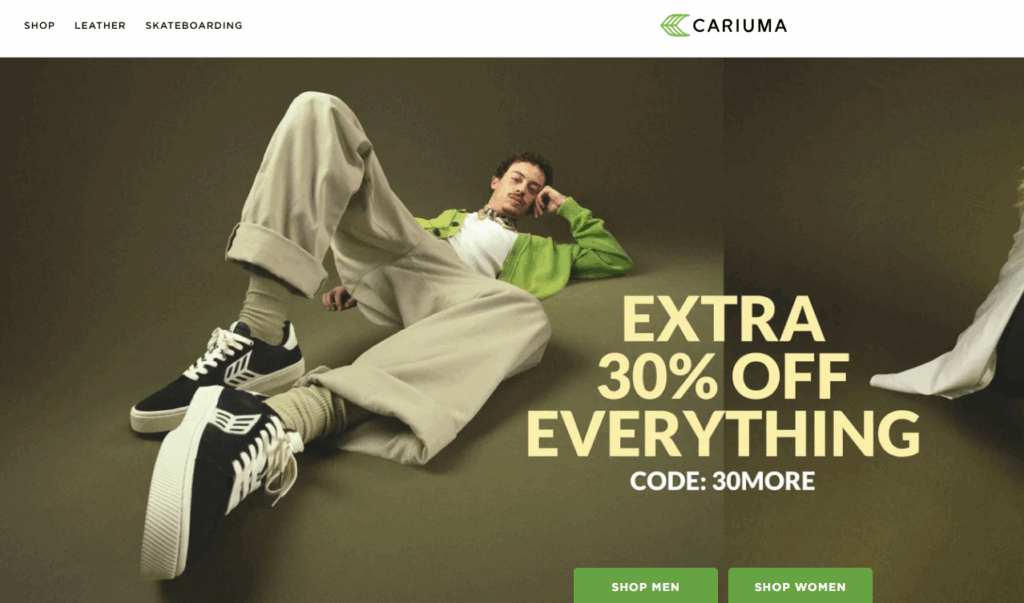
Cariuma breaks down every material in its sneakers and the sourcing behind it. The product pages read like a spec sheet for conscience. It works because it respects the buyer's intelligence.
Grove Collaborative: Subscription Meets Sustainability
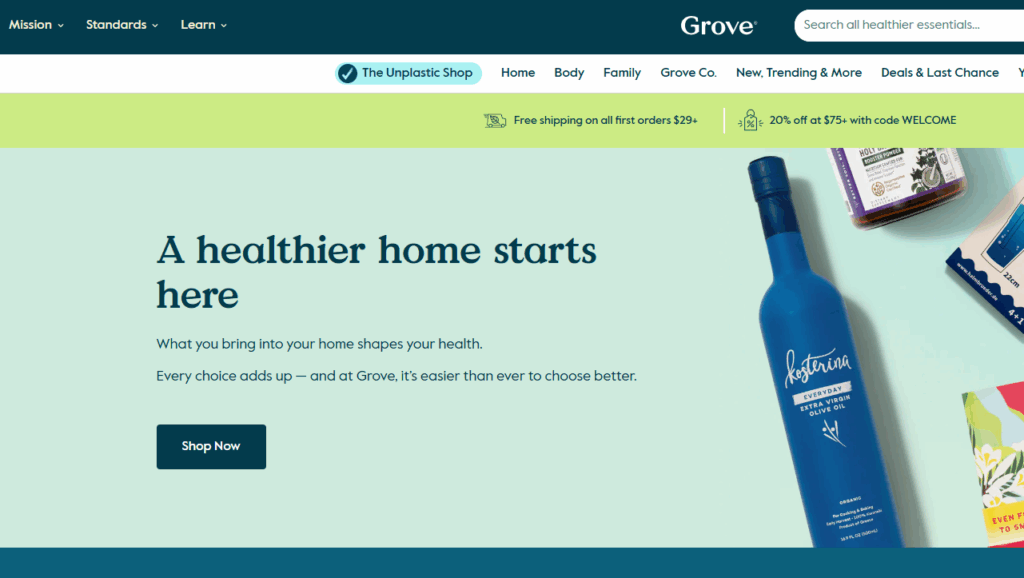
Grove runs a refill and subscription model for household goods. Recurring revenue plus reduced packaging waste. For consumable eco products, this model is hard to beat. A Shopify subscription app makes it straightforward to set up your business.
Bombas: Give-Back Built Into Every Sale
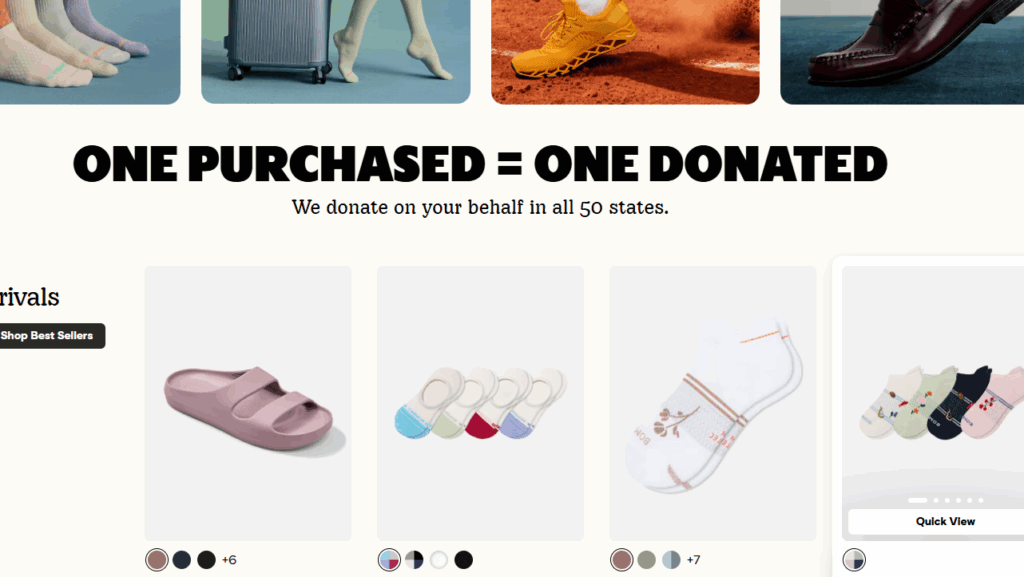
Bombas donates an item for each one purchased. The give-back is the brand, not a campaign. Customers repeat the story for you, which lowers your acquisition cost.
Finisterre: Repair Over Replace

Finisterre offers repairs and resale to keep gear out of landfills. Selling longevity instead of churn is a bold position, and it deepens loyalty in a way discounts can't.
Eco-Friendly Products Shopify Stores Can Sell Profitably
You don't need to manufacture your own line to run a credible store. The categories that move well right now span clean beauty, compostable home goods, ethical apparel, reusable kitchen items, and sustainable pet products.
If you're sourcing rather than making, vet suppliers hard. Ask for material certifications in writing. Ask where raw materials come from. A supplier who can't answer is a red flag you'll pay for later in refund requests and bad reviews.
Shopify Packaging and Sustainability Eco-Friendly Options
Packaging is where most "green" stores quietly break their promise.
Shopify itself runs sustainability programs you can plug into. Shopify's Sustainability Fund and its carbon-offset commitments give you a platform-level story to reference, and the Shop app surfaces eco-friendly merchants to shoppers who filter for them.
On your end, the packaging features and sustainability eco-friendly options come from how you fulfill, not from a single setting.
A few moves that hold up:
- Switch to recycled, recyclable, or compostable mailers and inserts, then photograph them for your product and FAQ pages.
- Add a packaging note at checkout using checkout UI extensions or order-confirmation content so customers know what's coming.
- Skip the filler. Right-sized boxes cut both waste and shipping costs, which protects your margin while serving the mission.
Show the packaging in your product photography. An unboxing that matches the promise turns first-time buyers into reviewers.
Eco-friendly delivery options Shopify merchants can offer
Shipping is the carbon-heavy part of ecommerce, and it's also where you can offer a visible green choice at checkout.
- Shopify Shipping with carbon offsets built in. Shopify purchases offsets for every order fulfilled through Shopify Shipping at no extra cost to you. You can advertise carbon-neutral delivery honestly. That's a real claim backed by the platform.
- Third-party apps for expanded options. Apps like EcoCart Green Protection let customers add carbon-neutral shipping at checkout. Sustainable returns apps cut the waste from reverse logistics, which becomes a real problem once your volume grows.
- Slower delivery tiers as a nudge. Offer a "low-carbon" delivery option at checkout. Many eco-conscious shoppers will pick it gladly if the price reflects the savings.
- Visibility at the point of decision. A carbon-neutral badge on the cart page converts better than a paragraph buried in your shipping policy.
Turn Shopify sustainability into repeat sales
Values get the first sale. Systems get the second. The brands above all built a reason to return: tree tracking, give-back counts, refill subscriptions, and repair services.
Use Shopify's native tools to reinforce the loop. Shopify Email can send a post-purchase note showing the impact of the order.
A loyalty app can reward customers for choosing the low-carbon shipping tier or returning packaging. Shopify Flow can automate a thank-you with the customer's running impact total after each order.
The point is to make sustainability feel like an ongoing relationship. That's what converts a values-driven shopper into a repeat buyer.
A Shopify eco friendly store earns trust by proving its claims at every step, from the product page through the packaging to the delivery confirmation. Pick the two or three tactics above that fit your products and ship them this month.
FAQs
1. What makes a Shopify eco friendly store different from a regular store?
A Shopify eco friendly store pairs sustainability messaging with operational proof across every touchpoint. They show customers certified products, recycled packaging, carbon-neutral shipping options, and transparent material sourcing.
2. Can I add eco-friendly delivery options to Shopify without using Shopify Shipping?
Yes. Apps like EcoCart let customers opt into carbon-neutral shipping at checkout, even if you use third-party carriers.
3. How do I display eco-friendly product information on my Shopify store?
Use Shopify product metafields to store material type, certifications, carbon footprint, and end-of-life details. Then display these fields on your product template so buyers see proof before adding to cart.
4. What are the best eco-friendly products Shopify stores are selling right now?
Clean beauty, compostable home goods, ethical apparel, reusable kitchen items, and sustainable pet products consistently move well. Niche down within these categories and ensure your suppliers can provide material certifications in writing.
5. How does Shopify packaging relate to sustainability for my eco friendly store?
Packaging is where most "green" stores lose credibility. If your product is sustainable but arrives in virgin plastic, customers notice and review it. Switch to recycled or compostable materials, photograph them for your FAQ and product pages, and add a packaging note to order confirmations.
6. Do customers actually choose eco-friendly delivery options when offered?
Yes. If you make the choice visible at the point of decision. A carbon-neutral badge on the cart page, paired with a slower delivery tier at a lower price, converts well with eco-conscious shoppers.
About the author
Vineet Nair
Vineet is an experienced content strategist with expertise in the ecommerce domain and a keen interest in Shopify. He aims to help Shopify merchants thrive in this competitive environment with technical solutions and thoughtfully structured content.