
Author: Bhavesha Ghatode
Gather knowledge about the latest insights, updates, tips, and tricks in the Ecommerce industry.
5 Min • 20 March 2026
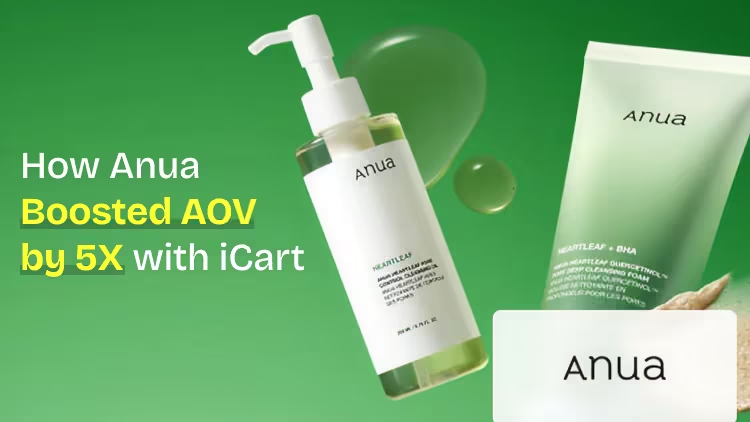
How Anua Unlocked 5X AOV Growth with iCart’s Smart Cart Features
delivery customization Challenges Solutions drive results Scale business delivery customization Challenges Solutions drive results Scale business delivery customization Challenges Solutions drive results Scale business delivery customization Challenges Solutions drive results Scale business Anua is a globally recognized Korean skincare brand known for its minimalist philosophy and focus on gentle yet effective formulations. Built on the idea of simplifying skincare routines, Anua develops products that deliver visible results while avoiding harsh or irritating components, making them suitable for sensitive skin types. Initially using a traditional full cart experience, Anua transitioned to iCart’s side cart solution in August 2025, to create a more seamless and engaging shopping journey. This shift allowed customers to easily explore complementary skincare products without disrupting their browsing flow, making it more intuitive to discover items that fit into a complete routine. By surfacing relevant recommendations directly within the cart, the brand enhanced product visibility across its range. Challenges Before implementing iCart’s side cart solution, Anua faced limitations with their existing full cart experience, which created friction in the customer journey. The traditional cart setup redirected users away from product pages, interrupting their browsing flow and reducing opportunities to explore additional products. As a skincare brand built around routines rather than single-item purchases, this made it difficult to effectively showcase complementary products and encourage customers to build complete regimens. Additionally, the lack of in-cart personalization and strategic upsell opportunities meant that customers were often unaware of related products that could enhance their skincare results. This limited the brand’s ability to increase average order value (AOV) and fully leverage its diverse product range. Anua needed a more dynamic and intuitive cart experience that could seamlessly introduce relevant recommendations while maintaining a smooth and engaging shopping journey. ❌ Cart Value Barriers Low average order value (AOV) due to single-item focus Most customers completed purchases with one primary product instead of building multi-step routines. Cart abandonment near shipping thresholds Customers were not clearly informed or motivated to reach free shipping or discount thresholds. Missed savings opportunities Customers were unaware of potential value in purchasing bundled routines or multiple complementary products. ❌ Absence of Progress-Based Incentives No free shipping or discount progress bar Customers were not motivated to increase their cart value due to lack of visible incentives. Missing tiered rewards system There were no structured milestones (e.g., “Spend more to unlock offers”), reducing upsell opportunities. ❌ Ineffective Cart UI/UX (Pre-Side Cart) Full-page cart disrupted shopping flowCustomers had to leave their browsing journey, increasing friction and drop-offs. No quick add/remove functionality Users couldn’t easily modify their cart or add suggested products without navigating away. Solution To overcome these challenges, Anua implemented iCart’s side cart solution to transform their traditional cart into a high-converting, interactive experience. By replacing the full-page cart with a seamless side cart, the brand ensured that customers could continue browsing while viewing their cart, significantly reducing friction in the shopping journey. Additionally, features like product recommendations & progress bars for free shipping and discounts motivated customers to increase their cart value. By combining personalization, incentive-driven messaging, and a user-friendly interface, Anua successfully turned their cart into a powerful revenue-driving touchpoint rather than just a checkout step. To maximize their cart effectiveness, they implemented two powerful features: ✅ Progress Bar with Multi-Reward Incentives Implemented a tiered progress bar to encourage higher cart value Customers are guided with a clear message like “Add $3.10 to unlock secret offer,” motivating them to continue adding products. Generated over $5M+ in revenue through incentive-driven cart progression Used product-based rewards to align with customer intent Instead of generic discounts, Anua incentivized purchases with relevant skincare items like Dark Spot Pads and mini serums. Built visual motivation for routine expansion As customers add products, they can clearly track progress toward unlocking multiple rewards, encouraging them to build a complete skincare routine. ✅ Product Recommendations Implemented “Frequently Bought Together” recommendations Customers adding a single product (e.g., toner) are shown complementary items like serums, moisturizers, or pads to complete their routine. Generated over 275K revenue through in-cart recommendations Encouraged full skincare regimen building Instead of isolated purchases, the cart suggests step-by-step product combinations aligned with common skincare routines. Increased product discovery at the final stage By surfacing relevant items directly in the cart, Anua ensured customers explore more of their catalog without leaving the checkout flow. Results Achieved in Last 180 Days 22932 Total Store Orders 45101 Total iCart Orders 5X iCart Generated AOV 65.70% Upsell Affected Conversion Rate These improvements reflect a clear shift in customer behavior on Anua’s store. Cart abandonment reduced as shoppers discovered complementary skincare products and felt encouraged to build complete routines. Engagement also increased, with customers interacting more with in-cart recommendations and exploring relevant product pairings. Results & Impact And...Results is Our Main Clarification By implementing iCart’s cart drawer, product recommendations, and progress bar, Anua transformed its cart into a high-performing conversion touchpoint. Shopping Experience Enhancement The improved cart experience encouraged customers to discover complementary products and understand the value of sustainable beauty routines. For instance, the clear presentation of subscription savings alongside one-time purchase options helped customers make more informed decisions about their long-term hair care needs. As Anua continues to optimize its cart experience, the brand is closely monitoring: Routine-based purchasing behavior - tracking how customers move from single items to multi-step regimens Engagement with in-cart recommendations - measuring interaction with suggested products Cart value progression - analyzing how incentives influence higher spending [related_cases_slider] Ready to Write Your Success Story? Try icart App Join successful businesses like Anua and Master your delivery scheduling Delight customers with precise timing Grow your special occasion orders Expand your delivery reach
Read Blog
6 Min • 1 July 2026
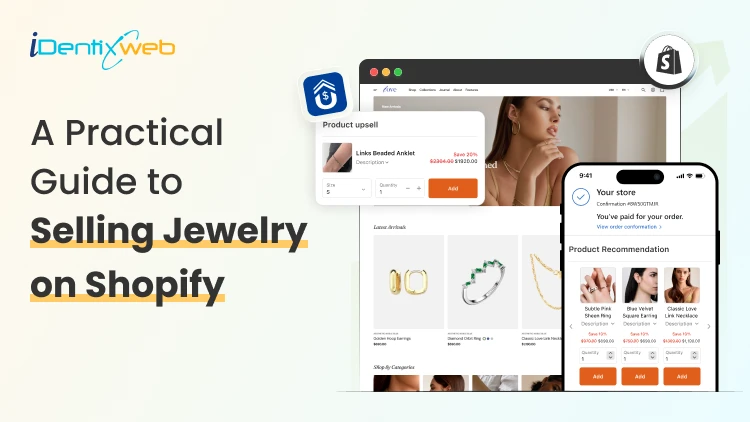
A Practical Guide to Selling Jewelry on Shopify: Upsells & Post Purchase Tricks
Selling Jewelry on Shopify is one of the most practical ways to turn a creative product into a scalable online business. Jewelry is visual, emotional, gift-friendly, and highly personal, which makes it a strong category for ecommerce. But at the same time, jewelry buyers need trust before they purchase. They want clear product images, metal details, size guidance, return policies, secure checkout, and a shopping experience that feels premium. In this guide, we will cover the complete process of Selling Jewelry on Shopify, including store setup, product presentation, marketing, upsells, and post-purchase tricks that can help you get more value from every order. How to sell jewelry on Shopify Step 1: Choose a Clear Jewelry Niche Most competitor blogs start with niche selection, and for good reason. Shopify’s own jewelry business guide also lists finding a niche, researching trends, defining the brand, sourcing products, taking product photos, building the store, marketing, and scaling as core steps. Your niche helps customers understand why they should buy from you instead of another store. A general jewelry store can work, but a focused brand is easier to position. You can build your niche around: Minimal everyday jewelry Premium gold-plated jewelry Handmade or artisan jewelry Bridal and engagement jewelry Personalized name necklaces Men’s bracelets and chains Spiritual, cultural, or zodiac jewelry Affordable luxury jewelry Stackable rings and bracelets Gift-ready jewelry for birthdays, anniversaries, and weddings Many Shopify jewelry stores perform better when they sell around a lifestyle, not just a product. For example, instead of saying “We sell rings,” your brand can say “Everyday stackable rings for modern women.” That instantly creates a clearer customer image. Step 2: Build a Brand That Feels Trustworthy Jewelry is not an impulse product for every customer. Some products may be affordable, but buyers still care about quality, material, packaging, skin safety, durability, and returns. Your brand identity should answer these concerns before the customer asks. Create a strong brand foundation with: A clear brand story Consistent logo, colors, and typography Premium product photography Detailed product descriptions Easy-to-find policies Customer reviews Gift packaging details Care instructions Authentic product videos For jewelry Shopify stores, trust is part of the design. A clean homepage, elegant product cards, visible reviews, and a simple navigation structure can make the store feel more premium. Your brand should also define what makes your jewelry different. Is it handmade? Tarnish-resistant? Waterproof? Customizable? Ethically sourced? Gift-ready? Designed for daily wear? These details help customers justify the purchase. Step 3: Select the Right Shopify Theme Competitor blogs often include theme recommendations because jewelry stores depend heavily on visuals. A good theme should make your products feel premium without slowing down the site. BOGOS also includes themes, product media, collections, apps, homepage optimization, marketing, store examples, and FAQs in its Shopify jewelry guide structure. When choosing a Shopify theme for a jewelry store, look for: Large product image support Mobile-first product pages Quick view option Video support Product filtering Collection-focused layout Lookbook or lifestyle image sections Sticky add-to-cart Recently viewed products Cross-sell sections Fast loading speed If you are just starting, Dawn can work well as a free theme. For premium jewelry brands, choose a theme with stronger visual storytelling, editorial sections, and better collection layouts. The best Shopify jewelry stores do not overload the homepage. They guide customers through clear sections like new arrivals, bestsellers, gifts under a certain price, personalized jewelry, and occasion-based collections. Step 4: Create Product Pages That Sell Your product page is where trust and desire meet. Nivoda’s guide on Shopify jewelry sales recommends rich product descriptions that go beyond basic specs and include craftsmanship, stone quality, carat weight, origin, and care instructions to support both SEO and buyer confidence. For Selling Jewelry on Shopify, every product page should include: Product name with material or style Clear pricing Multiple high-quality images Short product benefit summary Metal, stone, plating, size, and weight details Size guide Care instructions Shipping and return details Warranty or guarantee information Customer reviews Gift packaging details Related products A weak product description says: “This is a gold necklace for women.” A stronger description says: “Designed for everyday layering, this 18k gold-plated necklace adds a minimal shine to workwear, party outfits, and casual looks. Its lightweight chain makes it comfortable for daily wear, while the gift-ready packaging makes it a thoughtful choice for birthdays and anniversaries.” The second version gives style, usage, occasion, and gifting value. That is what helps customers imagine the product in their life. Step 5: Organize Collections Around Buying Intent Do not create collections only by product type. Jewelry shoppers often search by occasion, price, material, and recipient. Useful collection ideas include: Rings Necklaces Earrings Bracelets Anklets Personalized jewelry Gifts for her Gifts for him Wedding jewelry Minimal jewelry Gold jewelry Silver jewelry Jewelry under $50 New arrivals Bestsellers Stackable sets This type of collection structure helps both users and SEO. It also gives you more opportunities to create targeted landing pages for paid ads and email campaigns. Step 6: Use Post-Purchase Tricks That Feel Natural Post-purchase upsells work because the customer has already trusted your brand. They have completed the hardest step: placing the first order. Now you can offer something that improves their purchase. Shopify’s developer documentation notes that thank you and order status pages appear at the end of checkout and can be customized using checkout UI extensions. Here are some post-purchase tricks for jewelry Shopify stores: 1. Offer Matching Products If someone buys earrings, offer the necklace from the same collection. If someone buys a pendant, offer the matching chain. 2. Promote Gift Packaging Jewelry is often bought as a gift. Offer premium packaging, greeting cards, or custom notes after purchase. 3. Add Jewelry Care Products Offer polishing cloths, storage boxes, anti-tarnish pouches, or cleaning kits. 4. Use Limited-Time Offers Carefully Countdown timers can work, but avoid making the offer feel cheap. Use wording like “Add this matching piece before your order is packed.” 5. Offer a Second Piece at a Small Discount For stackable rings or bracelets, offer a second piece with a small discount. This works well because stacking jewelry looks better in pairs or sets. 6. Promote Bestsellers If the original product does not have a perfect match, recommend a bestseller from the same price range. These small offers can turn a single-product order into a larger order without interrupting checkout. Use SellMore to Increase AOV After Checkout Once a customer buys jewelry, the buying journey does not have to end. This is where SellMore Post Purchase Upsell can be useful for Shopify merchants who want to increase average order value without disturbing the original checkout flow. SellMore helps merchants show upsell offers on pages such as the post-purchase page, thank you page, order status page, and checkout page for Shopify Plus stores. Sell More After Every Sale Show irresistible one-click post purchase upsells at the right moment that converts.
12 Min • 16 July 2026
Shopify Functions: How The Latest Update Helps Merchants Customize
Shopify has completed one of its biggest checkout customization changes. Shopify Scripts stopped running on June 30, 2026, and Shopify Functions are now the main way to add custom business rules to carts and checkout. Merchants on any Shopify plan can use public apps built with Shopify Functions. This gives more stores access to advanced discounts, product bundles, delivery rules, payment controls, and checkout validation without asking merchants to manage code themselves. What are Shopify Functions? Shopify Functions are small pieces of backend logic that change how Shopify handles important parts of the buying process. A Function can tell Shopify to: Apply a discount when a cart meets specific conditions Combine several products into a bundle Hide an unsuitable shipping option Stop checkout when an order breaks a business rule Choose how an order should be routed or fulfilled The Function runs on Shopify’s infrastructure during the cart or checkout process. It receives information about the cart, applies the business rules, and sends Shopify a list of actions to perform. What is the latest Shopify Functions update? The most important current update is that Shopify Scripts are gone. Shopify stopped merchants from editing or publishing Scripts on April 15, 2026. All remaining Scripts stopped executing on June 30, 2026. Now merchants need to recreate rules using: A public app built with Shopify Functions A custom app using Shopify Function APIs This update makes the customization system easier to distribute and manage. Shopify Functions are packaged inside apps, and it follows a simple process: A customer changes their cart or moves through checkout. Shopify sends the Function the information it needs. The Function checks that information against its rules. It returns an instruction to Shopify. Shopify applies that instruction to the cart or checkout. For example, a merchant may create a tiered discount with these rules: Spend $100 and receive 10% off Spend $150 and receive 15% off Spend $200 and receive free shipping The Shopify Functions app reads the cart value and returns the correct discount. Shopify then applies it during the buying process. Functions run in a specific order. Cart transformations happen first, followed by product and order discounts, fulfillment logic, delivery rules, shipping discounts, payment changes, and checkout validation. This order matters when several apps are changing the same cart. What can merchants customize with Shopify Functions? 1. Product, order, and shipping discounts The current Discount Function API can create discounts across three areas: Products The complete order Shipping or delivery Use cases for merchants include: Tiered discounts Quantity breaks Buy X, get Y offers Customer-tag discounts Discounts for selected products or collections Shipping discounts based on cart value Discounts for products with custom properties This gives merchants more control than Shopify’s standard discount settings when the offer depends on several conditions. 2. Product bundles and cart changes Cart Transform Functions change how products appear and behave inside the cart. Apps can use them to: Merge multiple products into one bundle Expand a bundle into its individual components Add required products or services Change how bundle items are presented Build mix-and-match bundles Shopify allows Cart Transform apps on different plans. So check the app’s plan requirements instead of assuming every Cart Transform feature is available on every plan. 3. Delivery option customization Delivery Customization Functions can rename, reorder, or hide delivery options at checkout. A merchant could use these rules to: Hide express shipping for products that require preparation Place local delivery above standard shipping Hide delivery methods for particular customer groups Remove unsuitable options for specific addresses Prioritize a preferred delivery service Shopify currently allows up to 25 active delivery customization Functions on a store. Availability may still depend on the app, checkout surface, shipping setup, and the data available to the Function. 4. Payment method customization Payment Customization Functions control which payment choices customers see and how those choices are presented. They can help merchants: Hide cash on delivery for high-value orders Hide a payment option in selected countries Add payment terms for eligible B2B customers Send qualifying B2B orders for review Wallets such as Shop Pay, Apple Pay, and Google Pay have specific limitations. For example, wallets can be removed from certain checkout sections but cannot be reordered, and their branded names cannot be changed. 5. Cart and checkout validation Validation Functions prevent customers from completing an order when the cart does not meet the merchant’s rules. Examples include: Limiting the quantity of a high-demand product Requiring a minimum order amount Preventing incompatible products from being purchased together Checking a purchase order number Restricting purchases based on billing information Displaying an error message when a rule fails These validations run on Shopify’s backend. They can also apply to accelerated checkouts such as Shop Pay, PayPal, Apple Pay, and Google Pay. 6. Fulfillment and order routing Shopify Functions can help determine how an order should be fulfilled after checkout. A merchant may use them to: Prioritize a warehouse Prevent an order from being split across several locations Apply fulfillment restrictions Route orders based on stock, destination, or operational rules Choose a different fulfillment location for particular orders These features are useful for merchants with multiple warehouses, retail stores, and regional fulfillment centers. 7. Local pickup and pickup options Functions include tools for generating local pickup options, pickup-point delivery options, and local pickup charges. This can support cases where a merchant needs to: Generate pickup choices based on the customer’s location Provide pickup points from an external network Charge a fee for selected pickup services What is the Shopify Functions app? A Shopify Functions app is an app that includes one or more Shopify Functions. The app developer writes the backend logic and creates a merchant-facing interface for configuring it. The merchant can then install the app and create rules without editing the Function’s source code. For example, a discount app might allow a merchant to choose: Eligible products Customer tags Minimum quantities Discount values Campaign dates Market or country conditions The app converts those settings into configuration data that its Function can use when Shopify processes a cart. Are Shopify Functions available on all Shopify plans? Yes, it is. Public Shopify Functions apps can be used by stores on any Shopify plan, except where Shopify places a restriction on a particular API, operation, checkout feature, or app. However, merchants should still review: The app developer’s supported plans Restrictions for the specific Function operation Checkout and sales-channel compatibility Whether the app requires Shopify Plus features Limits involving subscriptions, POS, draft orders, or accelerated checkout Are Shopify functions available only on Shopify Plus? No. Shopify Functions are not available only on Shopify Plus. Stores on any plan can use approved public apps from the Shopify App Store that contain Functions. However, Plus is required for specific advanced operations. Here’s a breakdown. RequirementPlan availabilityInstall a public Functions app from the Shopify App StoreAny Shopify plan, subject to feature restrictionsBuild and install a custom app containing Shopify FunctionsShopify PlusUse advanced operations marked as Plus-onlyShopify PlusUse restricted network access for some Function targetsShopify Plus or Enterprise, depending on the API How does the latest Functions update help merchants? More customization without managing code Shopify Functions can be delivered and configured through apps. Therefore, most merchants can use advanced rules without seeing or editing the Function code. Better performance during busy sales Shopify says Functions execute in under 5 milliseconds on its WebAssembly platform. This is helpful during the busiest shopping days of the year. Know more details about the busiest shopping days of the year to prepare for 2026. Easier maintenance A Functions app can be updated and distributed by its developer. Merchants do not need to copy updated code into every store. This can make ongoing maintenance easier. More consistent backend rules Theme customizations may behave differently across online storefronts, accelerated checkout buttons, mobile apps, and other sales channels. Functions operate in Shopify’s backend, which can make business rules more reliable across supported surfaces. However, each Function API has its own compatibility table, so merchants must still verify whether it supports POS, subscriptions, draft orders, accelerated checkout, and other relevant channels. Shopify Scripts to Shopify Functions migration guide Step 1: Open the Shopify Scripts customizations report From Shopify admin: Go to Apps Open the Script Editor app (Only available till July 30, 2026) Find the Replace your Shopify Scripts banner Click Replace Shopify Scripts The report lists previously active customizations under areas such as product discounts, shipping, and payment gateways. It may also provide recommended apps and relevant Shopify Functions tutorials. Step 2: Decide which rules still matter Do not recreate every old Script automatically. For each customization, ask: Is the rule still used? Does it still support the current sales strategy? Does Shopify now provide a native feature for it? Can one app replace several Scripts? Did the Script conflict with other discounts or checkout apps? Step 3: Document the original behavior Write down the exact conditions and results for every rule you want to keep. Include: Eligible customers Eligible products Minimum cart values Quantity requirements Discount amounts Shipping conditions Payment conditions Markets and currencies Exclusions Combination rules Error messages Do not select a replacement app based only on a similar feature name. Confirm that it can reproduce the complete business rule. Step 4: Choose a public app or custom development A public app is usually suitable when the requirement involves common use cases such as: Tiered discounts Free gifts Bundles Shipping rules Payment restrictions Quantity limits Custom development may be necessary when the logic depends on proprietary workflows, unusual data, complex B2B rules, or several connected systems. Remember that a custom app containing Shopify Functions requires Shopify Plus. Step 5: Rebuild the rules Configure the replacement using the chosen Shopify Functions app or custom app. Keep the first version as close as possible to the original Script behavior. Avoid adding unrelated changes during migration because that makes problems harder to identify. Step 6: Test every important scenario Test more than one successful checkout. Cover: Eligible and ineligible customers Minimum and maximum cart values Discount combinations Different countries and currencies Mobile and desktop checkout Shop Pay and other accelerated checkouts Subscriptions Draft orders Local delivery and pickup Shopify documents different compatibility levels for each Function API. A rule that works during standard online checkout may behave differently with subscriptions, draft orders, order editing, or POS. Step 7: Monitor live orders After launch, monitor: Discount amounts Shipping charges Payment availability Checkout errors Bundle inventory Order routing Customer support tickets App execution errors Pricing and checkout logic should be treated as revenue-critical functionality. Review it after app updates, Shopify API changes, theme changes, and major campaign launches. Important Shopify Functions limitations Functions have resource limits Shopify sets limits on compiled size, memory, input size, output size, and execution instructions. Functions must be efficient because they run during key purchase steps. This means extremely complex rules may need to be simplified or split into a better data structure. App conflicts are still possible Several discount Functions can run at the same time, but they do not communicate directly with each other. Shopify evaluates its results using the discount combination settings attached to each discount. Check the combinations between discount, bundle, gift, subscription, shipping, and checkout apps before launching a major campaign. Do you need a developer to use Shopify Functions? You do not need a developer when a public Shopify Functions app already supports your use case. A developer becomes useful when: No existing app matches the rule The logic depends on custom data Several systems need to work together Your store has complex B2B requirements You are replacing heavily customized Shopify Scripts The rule affects several checkout stages You need a custom Functions app on Shopify Plus Final thoughts Shopify Functions have moved advanced commerce logic away from the old Script Editor and into a faster, app-based system. Merchants can create more relevant discounts, flexible bundles, safer checkout rules, clearer delivery options, and better payment experiences without coding. Shopify Functions are also available across Shopify plans, while custom Functions apps and some advanced capabilities remain restricted to Plus or Enterprise. Start with the business rule you need, confirm the app and plan compatibility, and test the complete customer journey before publishing it. FAQs 1. What are Shopify Functions? Shopify Functions are backend rules that customize how Shopify handles discounts, carts, delivery, payments, validation, fulfillment, and other parts of checkout. They are delivered through apps and run on Shopify’s infrastructure when customers shop. 2. What is a Shopify Functions app? A Shopify Functions app is a public or custom Shopify app that contains one or more Functions. It gives merchants an interface for configuring the Function’s rules without editing its underlying code. 3. Are Shopify Functions available on all Shopify plans? Public apps containing Shopify Functions can be installed on any Shopify plan unless the app or specific Function capability has additional restrictions. Merchants should check the app listing and Shopify API documentation for plan and checkout compatibility. 4. Are Shopify Functions available only on Shopify Plus? No. Public Shopify Functions apps can work on Basic, Grow, Advanced, and Plus plans. Shopify Plus is required for custom apps containing Shopify Functions and for some advanced operations. 5. What replaced Shopify Scripts? Shopify Functions replaced Shopify Scripts for custom discount, shipping, payment, cart, and checkout logic. Shopify Scripts stopped executing completely on June 30, 2026. 6. What is the difference between Shopify Functions and Shopify Scripts? Shopify Scripts used Ruby code in the Script Editor and were available only to Shopify Plus merchants. Shopify Functions run through apps on Shopify’s backend, and public Functions apps can be used across Shopify plans. Functions are faster, easier to maintain, and support more customization areas, while Scripts were fully discontinued on June 30, 2026.
8 Min • 3 July 2026
How Do Shopify Stores Use Gamification to Win More Customers
Shoppers in 2026 get overwhelmed by discount emails and static pop-ups. That also includes me 😶 Most click away without a second thought. But some Shopify stores are doing something different… They are turning the shopping experience into a game, and buyers keep coming back because of it. Understanding how Shopify stores use gamification is the first step to building a store that converts better and retains customers longer. This blog is to help you understand the power of gamification with real-life Shopify store gamification examples that I have researched. I will also educate you on the best Shopify gamification apps and pop up builders that I use in stores. What is gamification in a Shopify store? Gamification means adding game mechanics to your store experience so shoppers feel motivated to act, earn, and return. Points, progress bars, spin wheels, quizzes, badges, and tiered challenges are all gamification tools. The goal is to make every interaction feel rewarding, so shoppers buy more and come back. The market backs this up. In ecommerce specifically, gamified popups convert between 8-15% of visitors, while standard discount popups convert between 3-5%. Why gamification works especially well in 2026 Third-party cookies are mostly gone Most browsers block them by default, so the behavioral data is difficult to get. Gamification, especially quizzes and interactive sign-up flows, gives you first-party and zero-party data your competitors cannot buy. When a shopper answers four questions in a product finder quiz, you learn their preferences directly. Shoppers are desensitized to static offers A flat "15% off for your email" discount barely gets clicks anymore. A spin wheel where the prize is unknown? This will immediately get clicks. This is the same principle that makes slot machines in Vegas compelling. Not knowing the reward is often more motivating than a guaranteed one. Exit popups fail on mobile Standard exit-intent popups cannot fire on mobile because there is no cursor to track. Stores that use gamified teasers, small interactive elements that sit on the screen until tapped, capture mobile leads easily. How do Shopify stores use gamification: 5 proven examples 1. Gamified popups: Spin wheels, scratch cards, & mystery discount A gamified popup puts a game at the first moment a new visitor lands. Instead of showing a static form, you show a spin wheel or scratch card that requires a small interaction to reveal the reward. As per Sleeknote's report, spin-to-win popups averaged 8.67% conversion compared to 3.70% for standard popups. In my experience, scratch cards and mystery reveals work especially well for premium or minimalist brands. The shopper swipes or clicks to reveal their offer, and the earned reward feels more valuable because they worked for it. Fishwife uses an awesome mystery discount popup. Checkout my guide to adding a pop-up on Shopify for a full breakdown of how to configure a pop-up on your store. 2. Cart drawer progress bars and tiered rewards Gamification does not stop at the pop-up. Inside the cart, progress bars are one of the highest-ROI mechanics available. A cart drawer progress bar shows shoppers exactly how close they are to a reward: "You are $12 away from free shipping". Shoppers see a clear goal and feel the pull toward the finish line. A three-tier reward system works well for most stores. Each tier targets a different shopper type without squeezing margins. Anua, the Shopify skincare brand, uses a great three-tier reward system in their cart. This helps to increase AOV because shoppers always see the next reward, and most feel close enough to hit it with one extra item. Turn Your Shopify Cart Into a Mini Reward System Most carts only show products... iCart can show revenue-boosting offers. Try Free Till 100 Orders If you want to gamify the cart experience, iCart helps you add progress bars, free shipping goals, product upsells, free gifts, and cart-based offers inside the cart drawer. For a full setup guide, check out my guide on Shopify cart drawer gamification and tiered rewards that lift AOV. 3. Product discovery quizzes Quizzes are most valuable for stores with complex catalogs. A shopper who completes a five-question quiz about their lifestyle, budget, and preferences hands you a detailed preference profile you can use across every future channel: email, retargeting, and on-site recommendations. For Shopify DTC brands and beauty, skincare, or supplement stores, zero-party data is now essential. Without it, personalization relies on purchase history alone. With it, you know what shoppers want before they buy the first time. 4. Loyalty program tiers & badges Most people do not realize that loyalty programs are the most common form of gamification. Points, tiers, and badges keep shoppers engaged between purchases. A flat points program with no tier progression earns 1.8 times less ROI than one with tiers. Also, tier progression feels like leveling up. Shoppers close to Gold status find a way to qualify, the same way gamers push for a new rank. Starbucks' rewards system is a great example of a loyalty program used to gamify your store. For stores just getting started, my guide to setting up the best Shopify loyalty program walks through point structures and tier naming. 5. Countdown timers and time-based challenges Countdown timers and time-limited challenges create urgency. For example, "Buy in the next 2 hours for 20% off" gives shoppers a hard deadline. A timer with 90 minutes on the clock stops a browser mid-scroll in a way that a permanent banner never does. Countdown timers placed on cart pages are especially effective at reducing abandonment since the shopper has already signaled intent. See my full breakdown on the ‘While Supplies Last’ strategy for examples and tips to create urgency. Best popup builder/ Shopify gamification apps in 2026 Popup BuilderKey Gamification FeaturesWhy Choose ItSleeknoteSpin-to-win, scratch cards, seasonal calendars, daily offers, multi-step quizzesA strong all-around option for stores that want multiple gamified popup formats in one platform. It also bills by visitor instead of page view, so repeat shoppers do not unnecessarily increase costs.OptiMonkPersonalized gamified offers based on cart value, product categories, and customer tagsIdeal for Shopify stores that want offers triggered by real customer and store data, not just basic page behavior.OdicciInteractive quizzes, preference-based templates, data capture for email personalizationA good fit if your main goal is collecting shopper preferences and using that data for Klaviyo segmentation and personalization.WheelioSpin-to-win popups, Klaviyo integration, Mailchimp integrationBest for stores that want a quick, low-cost spin wheel setup without needing a full gamification platform. To wrap it up: Which gamification should I go with? Gamification mechanicWorks best forSpin wheelsFashion, beauty, lifestyle, and home goods stores with discount-driven shoppers. QuizzesStores with complex catalogs or health and wellness products where personalization drives purchases. Progress barsVirtually every store selling physical products. They operate in every session without any explicit interaction, so they never feel intrusive to shoppers who dislike pop-ups.Tiered loyaltyHigh-frequency stores selling coffee, supplements, pet food, or skincare see the strongest engagement because shoppers earn points fast enough to feel genuinely rewarded.Challenges and countdownsChallenges and countdowns work as a layer on top of any other mechanic. Run them around product launches, Black Friday, or slow-sales windows that need a revenue push. FAQs 1. What is gamification in a Shopify store? Gamification in a Shopify store means adding game mechanics to the shopping experience. Shopify store gamification examples include spin-to-win popups, cart progress bars, product discovery quizzes, tiered loyalty programs, and time-limited referral challenges. 2. What is the difference between gamified popups and standard popups? Standard popups usually ask shoppers to sign up or claim a discount. Gamified popups add interaction, such as spin wheels, quizzes, scratch cards, or reward unlocks, which makes the offer feel more engaging and will increase email sign-ups. 3. What are the best Shopify gamification apps in 2026? The best Shopify gamification apps in 2026 include Sleeknote for the strongest all-around popup and gamification suite, OptiMonk for on-site personalization, Odicci for quiz-based zero-party data capture, and Wheelio for a single-purpose spin wheel. 4. What is the best popup builder for gamification on Shopify in 2026? The best popup builder for gamification on Shopify in 2026 is Sleeknote for most mid-size ecommerce stores. It combines spin wheels, scratch cards, seasonal calendars, and multi-step quizzes in one platform, handles mobile compliance to avoid Google interstitial penalties, and integrates natively with Shopify and Klaviyo. 5. How do Shopify stores use gamification? Shopify stores use gamification to encourage actions like email sign-ups, product discovery, referrals, repeat purchases, and higher cart values. Common examples include spin-to-win discounts, product finder quizzes, free shipping progress bars, loyalty tiers, referral challenges, and countdown-based offers.

Bhavesha Ghatode
September 5, 2025
831 Views
Bhavesha Ghatode
June 24, 2025
1286 Views
![How to Add Estimated Delivery Date and Time on Shopify [Updated 2026]](https://www.identixweb.com/wp-content/uploads/2024/11/26-11-Wed-Blog-How-to-Show-Estimated-Delivery-Date-Time-on-Shopify_.webp "How to Add Estimated Delivery Date and Time on Shopify [Updated 2026]")
Bhavesha Ghatode
November 22, 2024
2316 Views
Bhavesha Ghatode
September 3, 2024
3523 Views
Bhavesha Ghatode
July 31, 2025
938 Views

Bhavesha Ghatode
August 13, 2025
927 Views
Bhavesha Ghatode
August 27, 2025
890 Views

Bhavesha Ghatode
April 1, 2025
1722 Views
Bhavesha Ghatode
March 7, 2025
1874 Views
Bhavesha Ghatode
September 11, 2025
712 Views
Bhavesha Ghatode
January 29, 2025
3177 Views

Bhavesha Ghatode
August 21, 2025
936 Views