



Shoppers in 2026 get overwhelmed by discount emails and static pop-ups. That also includes me 😶
Most click away without a second thought. But some Shopify stores are doing something different…
They are turning the shopping experience into a game, and buyers keep coming back because of it. Understanding how Shopify stores use gamification is the first step to building a store that converts better and retains customers longer.
This blog is to help you understand the power of gamification with real-life Shopify store gamification examples that I have researched. I will also educate you on the best Shopify gamification apps and pop up builders that I use in stores.
What is gamification in a Shopify store?
Gamification means adding game mechanics to your store experience so shoppers feel motivated to act, earn, and return.
Points, progress bars, spin wheels, quizzes, badges, and tiered challenges are all gamification tools.
The goal is to make every interaction feel rewarding, so shoppers buy more and come back.
The market backs this up. In ecommerce specifically, gamified popups convert between 8-15% of visitors, while standard discount popups convert between 3-5%.
Why gamification works especially well in 2026
Third-party cookies are mostly gone
Most browsers block them by default, so the behavioral data is difficult to get. Gamification, especially quizzes and interactive sign-up flows, gives you first-party and zero-party data your competitors cannot buy.
When a shopper answers four questions in a product finder quiz, you learn their preferences directly.
Shoppers are desensitized to static offers
A flat "15% off for your email" discount barely gets clicks anymore.
A spin wheel where the prize is unknown? This will immediately get clicks. This is the same principle that makes slot machines in Vegas compelling. Not knowing the reward is often more motivating than a guaranteed one.
Exit popups fail on mobile
Standard exit-intent popups cannot fire on mobile because there is no cursor to track. Stores that use gamified teasers, small interactive elements that sit on the screen until tapped, capture mobile leads easily.
How do Shopify stores use gamification: 5 proven examples
1. Gamified popups: Spin wheels, scratch cards, & mystery discount
A gamified popup puts a game at the first moment a new visitor lands. Instead of showing a static form, you show a spin wheel or scratch card that requires a small interaction to reveal the reward.
As per Sleeknote's report, spin-to-win popups averaged 8.67% conversion compared to 3.70% for standard popups.
In my experience, scratch cards and mystery reveals work especially well for premium or minimalist brands. The shopper swipes or clicks to reveal their offer, and the earned reward feels more valuable because they worked for it.
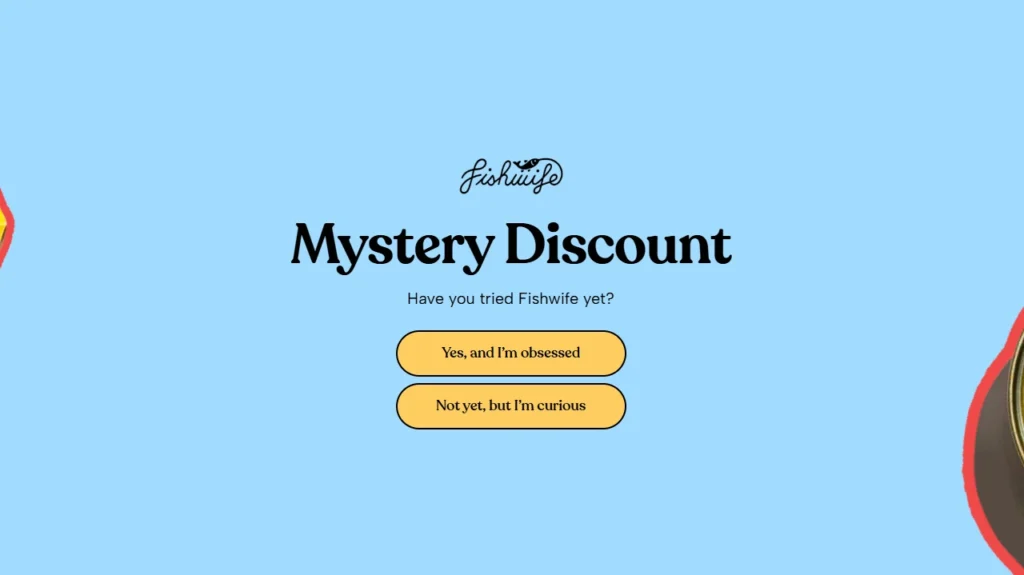
Fishwife uses an awesome mystery discount popup.
2. Cart drawer progress bars and tiered rewards
Gamification does not stop at the pop-up. Inside the cart, progress bars are one of the highest-ROI mechanics available.
A cart drawer progress bar shows shoppers exactly how close they are to a reward: "You are $12 away from free shipping". Shoppers see a clear goal and feel the pull toward the finish line.
A three-tier reward system works well for most stores. Each tier targets a different shopper type without squeezing margins.
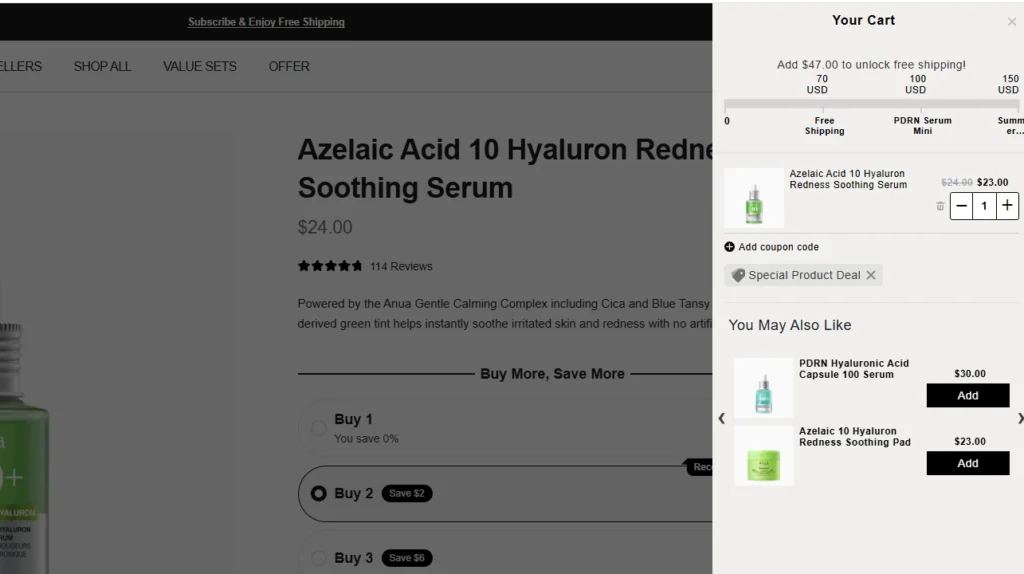
Anua, the Shopify skincare brand, uses a great three-tier reward system in their cart.
This helps to increase AOV because shoppers always see the next reward, and most feel close enough to hit it with one extra item.
Turn Your Shopify Cart Into a Mini Reward System
If you want to gamify the cart experience, iCart helps you add progress bars, free shipping goals, product upsells, free gifts, and cart-based offers inside the cart drawer.
3. Product discovery quizzes
Quizzes are most valuable for stores with complex catalogs. A shopper who completes a five-question quiz about their lifestyle, budget, and preferences hands you a detailed preference profile you can use across every future channel: email, retargeting, and on-site recommendations.
For Shopify DTC brands and beauty, skincare, or supplement stores, zero-party data is now essential. Without it, personalization relies on purchase history alone. With it, you know what shoppers want before they buy the first time.
4. Loyalty program tiers & badges
Most people do not realize that loyalty programs are the most common form of gamification. Points, tiers, and badges keep shoppers engaged between purchases.
A flat points program with no tier progression earns 1.8 times less ROI than one with tiers. Also, tier progression feels like leveling up. Shoppers close to Gold status find a way to qualify, the same way gamers push for a new rank.
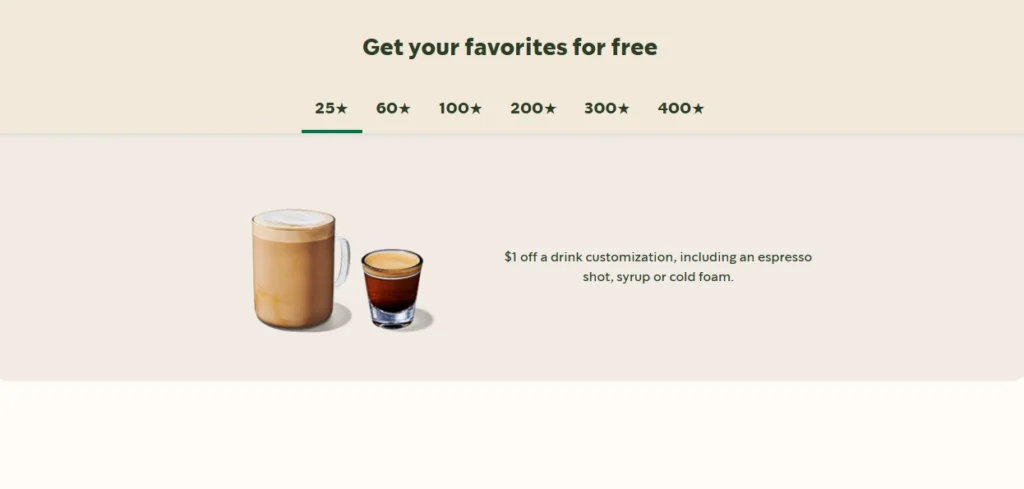
Starbucks' rewards system is a great example of a loyalty program used to gamify your store.
5. Countdown timers and time-based challenges
Countdown timers and time-limited challenges create urgency. For example, "Buy in the next 2 hours for 20% off" gives shoppers a hard deadline.
A timer with 90 minutes on the clock stops a browser mid-scroll in a way that a permanent banner never does.
Countdown timers placed on cart pages are especially effective at reducing abandonment since the shopper has already signaled intent.
Best popup builder/ Shopify gamification apps in 2026
| Popup Builder | Key Gamification Features | Why Choose It |
| Sleeknote | Spin-to-win, scratch cards, seasonal calendars, daily offers, multi-step quizzes | A strong all-around option for stores that want multiple gamified popup formats in one platform. It also bills by visitor instead of page view, so repeat shoppers do not unnecessarily increase costs. |
| OptiMonk | Personalized gamified offers based on cart value, product categories, and customer tags | Ideal for Shopify stores that want offers triggered by real customer and store data, not just basic page behavior. |
| Odicci | Interactive quizzes, preference-based templates, data capture for email personalization | A good fit if your main goal is collecting shopper preferences and using that data for Klaviyo segmentation and personalization. |
| Wheelio | Spin-to-win popups, Klaviyo integration, Mailchimp integration | Best for stores that want a quick, low-cost spin wheel setup without needing a full gamification platform. |
To wrap it up: Which gamification should I go with?
| Gamification mechanic | Works best for |
| Spin wheels | Fashion, beauty, lifestyle, and home goods stores with discount-driven shoppers. |
| Quizzes | Stores with complex catalogs or health and wellness products where personalization drives purchases. |
| Progress bars | Virtually every store selling physical products. They operate in every session without any explicit interaction, so they never feel intrusive to shoppers who dislike pop-ups. |
| Tiered loyalty | High-frequency stores selling coffee, supplements, pet food, or skincare see the strongest engagement because shoppers earn points fast enough to feel genuinely rewarded. |
| Challenges and countdowns | Challenges and countdowns work as a layer on top of any other mechanic. Run them around product launches, Black Friday, or slow-sales windows that need a revenue push. |
FAQs
1. What is gamification in a Shopify store?
Gamification in a Shopify store means adding game mechanics to the shopping experience. Shopify store gamification examples include spin-to-win popups, cart progress bars, product discovery quizzes, tiered loyalty programs, and time-limited referral challenges.
2. What is the difference between gamified popups and standard popups?
Standard popups usually ask shoppers to sign up or claim a discount. Gamified popups add interaction, such as spin wheels, quizzes, scratch cards, or reward unlocks, which makes the offer feel more engaging and will increase email sign-ups.
3. What are the best Shopify gamification apps in 2026?
The best Shopify gamification apps in 2026 include Sleeknote for the strongest all-around popup and gamification suite, OptiMonk for on-site personalization, Odicci for quiz-based zero-party data capture, and Wheelio for a single-purpose spin wheel.
4. What is the best popup builder for gamification on Shopify in 2026?
The best popup builder for gamification on Shopify in 2026 is Sleeknote for most mid-size ecommerce stores. It combines spin wheels, scratch cards, seasonal calendars, and multi-step quizzes in one platform, handles mobile compliance to avoid Google interstitial penalties, and integrates natively with Shopify and Klaviyo.
5. How do Shopify stores use gamification?
Shopify stores use gamification to encourage actions like email sign-ups, product discovery, referrals, repeat purchases, and higher cart values. Common examples include spin-to-win discounts, product finder quizzes, free shipping progress bars, loyalty tiers, referral challenges, and countdown-based offers.

About the author
Vineet Nair
Vineet is an experienced content strategist with expertise in the ecommerce domain and a keen interest in Shopify. He aims to help Shopify merchants thrive in this competitive environment with technical solutions and thoughtfully structured content.