
Author: Bhavesha Ghatode
Gather knowledge about the latest insights, updates, tips, and tricks in the Ecommerce industry.
5 Min • 20 March 2026
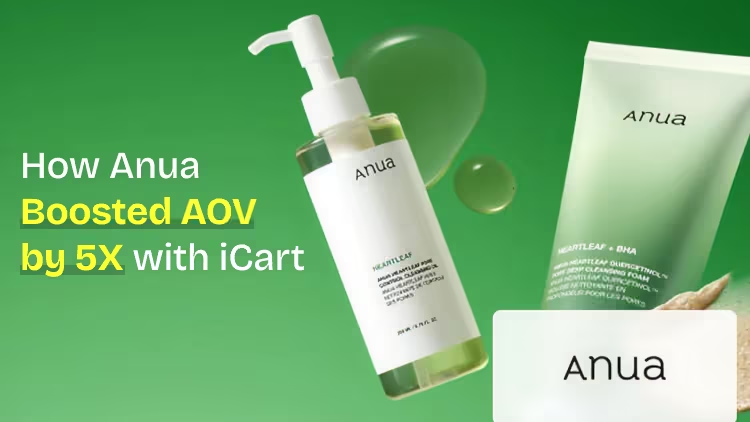
How Anua Unlocked 5X AOV Growth with iCart’s Smart Cart Features
delivery customization Challenges Solutions drive results Scale business delivery customization Challenges Solutions drive results Scale business delivery customization Challenges Solutions drive results Scale business delivery customization Challenges Solutions drive results Scale business Anua is a globally recognized Korean skincare brand known for its minimalist philosophy and focus on gentle yet effective formulations. Built on the idea of simplifying skincare routines, Anua develops products that deliver visible results while avoiding harsh or irritating components, making them suitable for sensitive skin types. Initially using a traditional full cart experience, Anua transitioned to iCart’s side cart solution in August 2025, to create a more seamless and engaging shopping journey. This shift allowed customers to easily explore complementary skincare products without disrupting their browsing flow, making it more intuitive to discover items that fit into a complete routine. By surfacing relevant recommendations directly within the cart, the brand enhanced product visibility across its range. Challenges Before implementing iCart’s side cart solution, Anua faced limitations with their existing full cart experience, which created friction in the customer journey. The traditional cart setup redirected users away from product pages, interrupting their browsing flow and reducing opportunities to explore additional products. As a skincare brand built around routines rather than single-item purchases, this made it difficult to effectively showcase complementary products and encourage customers to build complete regimens. Additionally, the lack of in-cart personalization and strategic upsell opportunities meant that customers were often unaware of related products that could enhance their skincare results. This limited the brand’s ability to increase average order value (AOV) and fully leverage its diverse product range. Anua needed a more dynamic and intuitive cart experience that could seamlessly introduce relevant recommendations while maintaining a smooth and engaging shopping journey. ❌ Cart Value Barriers Low average order value (AOV) due to single-item focus Most customers completed purchases with one primary product instead of building multi-step routines. Cart abandonment near shipping thresholds Customers were not clearly informed or motivated to reach free shipping or discount thresholds. Missed savings opportunities Customers were unaware of potential value in purchasing bundled routines or multiple complementary products. ❌ Absence of Progress-Based Incentives No free shipping or discount progress bar Customers were not motivated to increase their cart value due to lack of visible incentives. Missing tiered rewards system There were no structured milestones (e.g., “Spend more to unlock offers”), reducing upsell opportunities. ❌ Ineffective Cart UI/UX (Pre-Side Cart) Full-page cart disrupted shopping flowCustomers had to leave their browsing journey, increasing friction and drop-offs. No quick add/remove functionality Users couldn’t easily modify their cart or add suggested products without navigating away. Solution To overcome these challenges, Anua implemented iCart’s side cart solution to transform their traditional cart into a high-converting, interactive experience. By replacing the full-page cart with a seamless side cart, the brand ensured that customers could continue browsing while viewing their cart, significantly reducing friction in the shopping journey. Additionally, features like product recommendations & progress bars for free shipping and discounts motivated customers to increase their cart value. By combining personalization, incentive-driven messaging, and a user-friendly interface, Anua successfully turned their cart into a powerful revenue-driving touchpoint rather than just a checkout step. To maximize their cart effectiveness, they implemented two powerful features: ✅ Progress Bar with Multi-Reward Incentives Implemented a tiered progress bar to encourage higher cart value Customers are guided with a clear message like “Add $3.10 to unlock secret offer,” motivating them to continue adding products. Generated over $5M+ in revenue through incentive-driven cart progression Used product-based rewards to align with customer intent Instead of generic discounts, Anua incentivized purchases with relevant skincare items like Dark Spot Pads and mini serums. Built visual motivation for routine expansion As customers add products, they can clearly track progress toward unlocking multiple rewards, encouraging them to build a complete skincare routine. ✅ Product Recommendations Implemented “Frequently Bought Together” recommendations Customers adding a single product (e.g., toner) are shown complementary items like serums, moisturizers, or pads to complete their routine. Generated over 275K revenue through in-cart recommendations Encouraged full skincare regimen building Instead of isolated purchases, the cart suggests step-by-step product combinations aligned with common skincare routines. Increased product discovery at the final stage By surfacing relevant items directly in the cart, Anua ensured customers explore more of their catalog without leaving the checkout flow. Results Achieved in Last 180 Days 22932 Total Store Orders 45101 Total iCart Orders 5X iCart Generated AOV 65.70% Upsell Affected Conversion Rate These improvements reflect a clear shift in customer behavior on Anua’s store. Cart abandonment reduced as shoppers discovered complementary skincare products and felt encouraged to build complete routines. Engagement also increased, with customers interacting more with in-cart recommendations and exploring relevant product pairings. Results & Impact And...Results is Our Main Clarification By implementing iCart’s cart drawer, product recommendations, and progress bar, Anua transformed its cart into a high-performing conversion touchpoint. Shopping Experience Enhancement The improved cart experience encouraged customers to discover complementary products and understand the value of sustainable beauty routines. For instance, the clear presentation of subscription savings alongside one-time purchase options helped customers make more informed decisions about their long-term hair care needs. As Anua continues to optimize its cart experience, the brand is closely monitoring: Routine-based purchasing behavior - tracking how customers move from single items to multi-step regimens Engagement with in-cart recommendations - measuring interaction with suggested products Cart value progression - analyzing how incentives influence higher spending [related_cases_slider] Ready to Write Your Success Story? Try icart App Join successful businesses like Anua and Master your delivery scheduling Delight customers with precise timing Grow your special occasion orders Expand your delivery reach
Read Blog
8 Min • 20 July 2026
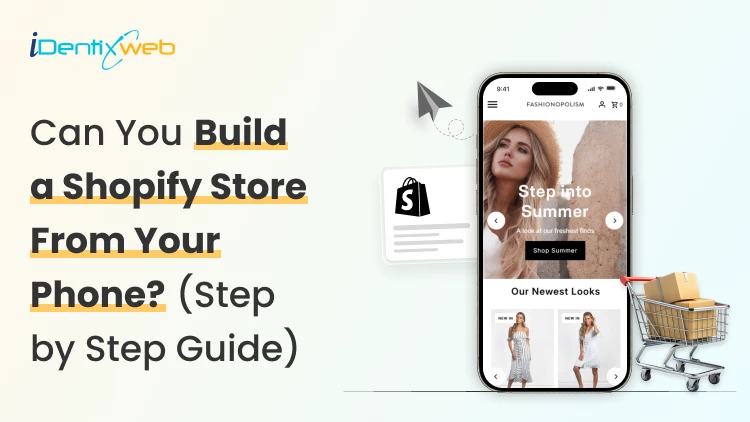
Can You Make a Shopify Store on Your Phone? Yes. (Step-by-Step Guide)
Yes, you can build and launch a Shopify store from your phone. The Shopify mobile app lets you add products, customize your theme, create pages, manage menus, configure payments, review orders, and track performance. You can also make theme changes through Shopify’s mobile online store editor. You can complete the setup and start accepting orders from an iPhone or Android phone. Still, I would not treat a phone as the perfect tool for every Shopify task. From working on Shopify store setups, I have found that mobile works well for launching and everyday management. Desktop is more comfortable for custom code, large catalogs, complex apps, and detailed testing. This guide explains how to create your store from your phone and where you may want a larger screen. Does Shopify have a mobile app? Yes. Shopify has an official mobile app for iOS and Android. The merchant app is designed for store owners and staff. It lets you manage products, orders, inventory, customers, analytics, payments, fulfillment, and parts of your online store. Shopify also provides a mobile theme editor for changing theme settings. How to make a Shopify store on your phone? Step 1: Download the Shopify mobile app Open the Apple App Store or Google Play Store and search Shopify. Open the app after installation. Sign in if you already have an account, or follow the registration process to create one. The app itself is free to download. Running an active Shopify store requires a Shopify subscription after the applicable trial or promotional period. Based on your budget, there are different types of Shopify Plans. Review my Shopify pricing guide before choosing one. Step 2: Create the store and add business details Follow the onboarding questions about your business, what you plan to sell, and where you want to sell. After the store is created, open: Menu > Settings Review the following details: Store name Legal business name Business address Store currency Time zone Contact information Order ID format Measurement units I recommend checking the currency and business location twice. They are easy to overlook during a fast mobile setup and can create extra work later. Step 3: Choose and customize a theme From the Shopify app, go to: Menu > Online Store > Edit Shopify’s mobile theme editor lets you change theme settings. You can add, remove, edit, and rearrange content from your phone. Start with a free Shopify theme if you are building your first store. Keep the initial homepage simple. I would recommend Dawn. Add your logo, fonts, colors, and images. Preview each section as you work. A common mistake is trying to fill every available section. I prefer a shorter homepage with a clear shopping path. A focused layout is easier to review on a phone and easier for customers to use. Step 4: Create your essential pages In the app, go to: Menu > Online store > pages Create the pages your customers need. Most new stores should have: About Us Contact Us Shipping Policy Return and Refund Policy Privacy Policy Terms of Service Frequently Asked Questions Keep the text readable on a small screen. Use short paragraphs, clear headings, and useful links. Step 5: Build the navigation Go to: Menu > Content > Menus Create a simple main menu and footer menu. A basic main menu might include: Home Shop Collections About Contact The footer can hold policy pages, FAQs, account links, and contact details. From experience, navigation is the first area I check on a new Shopify store. A good homepage cannot help much if customers cannot quickly reach products. Step 6: Add products from your phone Tap the Products icon in the Shopify app, then create a product. Add: Product title Description Photos or videos Price Inventory quantity SKU Weight Variants Product category Tags Collections Search engine listing I find it convenient to upload product images from my phone's camera. You can take a photo, crop it, and add it to the product without transferring files to a computer. Shopify lets merchants create, edit, preview, organize, publish, archive, and delete products through its mobile app. Read my guide on how to add products to Shopify for a detailed workflow on adding products. Step 7: Set up payments Go to: Menu > Settings > Payments The payment methods available depend on your business location and eligibility. Complete the requested business, identity, banking, and payout details. Use information that matches your legal and banking records. See my breakdown on how to set up Shopify Payments for a simple walkthrough. Step 8: Configure shipping, delivery, and taxes Open: Menu > Settings > Shipping and delivery Review your shipping profiles, zones, rates, packages, local delivery, and pickup settings. A basic setup may use: Flat-rate shipping Free shipping above a minimum order value Weight-based rates Price-based rates Local delivery Store pickup Carrier-calculated rates when supported Our guide on managing shipping and delivery in Shopify explains the broader setup. Step 9: Connect a domain Shopify gives your store a myshopify.com address. You can use it during setup, but a custom domain usually looks more professional. Go to: Menu > Settings > Domains From this area, you can review your Shopify domain and connect or manage a custom domain. Shopify also provides mobile controls for managing the store’s myshopify.com domain. Choose a name that is short, easy to type, and close to your brand. Changing a domain after launch will impact your existing URLs, marketing links, and search visibility can be affected. Read my guide on changing a Shopify store name and domain before making a major change. Step 10: Test the store before launch Do not skip testing because you built the store on the same phone customers may use. Check the store as a shopper, not as the owner. Test: Homepage loading Menu links Collection pages Product variants Product images Add-to-cart button Cart totals Discount codes Shipping rates Payment flow Confirmation emails Contact forms Policy links Account login Store search I prefer placing at least one full test order before launch. Read my simple guide on placing test orders in Shopify to do exactly that. Step 11: Remove the password and start selling When the store is ready, go to: Menu > Online Store Open the password protection settings and remove the storefront password. Your Shopify store is now open to customers. What can you manage from the Shopify mobile app? The mobile app is useful after launch. Shopify currently supports many daily store tasks from mobile. TaskGood on a phone?My recommendationAdd or edit a productYesGood for small catalogs and quick updatesUpload product photosYesOne of the best mobile workflowsCheck orders and salesYesIdeal for daily monitoringCapture payments and fulfill ordersYesUseful while away from a deskAdjust inventoryYesGood for quick stock correctionsEdit theme sections and blocksYesFine for basic layout changesCreate pages and menusYesGood for short content and simple navigationReview analyticsYesGood for quick checksConfigure a complex appSometimesDesktop is usually easierEdit theme codeNot idealUse a desktop for accuracy and testingImport or edit hundreds of productsNot idealUse desktop tools and bulk workflowsPerform detailed quality assuranceLimitedTest on several devices and browsers Shopify has also made Sidekick available on mobile through text and voice. It can help answer questions and complete supported admin tasks. What I won’t recommend doing on a phone? Custom theme code Liquid, CSS, JavaScript, and structured data require careful editing. A small typing mistake can affect the storefront. Bulk product work Adding five products from a phone is manageable. Cleaning hundreds of rows, variants, SKUs, and prices is much easier on a desktop. Detailed app configuration Many Shopify apps open inside the mobile admin, but their dashboards are difficult to view on a phone screen. Long-form content Writing detailed product descriptions, policy pages, and SEO content is slower on a phone. Formatting errors are also harder to notice. Full store testing Your phone shows one screen size. Customers may use different phones, tablets, laptops, and desktop monitors. Test the store across more than one device. Final verdict Can you make a Shopify store on your phone? Yes. For a small and straightforward store, that is everything you need to start. I see mobile as the fastest route to a working first version. Once the store becomes more complex, a desktop gives you better control. Need help turning the mobile setup into a polished storefront? Identixweb can help with Shopify store setup, theme customization, app configuration, and technical improvements when the project outgrows a phone-based workflow. FAQs 1. Can I create a Shopify store entirely from my phone? Yes. You can use the Shopify mobile app to create and manage a basic online store, add products, customize theme content, set up payments, configure shipping, and launch. Advanced development and large catalog work are usually easier on a desktop. 2. Does Shopify have a mobile app? Yes. Shopify offers an official merchant app for iOS and Android. It supports store management, products, orders, inventory, analytics, payments, fulfillment, and mobile theme editing. 3. Is the Shopify mobile app free? Yes, the app is free to download. You still need an eligible Shopify plan to keep the online store active after the applicable trial or promotional period. 4. Can I edit my Shopify theme from my phone? Yes. Shopify’s mobile theme editor lets you change theme settings and add, remove, edit, or rearrange sections and blocks. I recommend using a desktop for custom codes. 5. Can I add products to Shopify using my phone? Yes. You can add product titles, descriptions, images, prices, inventory, variants, tags, collections, and other details through the Shopify app.
9 Min • 21 July 2026
Product Recommendation Quiz Setup for Shopify Stores: The Complete Guide
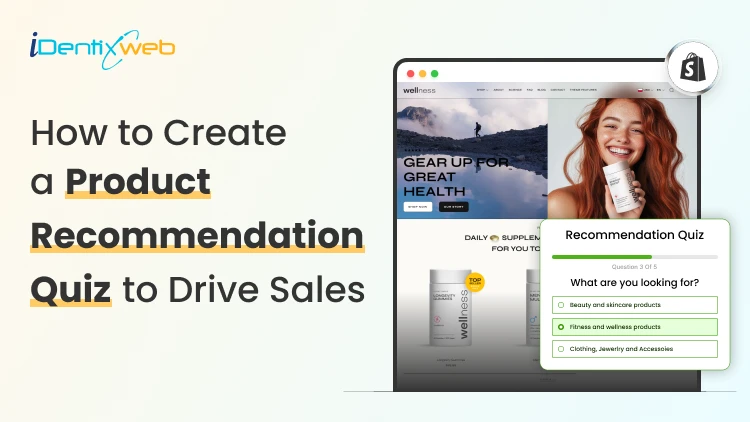
To set up a product recommendation quiz on Shopify, define the possible outcomes, connect each outcome to relevant products, and install a quiz-builder app. Create a set of 6 questions or less, map answers to recommendations, design a personalized results page, and embed the quiz through your theme editor. Your best-selling product isn't always the right product for every shopper. A generic collection page makes them do the work: scroll, compare, and choose. Product recommendation quiz setup for Shopify stores flips that around, turning a handful of questions into a personal shopping assistant that points each visitor straight to what fits them. Store owners who get real lift from a quiz treat it as a small system with a plan behind it, not just a widget bolted onto the homepage. What does a product recommendation quiz do for a Shopify store? A product recommendation quiz is a set of questions on your Shopify store that maps a shopper's answers to specific products. Below is a great example I came across of the skincare brand Ogee. Instead of browsing a full catalog, the shopper answers a few questions and lands on a personalized page. For stores with fewer products, or products where fit really matters (skin type, size, taste, budget, who the gift is for), a Shopify product quiz works great. Skincare, supplements, pet food, apparel sizing, fragrance, and gifting are the categories where this shows up most. My guide on how Shopify stores use gamification to win more customers covers spin-to-win offers, tiered rewards, and other mechanics that pair well with a product quiz. Plan before you build a product recommendation quiz The biggest setup mistake I see is starting with questions instead of outcomes. Before you write a single question, decide what result each shopper can land on and which products belong to each result. Here's the order that I follow: List your possible outcomes. A skincare store might use "Dry skin," "Oily skin," and "Combination skin." A gift shop might use "Gift for a partner," "Gift for a parent," and "Gift for a coworker." For each outcome, decide which products or collections should appear on the results page. Only after that's locked in, write the questions that sort shoppers into the right outcome. Four to eight outcomes is usually plenty. More than that and your product mapping gets hard to maintain as your catalog changes. Choosing a Shopify quiz app or quiz builder You don't need to hand-code a quiz. The Shopify App Store has a dedicated quiz app category. The right apps should let you connect answers to specific products without a developer. Here are four of the best Shopify product recommendation builder apps to consider. 1. Product Recommendation Quiz by RevenueHunt Best for: Growing brands that need advanced product matching and customer segmentation Key features: AI-powered quiz builder Conditional product recommendation logic Email capture and customer tagging Customizable product results pages GA4 and Meta Pixel integration Multi-language and multi-currency support Klaviyo, Omnisend, Zapier and webhook integrations Pricing: A free plan is available. Paid plans start at $39 per month. Shopify rating: 4.9/5 from 400+ reviews, as of July 2026. 2. Quiz Kit: Product Quiz Maker Best for: Established brands that want to test and optimize quiz performance Key features: AI-assisted quiz generation AI Shopping Assistant Drag-and-drop quiz editor A/B testing and funnel analytics Custom CSS and JavaScript control Email marketing and analytics integrations Pricing: Single paid plan available at $59/month. Shopify rating: 4.8/5 from 150+ reviews, as of July 2026. 3. Lantern AI Quiz Builder Best for: Merchants who want to launch an AI-generated quiz quickly Key features: Fast AI-generated quizzes Product matching and routine recommendations Logic jumps and advanced quiz flows Personalized discount incentives Dynamic quiz and results-page content A/B testing and conversion tracking Multi-language support More than 30 integrations Pricing: Single paid plan available at $39/month. Shopify rating: 4.9/5 from 100+ reviews, as of July 2026. 4. VQB: AI Product Quiz Builder Best for: Stores selling personalized, made-to-order or highly configurable products Key features: Product, variant and regimen recommendations Made-to-order product configuration AI generation and manual product tagging Dynamic and custom results pages Page, embedded and pop-up quiz formats A/B testing and drop-off analysis Klaviyo and Omnisend segmentation Support for 23 languages Pricing: The free plan is available. Paid plan starts at $30/month. Shopify rating: 5.0/5 from 50+ reviews, as of July 2026. Product recommendation quiz setup for Shopify stores: Step-by-step Step 1: Define the goal Pick one primary goal. I work with one of the three below Recommend products Capture leads, Segment shoppers into personas. Trying to do all three at once usually weakens all three, because your questions, design, and results page all pull in different directions depending on the goal. Step 2: Build your question flow Write one idea per question. Use text-based questions for facts like budget, image-based questions for style or taste. Keep the total under ten questions for a product recommendation quiz. Step 3: Link answers to products In your quiz app, open the product mapping or logic settings and connect each answer to products/collections. Set a hero recommendation plus one or two alternates per outcome, so the results page never forces a single option on every shopper who lands in that bucket. Step 4: Design the welcome and results pages Design your welcome page. This is where you state how long the quiz takes and what the shopper gets in return. For example, something like "2 minutes, 8 questions, your personalized routine." The results page is where the sale happens. Give the outcome a name instead of showing a plain product list. Add a line explaining why each product was picked, and put a direct add-to-cart button right on the recommendation. Step 5: Decide how and when you ask for email Most quiz apps let you place an email or SMS field before or after the results appear. Showing the results first and asking for email, in exchange for a discount, converts better. By the time you ask, the shopper has already seen the value. Step 6: Embed the quiz in your theme On Online Store 2.0 themes, most quiz apps install as an app embed or app block. This way you can drop the quiz into a dedicated page, or a banner on a collection page directly from the theme editor. Step 7: Test, then publish Take the quiz yourself, start to finish, on both desktop and mobile before it goes live. Check that every answer path leads to a connected product and confirm the email or SMS integration is working. Where to place your quiz in your Shopify quiz funnel In my experience, these places consistently pull the most quiz-takers: Homepage hero or banner, especially for a limited window around launch. Main navigation link, so returning visitors can find it any time they want a fresh recommendation. Exit-intent popup on collection pages, aimed at browsers who look stuck. Product page banner, something like "Not sure which one fits? Take the 2-minute quiz." Dedicated landing page for paid social traffic. Quizzes tend to perform well as interactive and creative because they invite a click instead of asking for one. Email to your existing list, both to re-engage subscribers and to refresh their preference data. Real Shopify product quiz examples worth studying Function of Beauty I love this product recommendation quiz because it directly tells me how many steps I need to finish the quiz. The cosmetics industry is one of the best places to add a quiz, and The Function of Beauty takes full advantage of it. Josh Cellers What I love about this is that Josh Cellers gives the customers a tasting experience in the form of a quiz. I also like its honest questions regarding everyday routines. This is perfect to build customer relationships. Beardman The first thing I noticed before taking this quiz was that it takes 2 minutes. People are more likely to take the quiz if they know its time limit. Their results page with recommended products is also fantastic. This is a great store for merchants to study. The Sill Much of The Sill’s success depends on its short quiz completion time. The Sill’s quiz asked me just 3 questions before recommending products to me. According to Typeform’s survey, quizzes with fewer than 6 questions had the best completion rate. Jones Road Beauty Complexion quizzes are popular among beauty brands. Jones Road Beauty’s product recommendation quiz is one of the best examples in this industry. One piece of advice. I would recommend using picture choices here because asking customers about their skin complexion is difficult. Turn product discovery into a personalized shopping experience A product recommendation quiz can turn a common shopping flow into a clear, personalized buying journey. Start with defined outcomes, keep the questions focused, and map every answer to relevant products. Create a results page that explains why each recommendation fits the shopper. A well-planned Shopify product quiz gives you valuable preference data and creates more opportunities to convert visitors into customers. FAQs 1. Can you make a quiz on Shopify? Yes, you can create a quiz on Shopify using a quiz-builder app or a custom-developed solution. A dedicated quiz app is best for using conditional logic, matching answers with products, displaying personalized recommendations and adding suggested items to the cart. 2. How to set up a product recommendation quiz for Shopify stores? To set up a product recommendations quiz, install a quiz app from the Shopify App Store. Build your quiz inside the app, then embed it as an app block or app embed through your theme editor. Most Online Store 2.0 themes support this without custom code. 3. Which quiz platform works best for Shopify stores? RevenueHunt Product Recommendation Quiz is a strong choice for most Shopify stores. It offers a no-code and AI-assisted builder, supports personalized product recommendations and includes a free plan. Octane AI is more suitable for larger DTC brands that need advanced AI features, image-based analysis, personalized result content and sophisticated customer-data workflows.
9 Min • 30 June 2026
How to Offer a Shopify Discount on Shipping Without Hurting Profit Margins
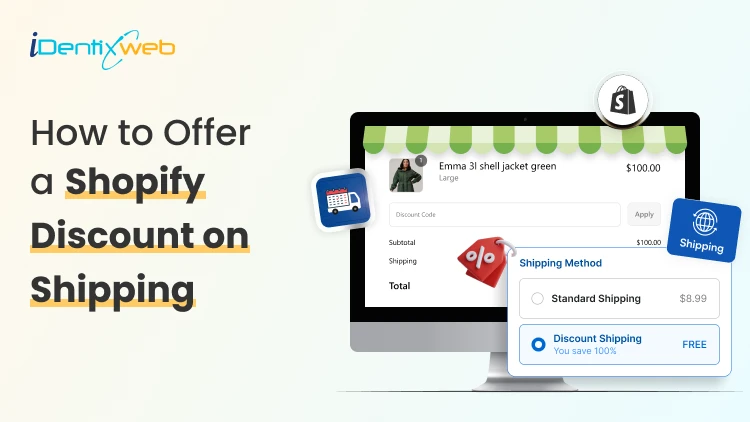
Shipping costs can make or break an online purchase. A customer may love your product, add it to the cart, and reach checkout with full buying intent. But when the final shipping charge feels too high, that order can disappear in seconds. That is why many merchants use a Shopify discount on shipping to reduce checkout friction and encourage customers to complete their purchase. The problem is simple: shipping is not actually free. If you reduce or remove the customer’s shipping cost without planning the numbers, the cost comes out of your profit. In this guide, we will cover how to offer a Shopify discount on shipping without hurting your profit margins, how to calculate the right threshold, which discount methods to use, and how to make shipping rates work better for your store. Why Shipping Discounts Matter for Shopify Stores Shipping is one of the most sensitive parts of the buying journey. Customers often compare the final checkout total, not just the product price. Even a small unexpected shipping fee can make the order feel less valuable. A shipping discount helps in three main ways: It reduces checkout hesitation. It encourages customers to add more products to qualify. It improves the perceived value of the order. The goal is not simply to make shipping cheaper. The goal is to make the customer feel rewarded while your store still protects its margin. What Is a Shopify Discount on Shipping? A Shopify discount on shipping is an offer that reduces or removes the shipping cost for eligible customers. In Shopify, this is commonly done through free shipping discounts, automatic discounts, shipping profiles, conditional shipping rates, or third-party apps. However, not every store should offer the same shipping discount. A fashion store selling lightweight products may have more flexibility than a furniture store shipping heavy items. A local bakery may need different rates for same-day delivery, weekend delivery, store pickup, and standard shipping. That is why the best shipping discount strategy starts with cost control, not just marketing. Best Ways to Offer Shipping Discounts on Shopify There are several ways to offer shipping discounts. The right option depends on your product type, margins, average order value, and fulfillment setup. 1. Free Shipping Above a Minimum Order Value This is one of the safest and most popular methods. Instead of offering free shipping on every order, set a minimum cart value. For example: Free shipping above ₹1,999 Free shipping above ₹2,499 for metro cities Free shipping above ₹3,999 for bulky products A simple way to calculate your threshold is: Free shipping threshold = average order value + average shipping cost + desired profit buffer If your current AOV is ₹1,500 and average shipping cost is ₹150, you might test a threshold of ₹1,999 or ₹2,000. This gives customers a clear reason to add one more product. 2. Product-Specific Shipping Discounts Some products are easier to ship than others. If you sell both lightweight and heavy products, do not use the same shipping rule for everything. You can offer free or discounted shipping only on: Lightweight products High-margin products Slow-moving inventory Product bundles Digital-plus-physical combinations Selected collections This keeps your shipping offer attractive without applying it to products that are expensive to deliver. You can try Delivery Date & Pickup Stellar app to offer shipping options on specific products. 3. Discounted Flat Shipping Rate Not every store can afford free shipping. In that case, a discounted flat rate can work better. For example: ₹49 shipping on all prepaid orders ₹99 shipping for orders below ₹1,000 ₹149 shipping for remote locations ₹0 store pickup This helps customers feel that the shipping cost is predictable. It also avoids the margin risk of free shipping on small orders. A discounted shopify shipping rate is especially useful when your product margins are moderate but you still want to reduce checkout friction. 4. Free Shipping Discount Code A discount code gives you more control. You can share it with selected customers, email subscribers, first-time buyers, or seasonal campaign traffic. For example: FREESHIP SHIPFREE2000 WEEKENDSHIP VIPSHIP This method works well when you want to track campaign performance. You can see how many customers used the code and whether it improved conversions. However, discount codes also have one drawback: customers need to remember and apply them. If they forget, they may feel disappointed at checkout. 5. Automatic Free Shipping Discount An automatic discount applies when the customer meets your conditions. This creates a smoother checkout experience because customers do not need to enter a code manually. For example, when a customer’s cart reaches ₹2,000, free shipping can apply automatically. This is useful for sitewide offers, festive campaigns, and AOV-based shipping rewards. Just make sure the conditions protect your profit margin. 6. Location-Based Shipping Discounts Shipping cost changes by location. Nearby zones may be cheaper, while remote or international zones may cost more. Instead of one blanket offer, create location-based rules. For example: Free local delivery within 5 km Discounted delivery for nearby cities Standard paid shipping for other regions No free shipping for remote zones unless cart value is high This is a practical way to stop shipping discounts from eating into your margin. Margin-Friendly Shipping Discount Strategies A profitable shipping discount is not just about setup. It is about strategy. Offer Free Shipping Only on Prepaid Orders COD orders often have higher risk due to returns, failed deliveries, and extra handling. If your store supports prepaid orders, offer better shipping benefits to prepaid customers. For example: Free shipping on prepaid orders above ₹1,999 ₹99 shipping on COD orders Extra COD fee for low-value orders This encourages prepaid payments and reduces fulfillment risk. Use Bundles to Increase Cart Value Shipping discounts work better when customers buy more in one order. Product bundles help increase AOV and reduce per-item shipping cost. For example: Buy 2 skincare products and get discounted shipping Buy a complete meal kit and get free delivery Buy 3 accessories and unlock free shipping This works because the shipping cost may not increase much with one or two extra lightweight products, but your revenue and margin improve. Give Store Pickup as the Best Discount If you have a physical store, warehouse, bakery, florist shop, or local pickup point, store pickup can be your most profitable shipping discount. You can offer: Free pickup Faster pickup slots Pickup-only discounts No delivery charge for nearby customers who collect orders This improves customer convenience without adding delivery cost. Use Shipping Discounts for Loyal Customers Not every customer needs the same offer. You can reserve better shipping discounts for repeat buyers, VIP customers, or members. For example: VIP customers get free shipping above ₹1,499 New customers get free shipping above ₹2,499 Wholesale customers get special shipping rules This protects your margin while rewarding customers with higher lifetime value. Avoid Free Shipping on Low-Margin Products Some products simply cannot support free shipping. These may include bulky, fragile, heavy, low-margin, or remote-shipping products. Instead of discounting shipping on these items, use clear messaging: “Shipping calculated based on product size” “Special handling charges apply” “Free pickup available” “Discounted delivery available on selected dates” Clear communication is better than offering a discount that makes the order unprofitable. Common Mistakes to Avoid Setting the Threshold Too Low If your free shipping threshold is too close to your current AOV, customers may qualify without adding more products. That means you are giving away shipping without increasing revenue. Ignoring Product Weight Two orders with the same cart value can have very different shipping costs. A ₹2,000 order of small accessories may be profitable, while a ₹2,000 order of heavy items may not. Offering Free Shipping Everywhere Remote zones, international orders, and urgent deliveries can be expensive. Keep your shipping discount limited to profitable locations and methods. Combining Too Many Discounts A product discount plus an order discount plus free shipping can quickly reduce your profit. Before stacking offers, calculate the final margin. Not Showing the Offer Early If customers discover free shipping only at checkout, you lose its full impact. Promote the offer on product pages, cart drawer, announcement bar, and checkout. For example: “Add ₹350 more to unlock free shipping.” This encourages customers to increase cart value before they reach checkout. Final Thoughts A Shopify discount on shipping can be one of the most effective ways to reduce checkout friction and increase average order value. But it should never be treated as a random offer. The safest strategy is to start with your real shipping cost, calculate a profitable threshold, limit discounts by product or location, and use delivery-date-based pricing when needed. If you manage local delivery, pickup, same-day delivery, or scheduled shipping, using a tool like Stellar Delivery Date & Pickup can give you better control over shipping charges based on delivery date, time, and fulfillment method. Shipping discounts should not hurt your margins. When planned correctly, they can help customers feel rewarded while your store keeps every order profitable. FAQs 1. What is the best way to offer a Shopify Discount on Shipping? The best way is to set a minimum order value that covers your shipping cost and protects your profit margin. For many stores, free shipping above a specific cart value works better than free shipping on every order. 2. Can I offer free shipping only for selected products? Yes, you can use shipping profiles or product-based rules to offer free shipping only for selected products or collections. This is useful for lightweight, high-margin, or promotional products. 3. How do I protect profit margins while offering shipping discounts? Calculate your real shipping cost, set a profitable threshold, avoid low-margin products, limit remote zones, and track profit per order after launch. Do not judge the offer only by sales. 4. Is free shipping better than discounted shipping? Not always. Free shipping is attractive, but discounted flat shipping can be safer for stores with tight margins. A ₹49 or ₹99 shipping rate can still reduce checkout friction without removing the shipping charge completely. 5. Can I charge different shipping rates by delivery date? Yes, with the right delivery date and pickup app, you can charge different rates based on the selected delivery date. This is useful for same-day delivery, weekend delivery, holidays, and store pickup. 6. How many times should I test my shipping discount strategy? Test it regularly, especially during festive seasons, sale periods, shipping rate changes, and changes in product pricing. Review conversion rate, AOV, and profit per order before making it permanent.

Bhavesha Ghatode
October 1, 2024
3346 Views

Bhavesha Ghatode
September 20, 2024
2972 Views

Bhavesha Ghatode
August 13, 2024
3187 Views
Bhavesha Ghatode
August 2, 2024
3473 Views
Bhavesha Ghatode
July 18, 2024
3260 Views

Bhavesha Ghatode
July 12, 2024
3562 Views

Bhavesha Ghatode
July 2, 2024
3697 Views

Bhavesha Ghatode
June 20, 2024
3980 Views

Bhavesha Ghatode
May 31, 2024
4544 Views
Bhavesha Ghatode
July 28, 2025
1106 Views

Bhavesha Ghatode
July 18, 2025
1269 Views
Bhavesha Ghatode
August 12, 2025
965 Views