




You make things by hand. Now you want a place to sell them where the brand, the customers, and the profit stay with you. Shopify for handmade goods does that well, whether you pour soy candles or stitch leather wallets.
As a Shopify agency, we’ve worked with merchants who now run successful businesses. Many of them started by selling handmade goods from home. Shopify even has a dedicated page for selling handcrafts.
But is it worth it? For most makers who want their own brand and customer list, yes. Here’s why, and how to set it up.
Can You Sell Handmade Items on Shopify?
Yes. Shopify has no rule that limits handmade products. You can sell one-of-a-kind pieces, small batches, personalized orders, craft kits, and even digital patterns from the same store.
Shopify is a store builder, so there's no handmade review process at all. You can mix handmade pieces with supplies or printed merch if it fits your brand.
A few limits still apply. Shopify's Acceptable Use Policy bans certain products in every store. Some handmade categories also carry their own rules where you sell.
Cosmetics, candles, food, and children's items often need specific labels, safety testing, or permits. Check your local rules before launch.
Our guide to laws and regulations every Shopify seller should know is a good starting checklist.
Why Shopify for Handmade Goods Works in 2026
Shopify works for handmade goods because you keep control of your brand, your margins, and your buyers. You pay a monthly plan and card processing. Use Shopify Payments, and there's no extra transaction fee on top.
Demand is there too. IMARC Group puts the US handicrafts market at USD 372.05 billion in 2026. They credit part of that growth to shoppers who want unique, handmade, and artisan products.
Here's what makes the platform practical for makers right now:
- Shopify now allows up to 2,048 variants per product for every merchant. Size, color, finish, and engraving combos can all live on one product page.
- Shopify POS lets you sell at craft fairs and pop-up markets using the same stock count as your website.
- Since March 2026, Shopify's Agentic Storefronts can show products from eligible stores inside ChatGPT, Microsoft Copilot, and Google's AI Mode. You manage it all from your Shopify admin.
- Every buyer's email belongs to you. Repeat orders don't depend on a marketplace algorithm.
Does Shopify Make Products for You?
No. Shopify doesn't make, stock, or ship products. It runs your storefront, checkout, payments, and orders. Making the product is on you or a production partner you choose.
You have three practical routes:
- Make everything yourself. Every piece is truly handmade, and your brand story rests on it.
- Add print on demand for extras. Apps like Printify and Printful print and ship items such as totes or mugs after an order comes in. Shopify itself doesn't print or ship them. Keep these separate from your handmade line so buyers know what they're getting.
- Stock other brands with Shopify Collective. If you're eligible, you can sell products from other Shopify brands. Someone else still makes them.
A merchant who wanted to open a handmade Shopify store
A year ago, a merchant came to us who cut and stitched leather wallets by hand in a spare room after work. He'd sold a few to friends and had a small Etsy shop.
His first question on our call was simple: "Does Shopify make the wallets, or do I?"

We told him Shopify would run the store and he'd keep doing the making. Next, we looked at his plan. He wanted to launch with 30 designs in six leather colors. Making 180 combinations by hand would have meant months of work before his first sale.
So we suggested a leaner launch:
- Five core designs.
- Initials embossing as a paid option on each product page.
- A clear "made to order, ships in 5 to 7 days" note near the Add to Cart button.
We kept his Etsy shop open for discovery and connected it to Shopify with a sync app. For the branded totes he wanted at local markets, we pointed him to a print-on-demand partner.
His launch was smaller than he first pictured. But it was also a store he could run alone, with promises he could keep to his customers.
How to Start Selling Handmade Items on Shopify
Start small, price for your time, and build product pages that show how each piece is made. The six steps below follow the order we use when we set up a handmade store for a client.
1. Pick a focused first collection
Launch with a handful of pieces you can make well and repeat. A tight catalog is easier to photograph, price, and restock. Add new designs once you know what sells.
2. Price for your time, not just materials
Add up materials, packaging, and your hours at a fair hourly rate. On top of that, add overhead, platform fees, and your profit margin.
Many new makers skip the labor time and end up working for free. If the final price feels high for the customers, your photos and story need to show why it's worth it.
3. Choose your Shopify plan
Most makers start on the Basic plan. In the US, it's $29 a month billed yearly or $39 billed monthly, and prices vary by country.
Upgrade later when your sales justify lower card rates. Read our guide to Shopify pricing plans, which breaks down each tier.
4. Pick a theme built for a craft store
A Shopify craft store needs room for stories, close-up photos, and process shots.
Shopify's free Craft theme was made for this, with sections designed to bring craftsmanship to life.
Here's our walkthrough of the Shopify Craft theme. Horizon, Shopify's newer free theme, is a solid pick if you want a more modern base.
5. Write product pages that show the making
Handmade buyers want to see the hands behind the product. Show the process, the materials, the exact size, and care instructions. Say upfront that each piece varies slightly. Natural light and a plain background go a long way.
Use the words buyers actually search for in product titles and descriptions. "Hand-thrown ceramic mug" is much better than "Homemade Mug" every time.
Our Shopify SEO guide walks through the rest.
6. Set up personalization and made-to-order
Add custom text fields, swatches, or file uploads so buyers can personalize their order. Our guide on adding product personalization in Shopify compares Shopify's own options with apps.
If you make in batches, set up preorders on Shopify and show the production time on every product page. Adding clear lead times stops most "where's my order?" emails from customers.
One last thing before launch. Weigh each item packed, not bare, so your shipping rates come out right. A handwritten thank-you note costs almost nothing and makes the order feel personal.
Shopify vs Etsy for Handmade Sellers
Etsy gives you instant traffic. Shopify gives you ownership. Most growing makers end up using both.
Etsy's reach is real. The marketplace reported about 88 million active buyers in its Q3 2026 shareholder letter. You pay for that reach on every order, though. In the US, Etsy charges a 6.5% transaction fee, a $0.20 listing fee, and payment processing of 3% plus $0.25.
Shopify and Etsy Fee at a Glance
| Fee | Etsy | Shopify (Basic plan) |
| Monthly plan | None | $29 billed yearly or $39 monthly |
| Listing fee | $0.20 per listing | None |
| Transaction fee | 6.5% of the order total | None with Shopify Payments |
| Payment processing | 3% plus $0.25 | Card rate set by your plan |
On Shopify, you pay a plan fee plus card processing. The tradeoff is that you bring your own traffic through search, social, email, and in-person sales.
Read more about the Etsy vs. Shopify comparison to choose between the two.
Our guide on how to integrate Etsy with Shopify also covers how to sync both platforms.
3 Handmade Shopify Stores to Learn From
These three handmade Shopify stores sell very different crafts, and each one does something worth copying.
Popov Leather: handmade leather goods
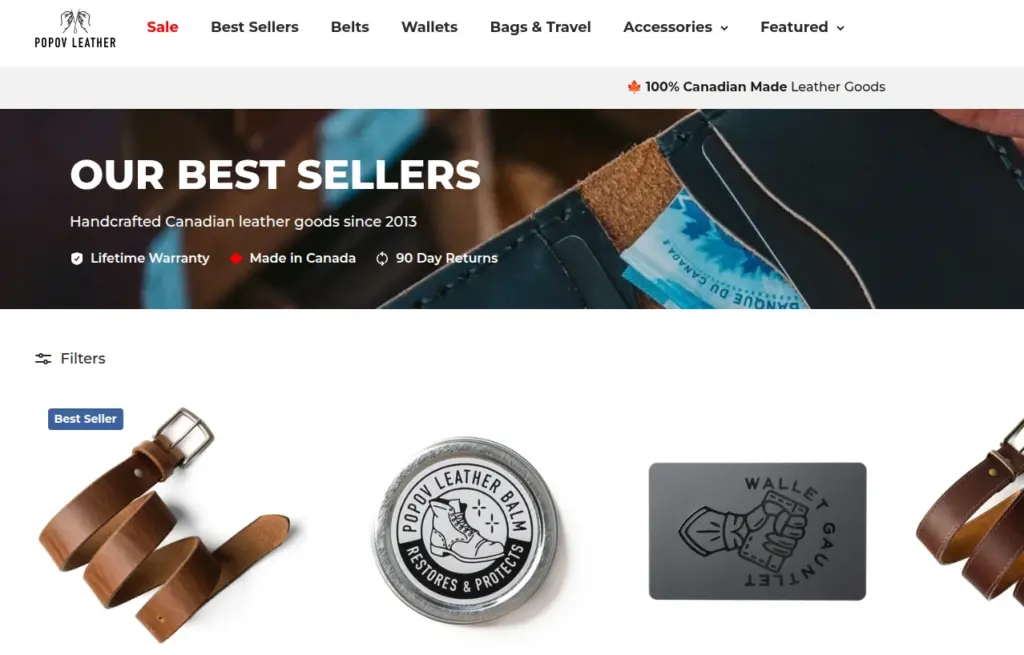
Popov Leather makes belts, wallets, and bags by hand in its workshop in Nelson, British Columbia. It started as a basement hobby with early sales on Etsy.
Today, a full workshop team sells through its own Shopify store. Most wallets can be laser-engraved with a name or initials. Every piece carries a lifetime guarantee, and customer photo reviews back up the quality.
East Fork: handmade pottery
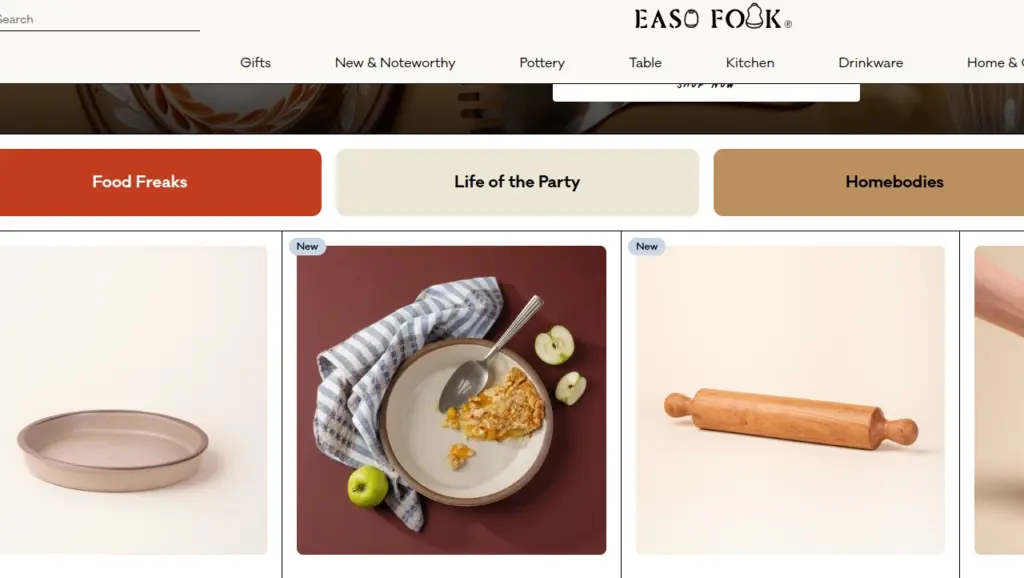
East Fork makes pottery in Asheville, North Carolina, with regional materials. Their pottery is made by humans and reduction-fired in Asheville.
Their product pages help buyers know exactly where each item comes from. The company always sells its standard colors but releases limited-edition seasonal colors to keep customers coming back for more.
Pura Vida Bracelets: artisan-made jewelry
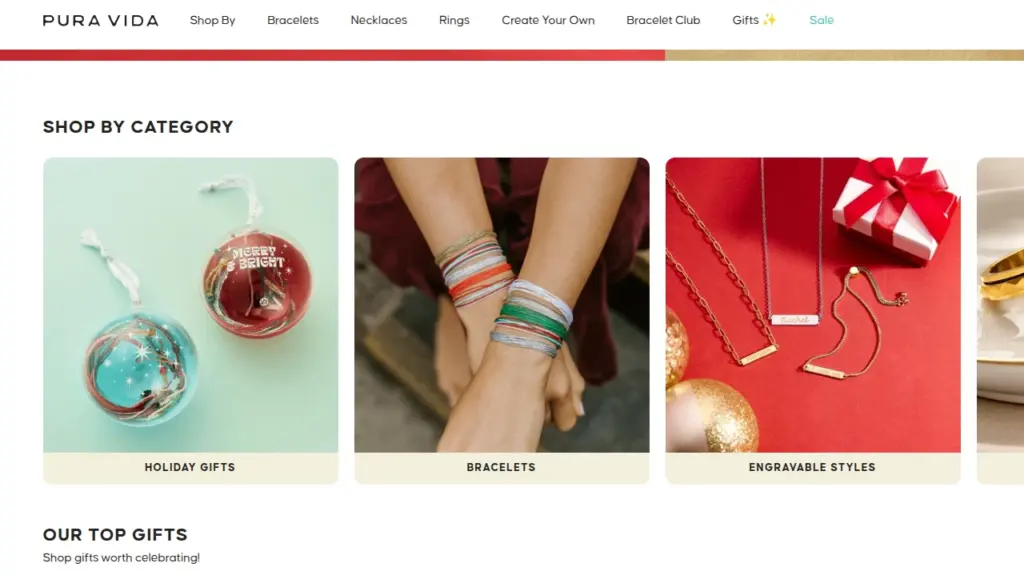
Pura Vida Bracelets began in 2010, when two friends met bracelet makers in Costa Rica and chose to partner with them. Handmade string bracelets are still the heart of the brand, which moved from Magento to Shopify Plus as it grew.
The strategy that works for them is the monthly Bracelet Club subscription, which turns one-time buyers into repeat customers.
Getting Your Handmade Business Live on Shopify
Shopify for handmade goods works best when you treat your store as a home base. Etsy, markets, and social media can feed it, but your store holds the brand and the customer list. Start with a small collection, price for your time, and let your product pages tell the story.
Rather spend your hours making than configuring?
Talk to our experts who can handle the Shopify store setup while you focus on the craft.
FAQs
1. Is Shopify good for handmade goods?
Yes. Shopify suits makers who want their own brand, customer data, and pricing control. It doesn't bring built-in traffic like Etsy, so plan how you'll market the store from day one.
2. How much does it cost to start a handmade Shopify store?
The Basic plan costs $29 a month billed yearly or $39 monthly in the US. Also budget for a domain, card processing on each sale, packaging, and any paid apps you add.
3. Can I sell on Shopify and Etsy at the same time?
Yes, and many makers do. Use a third-party sync app to keep inventory and orders aligned, since Shopify's Marketplace Connect no longer takes new Etsy connections.
4. Do I need a business license to sell handmade items on Shopify?
It depends on where you live and what you sell. Shopify lets individuals open a store, but your city, state, or country may require a license or tax registration. Food, cosmetics, and children's products usually have extra rules.
5. Can you sell handmade items on Shopify?
Yes. Shopify has no rules that limit handmade products. You can sell one-of-a-kind pieces, small batches, personalized orders, and craft kits from your own store. There’s no handmade review process like the one on Etsy, but it's always better to check your local rules before you launch.
6. Does Shopify make products for you?
No. Shopify runs your storefront, checkout, payments, and orders. It doesn’t make, stock, or ship products. As a handmade seller, you make your own pieces. For extras like printed totes or mugs, a print-on-demand app such as Printify or Printful can make and ship them after each order.



About the author
Vineet Nair
Vineet is an experienced content strategist with expertise in the ecommerce domain and a keen interest in Shopify. He aims to help Shopify merchants thrive in this competitive environment with technical solutions and thoughtfully structured content.