

Ecommerce
Gather knowledge about the latest insights, updates, tips, and tricks in the Ecommerce industry.
5 Min • 29 April 2026
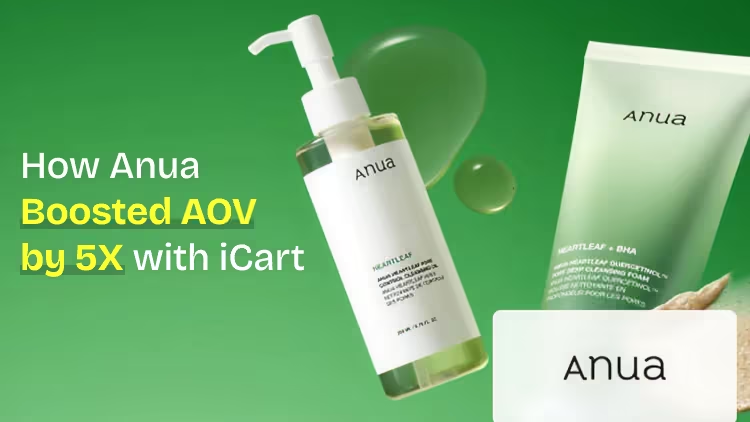
How Anua Unlocked 5X AOV Growth with iCart’s Smart Cart Features
delivery customization Challenges Solutions drive results Scale business delivery customization Challenges Solutions drive results Scale business delivery customization Challenges Solutions drive results Scale business delivery customization Challenges Solutions drive results Scale business Anua is a globally recognized Korean skincare brand known for its minimalist philosophy and focus on gentle yet effective formulations. Built on the idea of simplifying skincare routines, Anua develops products that deliver visible results while avoiding harsh or irritating components, making them suitable for sensitive skin types. Initially using a traditional full cart experience, Anua transitioned to iCart’s side cart solution in August 2025, to create a more seamless and engaging shopping journey. This shift allowed customers to easily explore complementary skincare products without disrupting their browsing flow, making it more intuitive to discover items that fit into a complete routine. By surfacing relevant recommendations directly within the cart, the brand enhanced product visibility across its range. Challenges Before implementing iCart’s side cart solution, Anua faced limitations with their existing full cart experience, which created friction in the customer journey. The traditional cart setup redirected users away from product pages, interrupting their browsing flow and reducing opportunities to explore additional products. As a skincare brand built around routines rather than single-item purchases, this made it difficult to effectively showcase complementary products and encourage customers to build complete regimens. Additionally, the lack of in-cart personalization and strategic upsell opportunities meant that customers were often unaware of related products that could enhance their skincare results. This limited the brand’s ability to increase average order value (AOV) and fully leverage its diverse product range. Anua needed a more dynamic and intuitive cart experience that could seamlessly introduce relevant recommendations while maintaining a smooth and engaging shopping journey. ❌ Cart Value Barriers Low average order value (AOV) due to single-item focus Most customers completed purchases with one primary product instead of building multi-step routines. Cart abandonment near shipping thresholds Customers were not clearly informed or motivated to reach free shipping or discount thresholds. Missed savings opportunities Customers were unaware of potential value in purchasing bundled routines or multiple complementary products. ❌ Absence of Progress-Based Incentives No free shipping or discount progress bar Customers were not motivated to increase their cart value due to lack of visible incentives. Missing tiered rewards system There were no structured milestones (e.g., “Spend more to unlock offers”), reducing upsell opportunities. ❌ Ineffective Cart UI/UX (Pre-Side Cart) Full-page cart disrupted shopping flowCustomers had to leave their browsing journey, increasing friction and drop-offs. No quick add/remove functionality Users couldn’t easily modify their cart or add suggested products without navigating away. Solution To overcome these challenges, Anua implemented iCart’s side cart solution to transform their traditional cart into a high-converting, interactive experience. By replacing the full-page cart with a seamless side cart, the brand ensured that customers could continue browsing while viewing their cart, significantly reducing friction in the shopping journey. Additionally, features like product recommendations & progress bars for free shipping and discounts motivated customers to increase their cart value. By combining personalization, incentive-driven messaging, and a user-friendly interface, Anua successfully turned their cart into a powerful revenue-driving touchpoint rather than just a checkout step. To maximize their cart effectiveness, they implemented two powerful features: ✅ Progress Bar with Multi-Reward Incentives Implemented a tiered progress bar to encourage higher cart value Customers are guided with a clear message like “Add $3.10 to unlock secret offer,” motivating them to continue adding products. Generated over $5M+ in revenue through incentive-driven cart progression Used product-based rewards to align with customer intent Instead of generic discounts, Anua incentivized purchases with relevant skincare items like Dark Spot Pads and mini serums. Built visual motivation for routine expansion As customers add products, they can clearly track progress toward unlocking multiple rewards, encouraging them to build a complete skincare routine. ✅ Product Recommendations Implemented “Frequently Bought Together” recommendations Customers adding a single product (e.g., toner) are shown complementary items like serums, moisturizers, or pads to complete their routine. Generated over 275K revenue through in-cart recommendations Encouraged full skincare regimen building Instead of isolated purchases, the cart suggests step-by-step product combinations aligned with common skincare routines. Increased product discovery at the final stage By surfacing relevant items directly in the cart, Anua ensured customers explore more of their catalog without leaving the checkout flow. Results Achieved in Last 180 Days 22932 Total Store Orders 45101 Total iCart Orders 5X iCart Generated AOV 65.70% Upsell Affected Conversion Rate These improvements reflect a clear shift in customer behavior on Anua’s store. Cart abandonment reduced as shoppers discovered complementary skincare products and felt encouraged to build complete routines. Engagement also increased, with customers interacting more with in-cart recommendations and exploring relevant product pairings. Results & Impact And...Results is Our Main Clarification By implementing iCart’s cart drawer, product recommendations, and progress bar, Anua transformed its cart into a high-performing conversion touchpoint. Shopping Experience Enhancement The improved cart experience encouraged customers to discover complementary products and understand the value of sustainable beauty routines. For instance, the clear presentation of subscription savings alongside one-time purchase options helped customers make more informed decisions about their long-term hair care needs. As Anua continues to optimize its cart experience, the brand is closely monitoring: Routine-based purchasing behavior - tracking how customers move from single items to multi-step regimens Engagement with in-cart recommendations - measuring interaction with suggested products Cart value progression - analyzing how incentives influence higher spending [related_cases_slider] Ready to Write Your Success Story? Try icart App Join successful businesses like Anua and Master your delivery scheduling Delight customers with precise timing Grow your special occasion orders Expand your delivery reach
Read Blog
8 Min • 3 July 2026
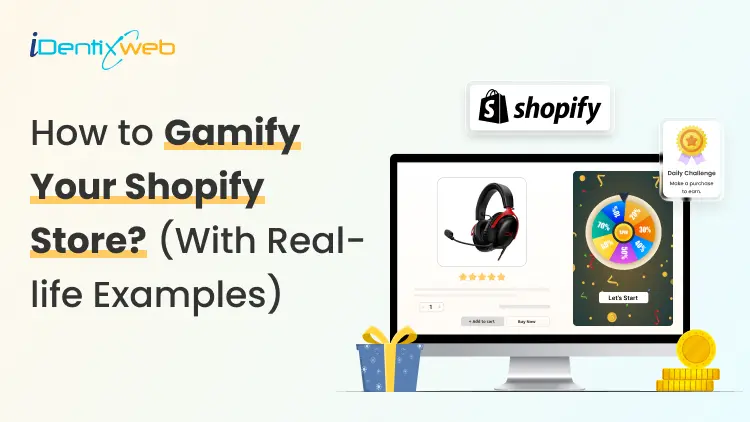
How Do Shopify Stores Use Gamification to Win More Customers
Shoppers in 2026 get overwhelmed by discount emails and static pop-ups. That also includes me 😶 Most click away without a second thought. But some Shopify stores are doing something different… They are turning the shopping experience into a game, and buyers keep coming back because of it. Understanding how Shopify stores use gamification is the first step to building a store that converts better and retains customers longer. This blog is to help you understand the power of gamification with real-life Shopify store gamification examples that I have researched. I will also educate you on the best Shopify gamification apps and pop up builders that I use in stores. What is gamification in a Shopify store? Gamification means adding game mechanics to your store experience so shoppers feel motivated to act, earn, and return. Points, progress bars, spin wheels, quizzes, badges, and tiered challenges are all gamification tools. The goal is to make every interaction feel rewarding, so shoppers buy more and come back. The market backs this up. In ecommerce specifically, gamified popups convert between 8-15% of visitors, while standard discount popups convert between 3-5%. Why gamification works especially well in 2026 Third-party cookies are mostly gone Most browsers block them by default, so the behavioral data is difficult to get. Gamification, especially quizzes and interactive sign-up flows, gives you first-party and zero-party data your competitors cannot buy. When a shopper answers four questions in a product finder quiz, you learn their preferences directly. Shoppers are desensitized to static offers A flat "15% off for your email" discount barely gets clicks anymore. A spin wheel where the prize is unknown? This will immediately get clicks. This is the same principle that makes slot machines in Vegas compelling. Not knowing the reward is often more motivating than a guaranteed one. Exit popups fail on mobile Standard exit-intent popups cannot fire on mobile because there is no cursor to track. Stores that use gamified teasers, small interactive elements that sit on the screen until tapped, capture mobile leads easily. How do Shopify stores use gamification: 5 proven examples 1. Gamified popups: Spin wheels, scratch cards, & mystery discount A gamified popup puts a game at the first moment a new visitor lands. Instead of showing a static form, you show a spin wheel or scratch card that requires a small interaction to reveal the reward. As per Sleeknote's report, spin-to-win popups averaged 8.67% conversion compared to 3.70% for standard popups. In my experience, scratch cards and mystery reveals work especially well for premium or minimalist brands. The shopper swipes or clicks to reveal their offer, and the earned reward feels more valuable because they worked for it. Fishwife uses an awesome mystery discount popup. Checkout my guide to adding a pop-up on Shopify for a full breakdown of how to configure a pop-up on your store. 2. Cart drawer progress bars and tiered rewards Gamification does not stop at the pop-up. Inside the cart, progress bars are one of the highest-ROI mechanics available. A cart drawer progress bar shows shoppers exactly how close they are to a reward: "You are $12 away from free shipping". Shoppers see a clear goal and feel the pull toward the finish line. A three-tier reward system works well for most stores. Each tier targets a different shopper type without squeezing margins. Anua, the Shopify skincare brand, uses a great three-tier reward system in their cart. This helps to increase AOV because shoppers always see the next reward, and most feel close enough to hit it with one extra item. Turn Your Shopify Cart Into a Mini Reward System Most carts only show products... iCart can show revenue-boosting offers. Try Free Till 100 Orders If you want to gamify the cart experience, iCart helps you add progress bars, free shipping goals, product upsells, free gifts, and cart-based offers inside the cart drawer. For a full setup guide, check out my guide on Shopify cart drawer gamification and tiered rewards that lift AOV. 3. Product discovery quizzes Quizzes are most valuable for stores with complex catalogs. A shopper who completes a five-question quiz about their lifestyle, budget, and preferences hands you a detailed preference profile you can use across every future channel: email, retargeting, and on-site recommendations. For Shopify DTC brands and beauty, skincare, or supplement stores, zero-party data is now essential. Without it, personalization relies on purchase history alone. With it, you know what shoppers want before they buy the first time. 4. Loyalty program tiers & badges Most people do not realize that loyalty programs are the most common form of gamification. Points, tiers, and badges keep shoppers engaged between purchases. A flat points program with no tier progression earns 1.8 times less ROI than one with tiers. Also, tier progression feels like leveling up. Shoppers close to Gold status find a way to qualify, the same way gamers push for a new rank. Starbucks' rewards system is a great example of a loyalty program used to gamify your store. For stores just getting started, my guide to setting up the best Shopify loyalty program walks through point structures and tier naming. 5. Countdown timers and time-based challenges Countdown timers and time-limited challenges create urgency. For example, "Buy in the next 2 hours for 20% off" gives shoppers a hard deadline. A timer with 90 minutes on the clock stops a browser mid-scroll in a way that a permanent banner never does. Countdown timers placed on cart pages are especially effective at reducing abandonment since the shopper has already signaled intent. See my full breakdown on the ‘While Supplies Last’ strategy for examples and tips to create urgency. Best popup builder/ Shopify gamification apps in 2026 Popup BuilderKey Gamification FeaturesWhy Choose ItSleeknoteSpin-to-win, scratch cards, seasonal calendars, daily offers, multi-step quizzesA strong all-around option for stores that want multiple gamified popup formats in one platform. It also bills by visitor instead of page view, so repeat shoppers do not unnecessarily increase costs.OptiMonkPersonalized gamified offers based on cart value, product categories, and customer tagsIdeal for Shopify stores that want offers triggered by real customer and store data, not just basic page behavior.OdicciInteractive quizzes, preference-based templates, data capture for email personalizationA good fit if your main goal is collecting shopper preferences and using that data for Klaviyo segmentation and personalization.WheelioSpin-to-win popups, Klaviyo integration, Mailchimp integrationBest for stores that want a quick, low-cost spin wheel setup without needing a full gamification platform. To wrap it up: Which gamification should I go with? Gamification mechanicWorks best forSpin wheelsFashion, beauty, lifestyle, and home goods stores with discount-driven shoppers. QuizzesStores with complex catalogs or health and wellness products where personalization drives purchases. Progress barsVirtually every store selling physical products. They operate in every session without any explicit interaction, so they never feel intrusive to shoppers who dislike pop-ups.Tiered loyaltyHigh-frequency stores selling coffee, supplements, pet food, or skincare see the strongest engagement because shoppers earn points fast enough to feel genuinely rewarded.Challenges and countdownsChallenges and countdowns work as a layer on top of any other mechanic. Run them around product launches, Black Friday, or slow-sales windows that need a revenue push. FAQs 1. What is gamification in a Shopify store? Gamification in a Shopify store means adding game mechanics to the shopping experience. Shopify store gamification examples include spin-to-win popups, cart progress bars, product discovery quizzes, tiered loyalty programs, and time-limited referral challenges. 2. What is the difference between gamified popups and standard popups? Standard popups usually ask shoppers to sign up or claim a discount. Gamified popups add interaction, such as spin wheels, quizzes, scratch cards, or reward unlocks, which makes the offer feel more engaging and will increase email sign-ups. 3. What are the best Shopify gamification apps in 2026? The best Shopify gamification apps in 2026 include Sleeknote for the strongest all-around popup and gamification suite, OptiMonk for on-site personalization, Odicci for quiz-based zero-party data capture, and Wheelio for a single-purpose spin wheel. 4. What is the best popup builder for gamification on Shopify in 2026? The best popup builder for gamification on Shopify in 2026 is Sleeknote for most mid-size ecommerce stores. It combines spin wheels, scratch cards, seasonal calendars, and multi-step quizzes in one platform, handles mobile compliance to avoid Google interstitial penalties, and integrates natively with Shopify and Klaviyo. 5. How do Shopify stores use gamification? Shopify stores use gamification to encourage actions like email sign-ups, product discovery, referrals, repeat purchases, and higher cart values. Common examples include spin-to-win discounts, product finder quizzes, free shipping progress bars, loyalty tiers, referral challenges, and countdown-based offers.

7 Min • 27 July 2026
Are Pre-Built Shopify Stores Worth It in 2026? A Straight Answer
Yes. Pre-built Shopify stores are absolutely worth it. A pre-built Shopify store promises the one thing every new entrepreneur wants: a shortcut. Skip the setup and guesswork, and buy something that already looks finished. I have reviewed dozens of these listings over the years, and the honest answer is a bit complicated. This guide covers what these stores actually are and the most important question of all: Are pre built Shopify stores worth it? What are pre-built Shopify stores? A pre-built Shopify store is a store someone else designed, configured, then sells to you as a finished product. These listings fall into three real categories. Turnkey dropshipping stores. A provider builds a store around a niche, loads it with products, and hands you the login. No sales history, no customers, just a ready-to-market store. Custom-built stores. A freelancer or agency builds a store to your spec. You get more input on design and product selection, but you're still starting from zero revenue. Established stores. These come with real sales history, existing customers, and traffic. You're buying an operating business Do pre-built Shopify stores work? Yes, it does. A pre-built store gives you a working storefront on day one. But the traffic and customer base have to be earned after purchase. I have seen turnkey stores generate real revenue within weeks, and I have seen identical templates from the same provider sit at zero sales for months. The difference almost never comes down to the store itself. It comes down to what the buyer does with it afterwards: product testing, ad spend, and consistent marketing. If you buy a one-product turnkey store expecting it to sell itself, read my guide on building a one-product Shopify store first. It explains why focus and offer clarity matter more than the store's design. How to vet a seller before you pay? Ask for read-only access to Google Analytics and Search Console if the listing claims traffic. Screenshots can be faked; live dashboard access is much harder to fake convincingly. Check the domain's history using a WHOIS lookup tool. A domain registered last month can't have "three years of organic traffic." Request an export of order history if you're buying an established store with sales claims. Ask why they're selling. A vague or evasive answer about a declining niche is worth more than any pitch deck. Use a marketplace with built-in escrow whenever the deal size justifies it, rather than paying a stranger directly. Confirm what you're actually inheriting. Products, theme, apps, domain, social accounts, email list. Get it in writing. Once the store is yours, you'll want visibility into what you actually bought. Go through my guide to pulling a Shopify inventory report to do just that. Do not buy a pre-built Shopify store if you see these red flags The seller refuses to give you a live demo link or read-only admin access before purchase. Revenue or proof of traffic comes only as screenshots, with no way to verify them independently. Payment is only accepted via wire transfer or crypto, with no escrow option. The seller pressures you to decide within hours. You can't find any independent reviews of the provider outside their own website. Only the current store owner can transfer ownership, and a store can only have one owner at a time. Here’s my guide on how you can transfer Shopify store ownership in 2026. Best websites to buy pre-built Shopify stores in 2026 1. BeBiggy BeBiggy sells ready-made Shopify dropshipping stores across niches such as fashion, pets, beauty, home products and coffee. Its stores include a completed design, imported products and connections to dropshipping suppliers. This makes it suitable for beginners who do not want to build everything from the beginning. Best for: Beginners looking for an affordable, ready-to-launch dropshipping store. 2. Dropbuild Dropbuild provides custom Shopify dropshipping stores rather than selling the same basic template. Its packages include product research, suppliers, advertising materials and a strategy for launching the store. This may be a better choice when you want more assistance with product selection and store setup. However, carefully check exactly what is included in your package because advertising, content creation and ongoing store management may still require additional work. Best for: Merchants who want a more customized store with launch support. 3. Zendrop Zendrop offers AI-built Shopify dropshipping stores that come with a theme and products selected by its product discovery team. Its pre-built store service is connected to the wider Zendrop platform, which helps merchants source and fulfil dropshipping products. This option is useful when you want your store and supplier system in one place. However, being connected to one supplier platform can reduce your flexibility. So review product costs, shipping locations and delivery times before choosing your products. Best for: New dropshippers who want store creation and product fulfilment under one platform. 4. Flippa Flippa is different from basic pre-built store providers. It is a marketplace where you can find stores and other online businesses for sale. Some listings are new starter stores, while others have existing traffic, customers and revenue. The benefit is that you may be able to purchase more than a website design. You could acquire a domain, customer list, supplier relationships, social media accounts and sales history. However, Flippa is an open marketplace, so buyers must independently verify revenue, profit, traffic and ownership before making an offer. Best for: Buyers who want a wider range of starter and established Shopify stores. 5. Empire Flippers Empire Flippers focuses on established and profitable online businesses, including Shopify-based ecommerce stores. Its listings can include information about revenue, net profit, business age and operating model, and the platform follows a more selective vetting process than a general marketplace. Stores listed here usually cost significantly more than newly created turnkey stores because you are purchasing an operating business rather than just a Shopify theme with imported products. It is more suitable for experienced merchants or investors with enough capital to acquire a proven business. Best for: Buyers looking for a vetted Shopify business with real operating history. Are pre-built Shopify stores worth it? My verdict It depends on what you're optimizing for. If you want to skip the setup and you understand you're still doing the marketing work, a budget turnkey store can be a reasonable starting point. If you have a budget and want lower risk with proven numbers, buy an established store bought through a real business marketplace. What doesn't hold up anymore is buying a pre-built Shopify store to avoid technical setup. That specific problem is largely solved by Shopify itself now. Whatever you choose, treat the purchase like buying any small business. Verify everything, use Shopify's official transfer process, and budget for the marketing work that starts the day you take ownership. FAQs 1. Do pre-built Shopify stores work? They can, but they don't run themselves. A pre-built store gives you a working storefront, not traffic or customers. Success still depends on product validation, ad spend, and ongoing marketing after you take ownership. 2. Are pre-built Shopify stores worth it? It depends on your goal. They're worth it if you want to skip technical setup, but understand the marketing still falls on you. They're less worth it if avoiding setup work was your only reason to buy, since Shopify's own AI tools can now build a functional store in a fraction of the time. 3. What are the best websites to buy Shopify pre built stores? Some popular websites for buying pre-built Shopify stores include BeBiggy, Dropbuild, Zendrop, Flippa and Empire Flippers. BeBiggy, Dropbuild and Zendrop are better for new, ready-to-launch stores, while Flippa and Empire Flippers are more suitable for buying established ecommerce businesses. 4. Can I buy a pre-built Shopify store? Yes, you can buy a pre-built Shopify store that already includes a theme, products, supplier connections and basic store setup. However, always verify store ownership, app costs, supplier reliability, sales data and included assets before making the purchase.
10 Min • 25 August 2026
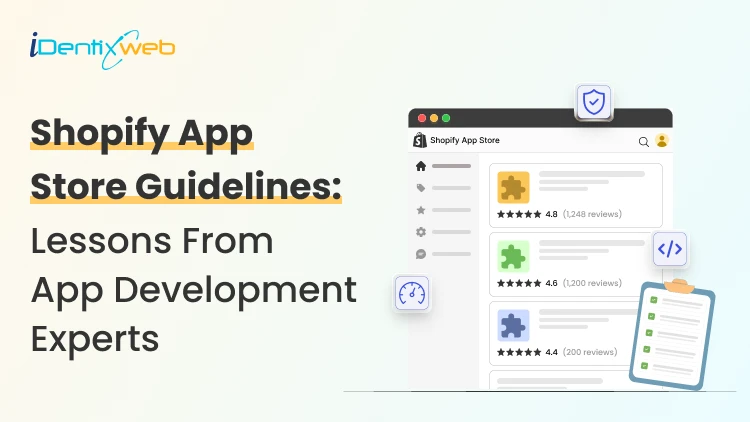
Shopify App Store Guidelines: Lessons for Merchants Building an App
Getting an app approved on the Shopify App Store starts long before you hit submit. The Shopify App Store guidelines shape how an app is built, authenticated, billed, designed, tested, marketed, and maintained after launch. If you are the merchant paying for that app, those guidelines should be your concern. After more than a decade around the Shopify app ecosystem, I have learned one lesson worth passing on to store owners: Merchants who only think about App Store requirements at the end of a build are the ones who end up with delays, rework, and surprise costs. The better move is to understand these standards before the first line of code. That way you can brief the project properly, ask your developer the right questions, and recognise finished work when you see it. This guide walks through the practical lessons I use when helping merchants get a Shopify app listed. Shopify App store guidelines are product requirements It is easy to treat Shopify's requirements as a checklist your developer ticks off at the end. I would encourage you to see them differently. Shopify evaluates whether an app is safe, functional, useful, clear for merchants, and compatible with the way its platform is designed to work. Its requirements cover policy, functionality, installation, security, billing, App Store listings, and category-specific functionality. Shopify can also update these requirements as its platform evolves. That means an app that passed review two years ago should not assume its old implementation is still enough. ⭐ The biggest lesson before I start: Compliance should be a part of the app development process. 1. Start with Shopify-native architecture A technically functional SaaS product does not automatically make a good Shopify app. A Shopify app needs to behave like part of Shopify. For new public apps, this starts with the platform itself. From April 1, 2025, new public apps must use the GraphQL Admin API rather than the legacy REST Admin API. One thing to watch on any build: teams often request more permissions than the core feature actually needs. That creates needless privacy exposure and raises flags during review. Shopify requires an app to request only the access scopes it needs to function, and sensitive scopes can need extra justification. When you go over the plan with your developer, ask exactly why each permission is on the list. The same principle applies to storefront apps. Apps that modify themes should use theme app extensions instead of directly modifying theme code. Shopify also expects clear setup instructions for app embeds and blocks. ⭐ The lesson: Build the app around Shopify’s architecture from the beginning. 2. Installation and billing should be core features It is natural for a build to pour most of its energy into the headline feature. Reviewers care just as much about everything around it, and installation is the first thing they touch. Shopify requires installation to begin from a Shopify-owned surface. OAuth should happen immediately after installation, and the merchant should land inside the app UI after accepting permissions. Here’s the complete journey I test: Install → OAuth → permissions → app UI → setup → uninstall → reinstall Ask your developer to run this on a clean development store, not the environment they have used for months, where old data can hide broken steps. Billing deserves similar testing. Apps distributed through the Shopify App Store generally need to use Shopify App Pricing or the Shopify Billing API for app charges. Merchants should also be able to move between plans without contacting support or reinstalling the app. Before submission, confirm the app has been tested for plan selection, upgrades, downgrades, subscription status, and usage charges where they apply. ⭐ Lesson: Insist that installation and billing get tested as carefully as the app's main features. A broken setup can stop the review on day one. 3. Build privacy and security before the review Do not take security lightly. If something happens, it is your store's reputation and your customers' data at risk. Apps need valid TLS/SSL certificates and secure authentication. Embedded apps should work without depending on third-party cookies. Shopify also expects the app to use session tokens correctly. Customer data requires even more attention. If your app needs access to protected customer data, determine that requirement early and apply for the appropriate access. Shopify evaluates whether requested customer information is genuinely required for the app’s functionality. I follow one simple lesson here: ⭐ The lesson here is this: If the app does not need a piece of data, do not collect it. It reduces technical risk, simplifies privacy management, and gives reviewers fewer unnecessary permissions to question. 4. Your listing is part of the product If you are launching a public app, the listing is part of the product. It is the first thing a prospective merchant reads before they trust your app with their store. The Shopify app store listing guidelines require the public listing to accurately represent what the app can actually do. Your name, pricing, screenshots, descriptions, supported languages, geographic restrictions, and claims all need to match the product. Avoid claims such as “the best,” “the first,” or “the only” unless Shopify’s requirements clearly allow and the statement can be substantiated. Testimonials and merchant reviews should not be inserted manually into listing content or images either. Images should focus on the actual product interface. Each image should add something new instead of repeating the same screen. This is also where more focus should be put on Shopify app store optimization. Shopify recommends an app card subtitle that explains merchant value, and the listing allows up to five relevant search terms, each a complete term with one clear idea. They specifically warns against forcing keywords into subtitles for search performance. I normally think about the merchant’s search intent: What problem are they trying to solve? What would they call that problem? What outcome does the app provide? Which features actually differentiate it? There is another reason listing quality matters in 2026. Shopify introduced app discovery through Sidekick. It can recommend, compare, and surface apps using information from App Store listings. Shopify advises developers to keep listing information accurate, clear, and structured for this experience. Your listing is now serving humans, App Store search, external search engines, and AI-assisted discovery. ⭐ The lesson here: Your app store listing should explain the app as clearly and accurately as the product itself. 5. Make the reviewer’s job easy Shopify requires a demo screencast showing onboarding and the core features described in the listing. Test credentials must remain valid and provide access to the complete feature set needed for review. I treat the reviewer like the app’s first merchant. Make sure the submission hands the reviewer: Clear installation instructions. Working test credentials. Exact steps required to activate important features. A concise screencast showing the full workflow. Notes explaining unusual configuration requirements. Any category-specific setup the reviewer needs. Then have someone test those instructions in a fresh store, ideally not the person who wrote them. The current Shopify app review process moves an app through 4 stages: Draft > Submitted > Reviewed > Published. An app that fails core requirements can be paused until fixes are submitted. Once the core requirements are satisfied, a reviewer can continue with deeper testing and request further changes. Shopify also now offers an AI self-review through its AI Toolkit. The tool can inspect a local codebase against App Store requirements that can be evaluated from code. It does not replace Shopify’s review team and cannot evaluate every live UX or listing requirement. ⭐ The lesson here: Give reviewers clear instructions, working credentials, and a complete path to test every important feature. 6. The most common rejections are often preventable I have experienced app rejection coming from a policy that is hard to understand. Usually, the causes are far less dramatic. Broken OAuth or installation flows. 404, 500, and other web errors. Inaccurate pricing. Billing implementation problems. Broken embedded behaviour. Missing testing instructions or credentials. Unfinished app functionality. Storefront apps that fail to use theme app extensions correctly. These are mostly QA problems. That is why a solid pre-submission check runs the app as a complete merchant journey rather than testing features in isolation. When you review a build, ask to see it run end to end, from install to uninstall. ⭐ The lesson here is: A thorough pre-submission QA check can prevent many of the issues that delay Shopify App Store approval. 7. Approval should be the starting line Publishing the app is a milestone, but it is not the end of development. Shopify continues to evaluate app quality. Performance, reliability, merchant experience, platform changes, API versions, privacy requirements, and listing accuracy need ongoing attention. If you are in this for the long run, ask your developer about Built for Shopify. Built for Shopify adds stricter quality standards around areas such as performance, integration, ease of use, safety, and proven merchant value. Qualifying apps can receive a badge, greater visibility, a search-ranking boost, and priority review for future apps from the developer. ⭐ The lesson here: Treat App Store approval as the beginning of ongoing improvement, not the final stage of app development. Here’s my complete guide on why merchants prefer Built for Shopify apps in 2026. What should merchants look for in a Shopify app development agency? If you are hiring an agency to turn an app idea into a Shopify product, ask deeper questions than “Can you build this feature?” Start by understanding what goes into Shopify custom app development. Ask the agency how they handle Shopify APIs, OAuth, billing, access scopes, protected customer data, app extensions, performance, App Store submissions, listing requirements, and post-launch API changes. An experienced Shopify app development team should be thinking about approval while the app architecture is still being discussed. Before making a hire, read my article on what to check before hiring a Shopify expert in 2026. Build for Shopify before you build for approval The biggest mistake I see merchants make is treating the Shopify App Store review as the final hurdle. It should shape the product from the start. Insist on Shopify-native APIs and installation that just works. Make sure billing is tested properly, customer data is protected, the listing is written around real value, and the reviewer is handed everything they need. Then keep improving after approval. That approach cuts avoidable rework and gets you something more valuable than an approved submission: a Shopify app that merchants can install, understand, and keep paying for. FAQs 1. What are the Shopify app store guidelines? Shopify App Store guidelines are the rules an app must follow to be listed on the Shopify App Store. They cover areas like security, functionality, billing, privacy, performance, and app listing content. 2. How much does it cost to develop a Shopify app? The cost depends on the app’s features, complexity, integrations, and whether it is a custom or public app. A simple app can cost a few thousand dollars, while a complex public app can require a much larger budget. 3. Can I build my own Shopify app? Yes. Shopify offers APIs, the Shopify CLI, App Bridge, and other tools for building an app. In practice it takes solid development knowledge across authentication, APIs, billing, webhooks, and security, so most merchants hire a developer, agency, or Shopify expert rather than building it in-house. 4. What are the different types of Shopify apps? The main types are public apps and custom apps. Public apps are built for multiple merchants, while custom apps are usually created for the specific needs of one merchant or organization.
Bidisha Saha
6 Min • 10 February 2026
5151 Views
Journi Zoie
6 Min • 10 February 2026
5499 Views
Sajini Annie John
6 Min • 23 January 2026
5531 Views
Sajini Annie John
4 Min • 10 February 2026
5744 Views
Sajini Annie John
7 Min • 10 February 2026
5358 Views
Dmytro Reshetchenko
5 Min • 10 February 2026
5301 Views
Sajini Annie John
5 Min • 10 February 2026
6028 Views
Sajini Annie John
4 Min • 10 February 2026
5378 Views
Alyse Falk
6 Min • 12 February 2026
5476 Views
Sajini Annie John
5 Min • 10 February 2026
5525 Views
Sajini Annie John
5 Min • 12 February 2026
6198 Views
Sajini Annie John
5 Min • 11 June 2026
5634 Views