



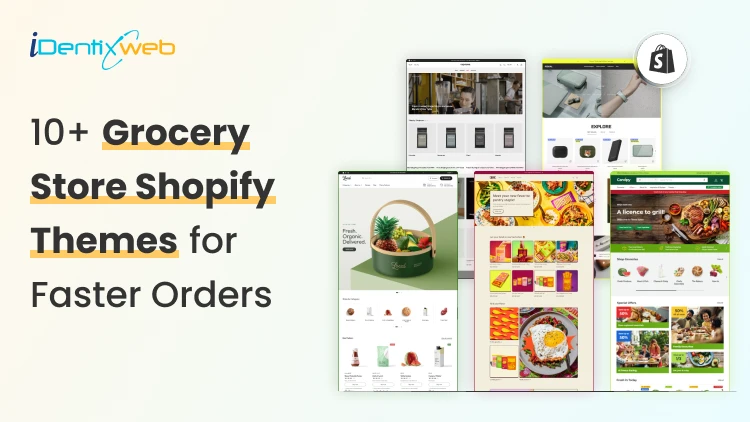
A grocery store lives or dies on how fast a shopper finds what's on their list and gets to checkout.
Pick the wrong grocery store Shopify theme and your sales will definitely drop.
The theme decision shapes almost everything that comes after it, from how customers browse to how fast you can add new product categories.
Here's a walkthrough of the best Shopify themes for grocery stores that I have come across as a Shopify expert. This is a mix of both free and paid themes.
Grocery store Shopify theme comparison in 2026
| Theme | Type | Price | Rating | Best for |
| Crave | Free | Free | 33% | New food and drink stores testing the market |
| Taste | Free | Free | 54% | Smaller SKU count, story-driven brands |
| Savor | Free | Free | 21% | Visual, magazine-style food branding |
| Local | Paid | $380 | 98% | Stores with a physical location too |
| Canopy | Paid | $400 | 95% | Full-line supermarkets, large SKUs |
| Expanse | Paid | $400 | 93% | Multipurpose growth beyond groceries |
| Empire | Paid | $340 | 79% | Large catalogs across multiple categories |
| Taiga | Paid | $490 | 100% | Premium build, smaller review base |
| Groca / Vegist / Organici | Marketplace | Varies | Varies | Budget-friendly, style-specific templates |
Free grocery store Shopify themes worth starting with
1. Crave
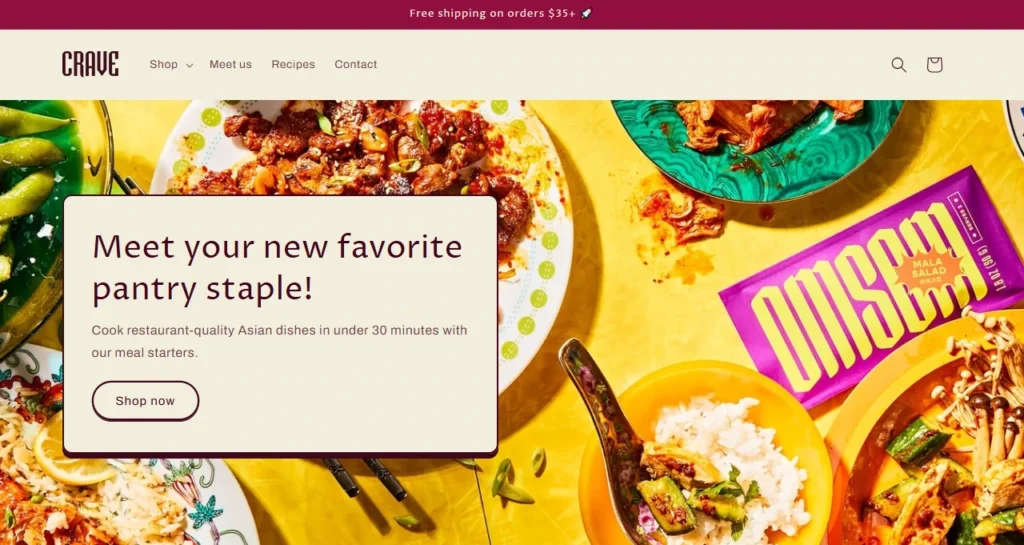
When I evaluate free Shopify themes for grocery stores, Crave is usually one of the first options I consider. Its bold colors, prominent product cards, and mobile-optimized layout work well for stores selling snacks, beverages, fresh produce, packaged foods, or other visually appealing products.
Key features:
- Mobile-optimized layouts
- Quick-buy functionality
- In-store pickup support
- Mega menu
- Product filtering and sorting
- Recommended products and cross-selling
- Shipping and delivery information
- Product videos, image zoom, and galleries
- Color swatches and swatch filters
Rating: 33%
Price: Free
2. Taste
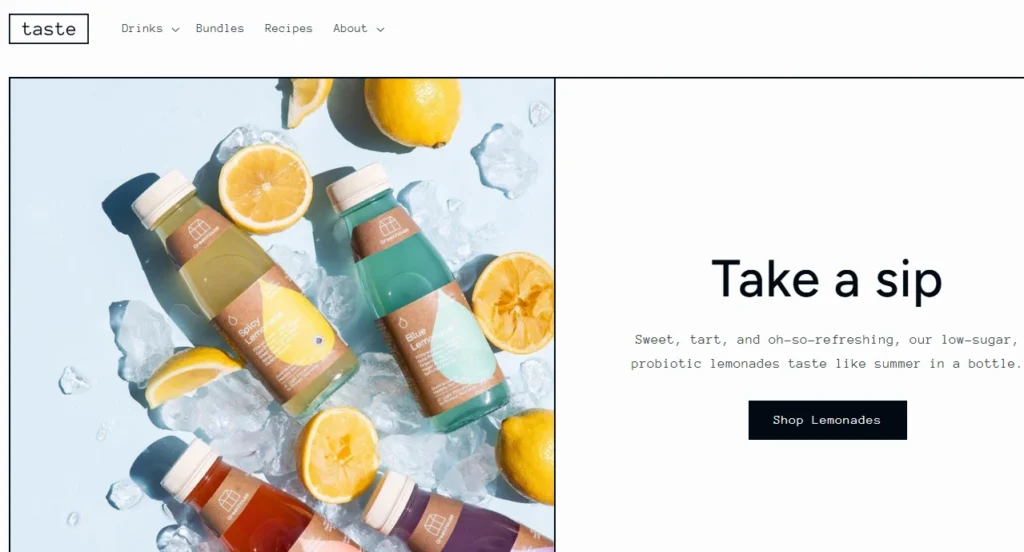
I recommend Taste when the grocery store needs to communicate product quality, sourcing, ingredients, or craftsmanship.
Its spacious layout, large product cards, bold headings, and built-in FAQ capabilities make it especially suitable for specialty coffee, organic foods, gourmet products, bakeries, premium beverages, and artisan grocery brands.
Key features:
- Large product cards and product highlights
- Custom FAQ pages
- Quick buy
- In-store pickup support
- Product recommendations and cross-selling
- Mega menu
- Product filtering and sorting
- Sticky header
- High-resolution images, galleries, and image zoom
- Product videos and slideshows
- Shipping and delivery information
Rating: 54%
Price: Free
3. Savor
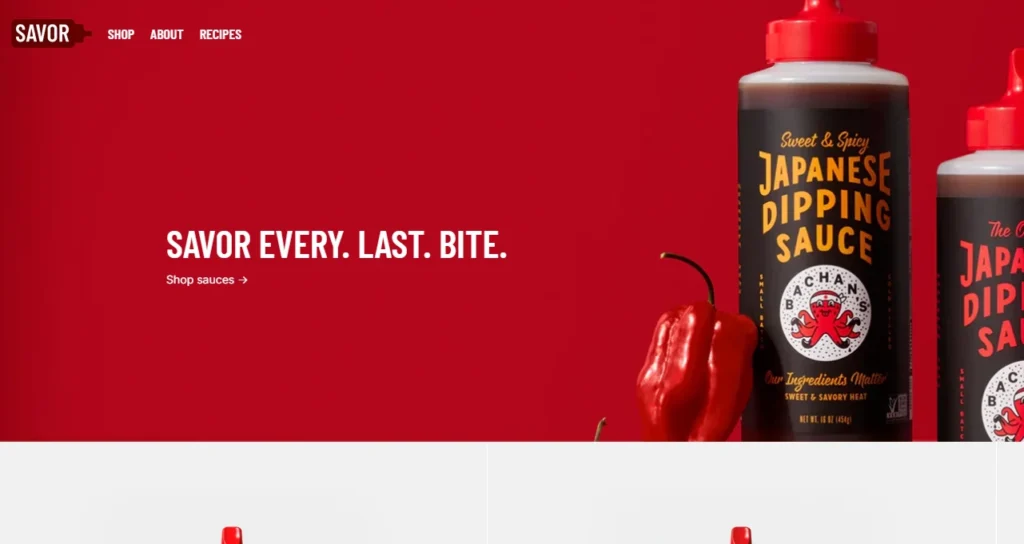
I would consider Savor for a grocery or food brand that wants a newer, more immersive storefront.
As part of Shopify’s Horizon collection, it supports nested theme blocks, edge-to-edge imagery, large flexible product cards, and more advanced merchandising layouts. I find it particularly suitable for recipe-driven brands, speciality foods, premium ingredients, meal kits, beverages, and stores that rely heavily on visual storytelling.
Key features:
- Flexible nested theme blocks
- Large, immersive product imagery
- Quick view and quick buy
- Slide-out cart
- In-store pickup support
- Product badges and stock counter
- Recently viewed products
- Infinite scroll
- Mega menu and in-menu promotions
- Product filtering, sorting, and swatch filters
- Recommended products and cross-selling
- Product videos, animations, and image galleries
Rating: 21%
Price: Free
4. Dawn

Dawn is not designed specifically for grocery stores, but I still see it as one of the safest starting points for merchants who prioritize simplicity and flexibility.
It keeps attention on product photography and can be adapted for produce, pantry products, beverages, household essentials, or smaller grocery catalogs.
Key features:
- Minimalist, product-focused design
- Quick buy
- In-store pickup support
- Cart notes
- Mega menu
- Product filtering and sorting
- Recommended products and cross-selling
- Sticky header
- Product videos and high-resolution images
- Image zoom, rollover, and galleries
- Shipping and delivery information
- Color swatches and swatch filters
Rating: 35%
Price: Free
Let Customers Choose When Their Groceries Arrive
Stellar Delivery Date & Pickup helps grocery merchants who want customers to choose a convenient date and time for local delivery, store pickup, or shipping directly from the product or cart page.
Losing orders because buyers want flexible delivery?
A simple calendar at checkout fixes that.
Start Your Free PlanYou can also manage cut-off times, unavailable dates, delivery schedules, and pickup slots without rebuilding your theme.
Best paid grocery store Shopify themes for bigger catalogs
1. Local
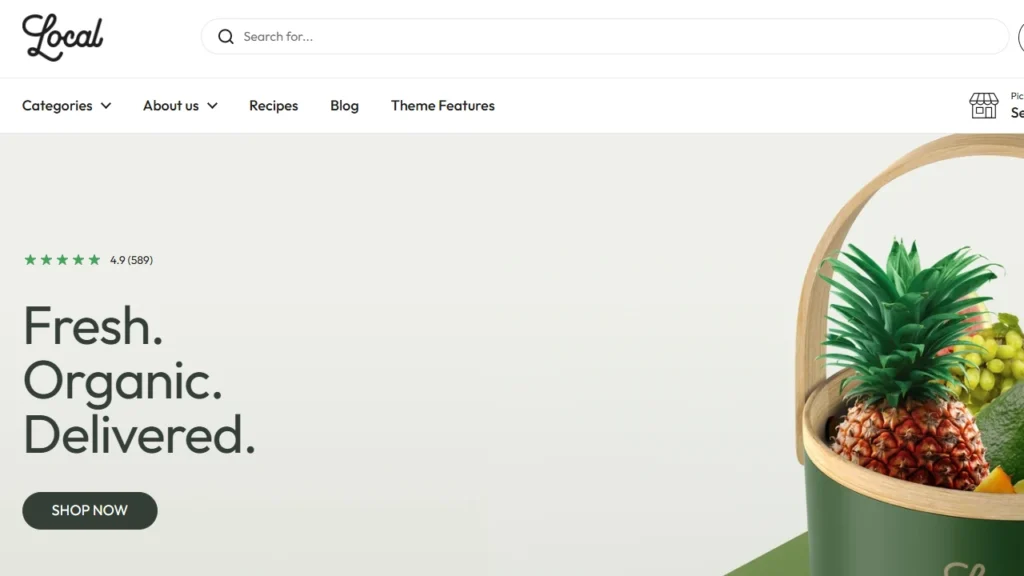
When I evaluate premium Shopify themes for grocery businesses with physical locations, Local is usually the first one I recommend testing.
It is designed specifically for food, beverage, and local retail businesses that sell online and in person. Its combination of in-store pickup, quick-buy tools, nutritional information, cross-selling, age verification, and flexible store sections makes it especially useful for grocery stores, cafés, bakeries, specialty food shops, and beverage brands.
Key features:
- In-store pickup
- Quick buy
- Slide-out and sticky carts
- Pre-orders
- Cross-selling and recommended products
- Age-verification popup
- Back-in-stock alerts
- Product badges and stock counter
- Enhanced search
- Mega menu
- Product filtering and sorting
- More than 30 customizable sections
- Five ready-made presets
Rating: 98%
Price: $380 USD
2. Canopy
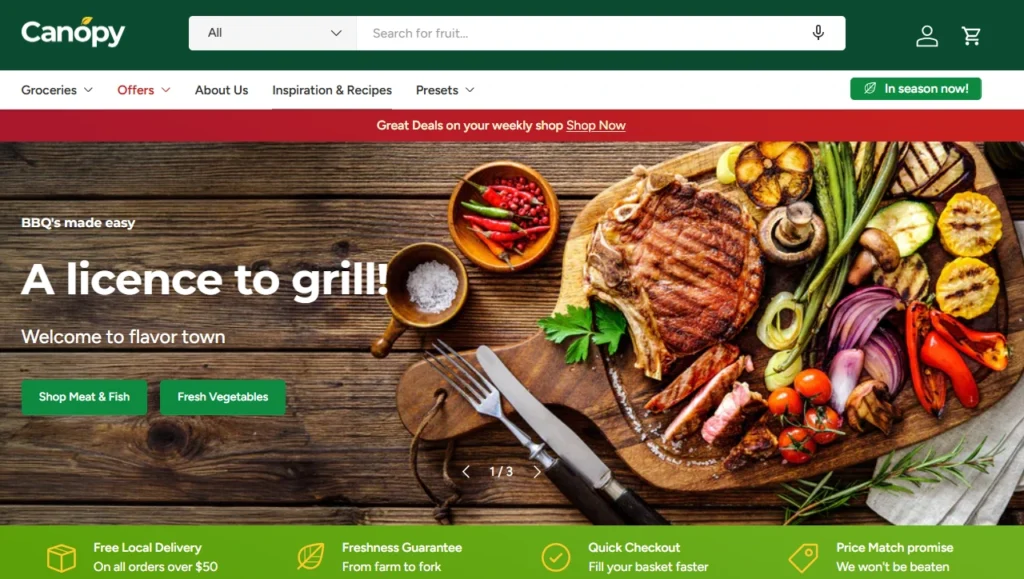
I recommend Canopy when a grocery store has a large inventory, and shoppers need to find products quickly. Its Amazon-inspired layout places search and product discovery at the center of the experience, while the optional always-visible cart sidebar works well for customers building larger grocery orders.
Key features:
- Prominent enhanced search
- Quick-order list
- Quick buy and quick view
- Slide-out and sticky carts
- In-store pickup
- Pre-orders
- Product filtering and sorting
- Infinite scroll
- Mega menu
- Collection-page navigation
- Recently viewed products
- Recommended products and cross-selling
- Back-in-stock alerts
- Product badges and stock counter
Rating: 95%
Price: $420 USD
3. Expanse
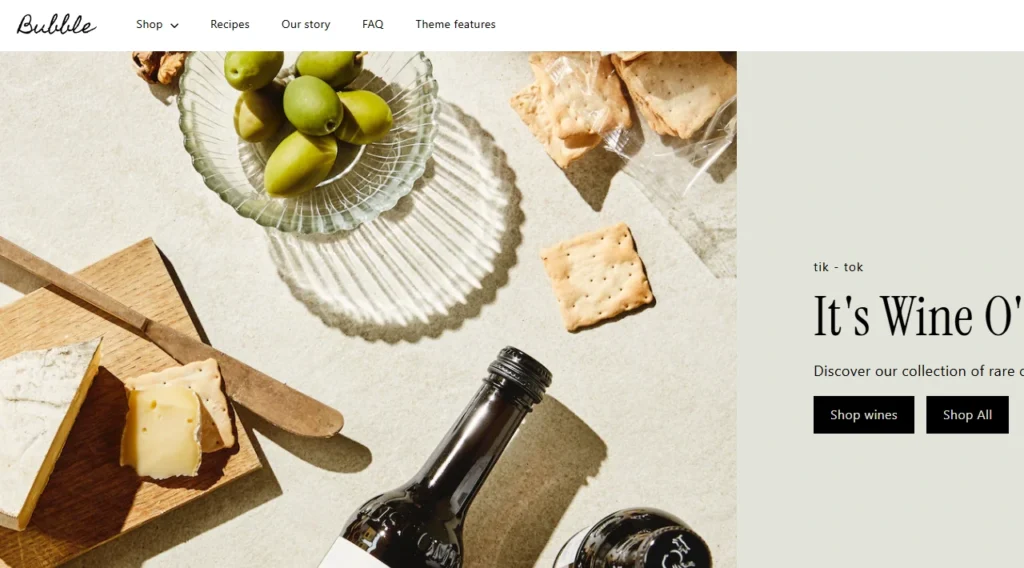
Expanse stands out for its balance of merchandising, promotions, and large-inventory navigation. I would consider it for grocery businesses planning to expand into household essentials, personal care, kitchen products, or other adjacent categories because its design is not restricted to food alone.
Key features:
- Cart upsells and cross-selling
- Recommended products
- Quick buy and quick view
- Slide-out cart
- In-store pickup
- Advanced promotional banners and tiles
- Product badges and stock counter
- Enhanced search
- Multi-category product filtering
- Mega menu
- Recently viewed products
- Product tabs and product videos
- Five ready-made presets
Rating: 93%
Price: $420 USD
4. Empire
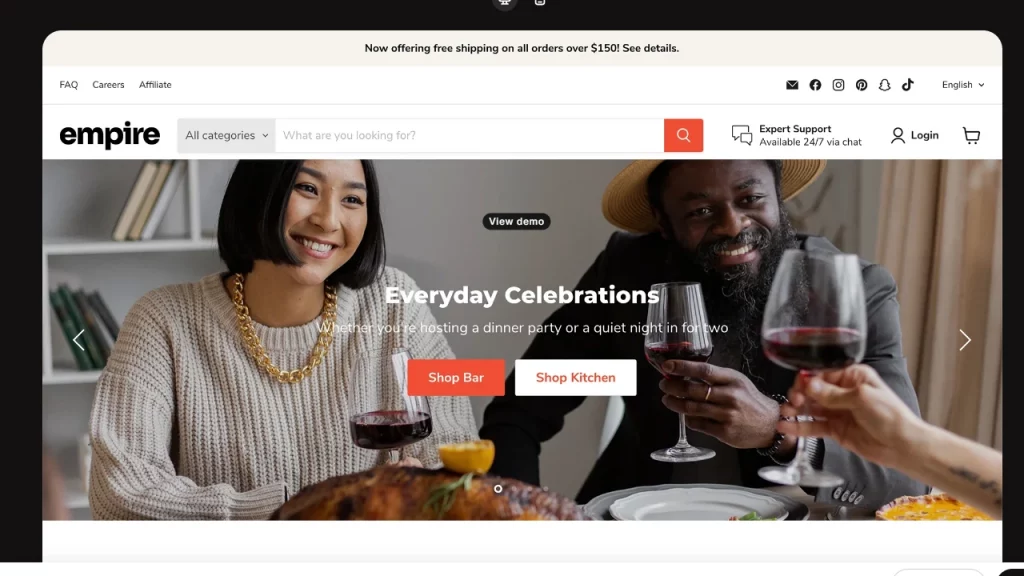
I usually shortlist Empire when a grocery store has hundreds or thousands of products and needs more structured catalog navigation.
It is optimized for large collections and includes advanced filters, product comparison, a prominent mega menu, quick ordering, and shoppable imagery.
In my assessment, its biggest strength is versatility: the same catalog-first structure can support groceries, household supplies, wholesale products, electronics, or fashion without forcing the merchant into a highly niche visual style.
Key features:
- Advanced product filtering and sorting
- Product comparison
- Bold mega menu
- Slide-out cart
- In-store pickup
- Pre-orders
- Recently viewed products
- Product badges and stock counter
- Shoppable image hotspots
- Shipping and delivery information
- Multi-language and multi-currency support
Rating: 79%
Price: $360 USD
5. Taiga

I would consider Taiga for a premium grocery or food brand that relies heavily on photography, video, and visual storytelling.
It combines a modern, conversion-focused layout with more than 10 video sections and separate presentation controls for desktop and mobile. This makes it a strong option for premium beverages, organic foods, meal kits, supplements, specialty ingredients, and visually led direct-to-consumer food brands.
Key features:
- More than 10 video-focused sections
- Separate visual controls for desktop and mobile
- Ingredients and nutritional information
- Quick buy and quick view
- Slide-out and sticky carts
- Pre-orders
- Cross-selling and recommended products
- Enhanced search
- Infinite scroll
- Mega menu
- Product filtering and sorting
- Recently viewed products
- Four ready-made presets
Rating: 100%
Price: $500 USD
Shopify grocery store templates from theme marketplaces
Marketplaces like Envato are great for buying premium Shopify themes. The four below are the best ones for grocery stores.
- Groca, built specifically for grocery and supermarket stores, with multiple mega menu styles and built-in newsletter popups.
- Vegist, aimed at organic and vegetable-focused stores, with more than a dozen homepage layout variations.
- Organici, a newer Shopify 2.0 compatible option built for organic food and general grocery, with SEO-focused setup out of the box.
- Appetiza, designed around supermarket and delivery use cases, with a bright, multipurpose layout that can flex beyond food if needed.
What to look for in a Shopify theme for grocery stores
- Advanced filtering and search. Shoppers need to narrow by category, brand, or price without loading a new page each time.
- Quick buy from the collection page. Grocery is list-shopping. Forcing every add-to-cart through a full product page slows people down and costs you sales.
- Clear variant display. A theme should show pack sizes, weights, or flavors without extra clicks.
- Mobile-first layout. Most grocery orders start on a phone, often while someone is standing in their kitchen checking what's missing.
- Room for delivery and pickup messaging. Shoppers want to know how they'll get their order before they finish checkout.
- Reorder-friendly structure. Best-selling grocery products get bought weekly. A layout that supports ‘buy again’ or subscription blocks pays off fast.
Wrapping up
The right grocery store Shopify theme is the one that matches your catalog size and your delivery model.
Start free with Crave or Taste if you're testing the market. Move to Local, Canopy, or Empire once your SKU count increases, or look at a marketplace template if budget matters more than official support.
FAQs
1. Where to find Shopify themes for grocery stores?
Go to the official Shopify theme store and in the ‘Industry’ section on the left, select Food and drink. There will be 100+ themes you can choose from for your grocery store.
2. What is the best Shopify theme for a grocery store?
For a smaller grocery store, Crave or Taste (both free) cover most needs. For a large, multi-category supermarket, Local, Canopy, or Empire handle bigger catalogs with stronger filtering and search.
3. Are there free Shopify themes built for grocery stores?
Yes. Shopify offers Crave and Taste as free themes designed specifically for food and drink stores, along with a newer option called Savor. All three support features like nutritional information display and quick buy.
4. How much do paid grocery Shopify themes cost?
Most paid themes for grocery stores range from around $150 for simpler options up to $490 for premium picks like Taiga. Local, Canopy, and Expanse typically fall between $380 and $420.

About the author
Vineet Nair
Vineet is an experienced content strategist with expertise in the ecommerce domain and a keen interest in Shopify. He aims to help Shopify merchants thrive in this competitive environment with technical solutions and thoughtfully structured content.