

Ecommerce
Gather knowledge about the latest insights, updates, tips, and tricks in the Ecommerce industry.
5 Min • 29 April 2026
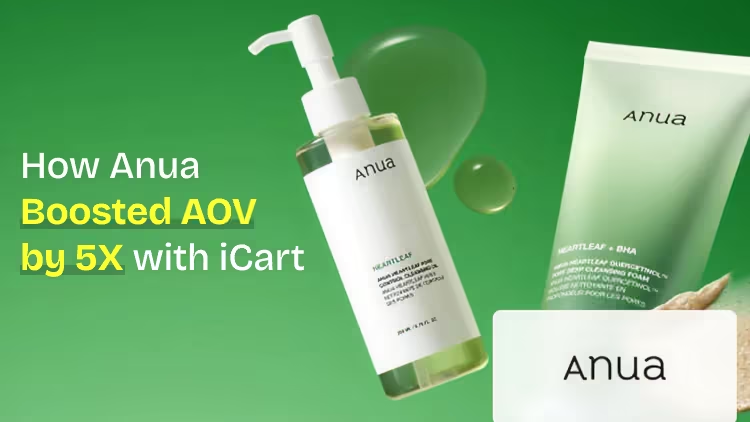
How Anua Unlocked 5X AOV Growth with iCart’s Smart Cart Features
delivery customization Challenges Solutions drive results Scale business delivery customization Challenges Solutions drive results Scale business delivery customization Challenges Solutions drive results Scale business delivery customization Challenges Solutions drive results Scale business Anua is a globally recognized Korean skincare brand known for its minimalist philosophy and focus on gentle yet effective formulations. Built on the idea of simplifying skincare routines, Anua develops products that deliver visible results while avoiding harsh or irritating components, making them suitable for sensitive skin types. Initially using a traditional full cart experience, Anua transitioned to iCart’s side cart solution in August 2025, to create a more seamless and engaging shopping journey. This shift allowed customers to easily explore complementary skincare products without disrupting their browsing flow, making it more intuitive to discover items that fit into a complete routine. By surfacing relevant recommendations directly within the cart, the brand enhanced product visibility across its range. Challenges Before implementing iCart’s side cart solution, Anua faced limitations with their existing full cart experience, which created friction in the customer journey. The traditional cart setup redirected users away from product pages, interrupting their browsing flow and reducing opportunities to explore additional products. As a skincare brand built around routines rather than single-item purchases, this made it difficult to effectively showcase complementary products and encourage customers to build complete regimens. Additionally, the lack of in-cart personalization and strategic upsell opportunities meant that customers were often unaware of related products that could enhance their skincare results. This limited the brand’s ability to increase average order value (AOV) and fully leverage its diverse product range. Anua needed a more dynamic and intuitive cart experience that could seamlessly introduce relevant recommendations while maintaining a smooth and engaging shopping journey. ❌ Cart Value Barriers Low average order value (AOV) due to single-item focus Most customers completed purchases with one primary product instead of building multi-step routines. Cart abandonment near shipping thresholds Customers were not clearly informed or motivated to reach free shipping or discount thresholds. Missed savings opportunities Customers were unaware of potential value in purchasing bundled routines or multiple complementary products. ❌ Absence of Progress-Based Incentives No free shipping or discount progress bar Customers were not motivated to increase their cart value due to lack of visible incentives. Missing tiered rewards system There were no structured milestones (e.g., “Spend more to unlock offers”), reducing upsell opportunities. ❌ Ineffective Cart UI/UX (Pre-Side Cart) Full-page cart disrupted shopping flowCustomers had to leave their browsing journey, increasing friction and drop-offs. No quick add/remove functionality Users couldn’t easily modify their cart or add suggested products without navigating away. Solution To overcome these challenges, Anua implemented iCart’s side cart solution to transform their traditional cart into a high-converting, interactive experience. By replacing the full-page cart with a seamless side cart, the brand ensured that customers could continue browsing while viewing their cart, significantly reducing friction in the shopping journey. Additionally, features like product recommendations & progress bars for free shipping and discounts motivated customers to increase their cart value. By combining personalization, incentive-driven messaging, and a user-friendly interface, Anua successfully turned their cart into a powerful revenue-driving touchpoint rather than just a checkout step. To maximize their cart effectiveness, they implemented two powerful features: ✅ Progress Bar with Multi-Reward Incentives Implemented a tiered progress bar to encourage higher cart value Customers are guided with a clear message like “Add $3.10 to unlock secret offer,” motivating them to continue adding products. Generated over $5M+ in revenue through incentive-driven cart progression Used product-based rewards to align with customer intent Instead of generic discounts, Anua incentivized purchases with relevant skincare items like Dark Spot Pads and mini serums. Built visual motivation for routine expansion As customers add products, they can clearly track progress toward unlocking multiple rewards, encouraging them to build a complete skincare routine. ✅ Product Recommendations Implemented “Frequently Bought Together” recommendations Customers adding a single product (e.g., toner) are shown complementary items like serums, moisturizers, or pads to complete their routine. Generated over 275K revenue through in-cart recommendations Encouraged full skincare regimen building Instead of isolated purchases, the cart suggests step-by-step product combinations aligned with common skincare routines. Increased product discovery at the final stage By surfacing relevant items directly in the cart, Anua ensured customers explore more of their catalog without leaving the checkout flow. Results Achieved in Last 180 Days 22932 Total Store Orders 45101 Total iCart Orders 5X iCart Generated AOV 65.70% Upsell Affected Conversion Rate These improvements reflect a clear shift in customer behavior on Anua’s store. Cart abandonment reduced as shoppers discovered complementary skincare products and felt encouraged to build complete routines. Engagement also increased, with customers interacting more with in-cart recommendations and exploring relevant product pairings. Results & Impact And...Results is Our Main Clarification By implementing iCart’s cart drawer, product recommendations, and progress bar, Anua transformed its cart into a high-performing conversion touchpoint. Shopping Experience Enhancement The improved cart experience encouraged customers to discover complementary products and understand the value of sustainable beauty routines. For instance, the clear presentation of subscription savings alongside one-time purchase options helped customers make more informed decisions about their long-term hair care needs. As Anua continues to optimize its cart experience, the brand is closely monitoring: Routine-based purchasing behavior - tracking how customers move from single items to multi-step regimens Engagement with in-cart recommendations - measuring interaction with suggested products Cart value progression - analyzing how incentives influence higher spending [related_cases_slider] Ready to Write Your Success Story? Try icart App Join successful businesses like Anua and Master your delivery scheduling Delight customers with precise timing Grow your special occasion orders Expand your delivery reach
Read Blog
7 Min • 27 July 2026
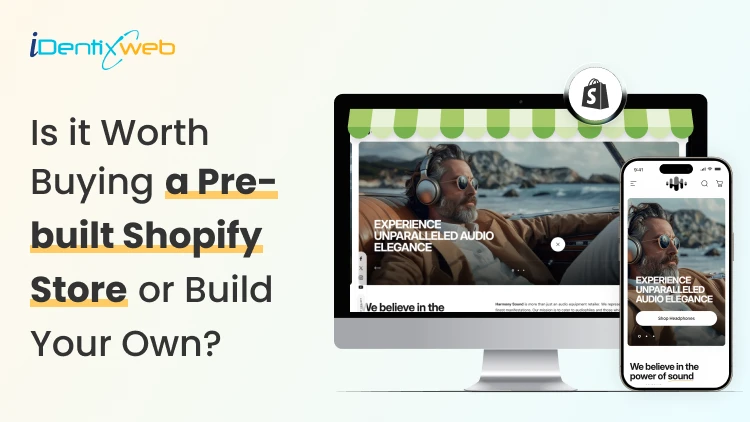
Are Pre-Built Shopify Stores Worth It in 2026? A Straight Answer
Yes. Pre-built Shopify stores are absolutely worth it. A pre-built Shopify store promises the one thing every new entrepreneur wants: a shortcut. Skip the setup and guesswork, and buy something that already looks finished. I have reviewed dozens of these listings over the years, and the honest answer is a bit complicated. This guide covers what these stores actually are and the most important question of all: Are pre built Shopify stores worth it? What are pre-built Shopify stores? A pre-built Shopify store is a store someone else designed, configured, then sells to you as a finished product. These listings fall into three real categories. Turnkey dropshipping stores. A provider builds a store around a niche, loads it with products, and hands you the login. No sales history, no customers, just a ready-to-market store. Custom-built stores. A freelancer or agency builds a store to your spec. You get more input on design and product selection, but you're still starting from zero revenue. Established stores. These come with real sales history, existing customers, and traffic. You're buying an operating business Do pre-built Shopify stores work? Yes, it does. A pre-built store gives you a working storefront on day one. But the traffic and customer base have to be earned after purchase. I have seen turnkey stores generate real revenue within weeks, and I have seen identical templates from the same provider sit at zero sales for months. The difference almost never comes down to the store itself. It comes down to what the buyer does with it afterwards: product testing, ad spend, and consistent marketing. If you buy a one-product turnkey store expecting it to sell itself, read my guide on building a one-product Shopify store first. It explains why focus and offer clarity matter more than the store's design. How to vet a seller before you pay? Ask for read-only access to Google Analytics and Search Console if the listing claims traffic. Screenshots can be faked; live dashboard access is much harder to fake convincingly. Check the domain's history using a WHOIS lookup tool. A domain registered last month can't have "three years of organic traffic." Request an export of order history if you're buying an established store with sales claims. Ask why they're selling. A vague or evasive answer about a declining niche is worth more than any pitch deck. Use a marketplace with built-in escrow whenever the deal size justifies it, rather than paying a stranger directly. Confirm what you're actually inheriting. Products, theme, apps, domain, social accounts, email list. Get it in writing. Once the store is yours, you'll want visibility into what you actually bought. Go through my guide to pulling a Shopify inventory report to do just that. Do not buy a pre-built Shopify store if you see these red flags The seller refuses to give you a live demo link or read-only admin access before purchase. Revenue or proof of traffic comes only as screenshots, with no way to verify them independently. Payment is only accepted via wire transfer or crypto, with no escrow option. The seller pressures you to decide within hours. You can't find any independent reviews of the provider outside their own website. Only the current store owner can transfer ownership, and a store can only have one owner at a time. Here’s my guide on how you can transfer Shopify store ownership in 2026. Best websites to buy pre-built Shopify stores in 2026 1. BeBiggy BeBiggy sells ready-made Shopify dropshipping stores across niches such as fashion, pets, beauty, home products and coffee. Its stores include a completed design, imported products and connections to dropshipping suppliers. This makes it suitable for beginners who do not want to build everything from the beginning. Best for: Beginners looking for an affordable, ready-to-launch dropshipping store. 2. Dropbuild Dropbuild provides custom Shopify dropshipping stores rather than selling the same basic template. Its packages include product research, suppliers, advertising materials and a strategy for launching the store. This may be a better choice when you want more assistance with product selection and store setup. However, carefully check exactly what is included in your package because advertising, content creation and ongoing store management may still require additional work. Best for: Merchants who want a more customized store with launch support. 3. Zendrop Zendrop offers AI-built Shopify dropshipping stores that come with a theme and products selected by its product discovery team. Its pre-built store service is connected to the wider Zendrop platform, which helps merchants source and fulfil dropshipping products. This option is useful when you want your store and supplier system in one place. However, being connected to one supplier platform can reduce your flexibility. So review product costs, shipping locations and delivery times before choosing your products. Best for: New dropshippers who want store creation and product fulfilment under one platform. 4. Flippa Flippa is different from basic pre-built store providers. It is a marketplace where you can find stores and other online businesses for sale. Some listings are new starter stores, while others have existing traffic, customers and revenue. The benefit is that you may be able to purchase more than a website design. You could acquire a domain, customer list, supplier relationships, social media accounts and sales history. However, Flippa is an open marketplace, so buyers must independently verify revenue, profit, traffic and ownership before making an offer. Best for: Buyers who want a wider range of starter and established Shopify stores. 5. Empire Flippers Empire Flippers focuses on established and profitable online businesses, including Shopify-based ecommerce stores. Its listings can include information about revenue, net profit, business age and operating model, and the platform follows a more selective vetting process than a general marketplace. Stores listed here usually cost significantly more than newly created turnkey stores because you are purchasing an operating business rather than just a Shopify theme with imported products. It is more suitable for experienced merchants or investors with enough capital to acquire a proven business. Best for: Buyers looking for a vetted Shopify business with real operating history. Are pre-built Shopify stores worth it? My verdict It depends on what you're optimizing for. If you want to skip the setup and you understand you're still doing the marketing work, a budget turnkey store can be a reasonable starting point. If you have a budget and want lower risk with proven numbers, buy an established store bought through a real business marketplace. What doesn't hold up anymore is buying a pre-built Shopify store to avoid technical setup. That specific problem is largely solved by Shopify itself now. Whatever you choose, treat the purchase like buying any small business. Verify everything, use Shopify's official transfer process, and budget for the marketing work that starts the day you take ownership. FAQs 1. Do pre-built Shopify stores work? They can, but they don't run themselves. A pre-built store gives you a working storefront, not traffic or customers. Success still depends on product validation, ad spend, and ongoing marketing after you take ownership. 2. Are pre-built Shopify stores worth it? It depends on your goal. They're worth it if you want to skip technical setup, but understand the marketing still falls on you. They're less worth it if avoiding setup work was your only reason to buy, since Shopify's own AI tools can now build a functional store in a fraction of the time. 3. What are the best websites to buy Shopify pre built stores? Some popular websites for buying pre-built Shopify stores include BeBiggy, Dropbuild, Zendrop, Flippa and Empire Flippers. BeBiggy, Dropbuild and Zendrop are better for new, ready-to-launch stores, while Flippa and Empire Flippers are more suitable for buying established ecommerce businesses. 4. Can I buy a pre-built Shopify store? Yes, you can buy a pre-built Shopify store that already includes a theme, products, supplier connections and basic store setup. However, always verify store ownership, app costs, supplier reliability, sales data and included assets before making the purchase.
7 Min • 25 August 2026
Built for Shopify Apps Benefits: What Merchants Gain from the Badge
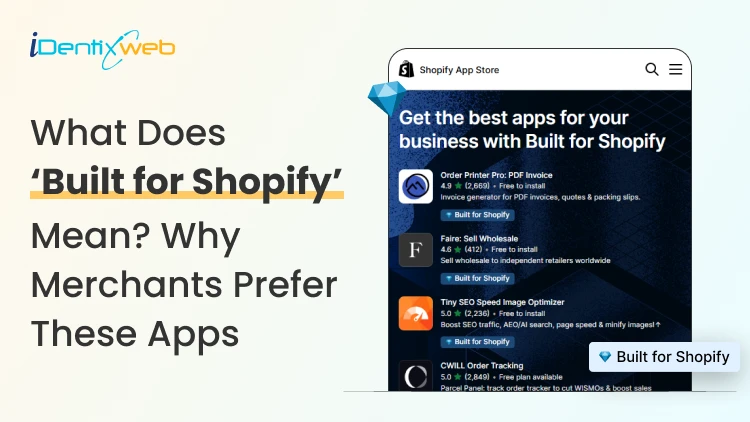
Built for Shopify apps give merchants a stronger quality signal when choosing apps. They are evaluated against Shopify’s standards for performance, design, integration, usability, and ongoing compliance. Benefits for 'Built for Shopify' apps include smoother admin workflows, simple storefront integration, better performance safeguards, and easier app discovery. The Shopify App Store gives merchants thousands of ways to add features that Shopify does not provide by default. The difficult part is deciding which app to install to make your life easier. That is where the Built for Shopify badge helps. It is Shopify's highest level of recognition for apps that meet its quality standards. Built for Shopify apps have their benefits, but it's more than that. That being said, I would not just choose an app because it has the badge. I would use it as a strong first filter, then compare functionality, pricing, reviews, support, permissions, and compatibility. What does Built for Shopify mean? Built for Shopify, often shortened to BFS, is Shopify's quality program for apps distributed through the Shopify App Store. Apps that earn the status must meet requirements such as performance, integration, design, App Store compliance, merchant adoption, reviews, and category-specific criteria. Shopify describes Built for Shopify as the highest level of recognition and achievement an app can reach. The badge appears on qualifying app listings and app cards in search results and category pages. Merchants can also filter App Store results to show only Built for Shopify apps. Above is an app, Delivery Date & Pickup Stellar. You can see it has a Built for Shopify badge just below its name. I’ve worked closely with Shopify merchants and been involved in developing Shopify apps around real store requirements. I know how much difference a well-built app can make to day-to-day store management. Built for Shopify apps: Benefits for merchants 1. You get a faster way to shortlist better apps Several apps offer similar features. The Built for Shopify badge helps you to filter apps that are helpful in a specific category. Instead of comparing every app only by listing content, pricing, and reviews, you can use the badge to quickly identify apps that meet Shopify's standards. It makes the selection process much easier. 2. You reduce the risk of choosing an app that hurts store performance Every app you install can affect your storefront or Shopify admin experience. Built for Shopify apps must meet Shopify's performance requirements. This includes limits around storefront and admin Web Vitals. For you as a merchant, this means the app has been evaluated against measurable performance standards rather than relying only on the developer's claims. 3. You get an app that feels more familiar inside Shopify Built for Shopify apps are expected to follow Shopify's UX and design standards. This includes clear navigation, responsive layouts, familiar controls, and admin behavior. For you, that can mean less time figuring out where settings are located and a smoother experience for team members navigating through the admin panel. 4. You can manage more of the app without leaving Shopify One of the biggest benefits of choosing a Built for Shopify app is better Shopify integration. Shopify expects the primary functionality of an embedded BFS app to work inside the Shopify admin where applicable. That means you are less likely to depend on completely separate dashboards for everyday tasks. If you use multiple apps, this will make daily store management more organized and easier to follow. 5. You get cleaner storefront installation and removal Apps that add storefront features can create problems if they make unnecessary changes to your theme. Built for Shopify requirements encourage apps to use Shopify's current extension architecture, including theme app extensions. These extensions are made to integrate more easily with themes and are removed when the app is uninstalled. For you, that means less risk of being left with unnecessary storefront elements after removing an app. 6. You choose apps that already have real merchant usage An app cannot qualify for the Built for Shopify badge without meeting Shopify's merchant adoption and review requirements. That means the app must already have real usage across active stores before it can earn the badge. For you, this provides confidence that the app has been used by actual merchants. 7. You get a quality signal that Shopify continues to review The Built for Shopify badge does not stay forever with the app. Shopify continues to monitor requirements and reviews BFS apps over time. If an app stops meeting the requirements, it can lose its status. This makes the badge more useful because it reflects ongoing compliance with Shopify's standards. Built for Shopify requirements merchants should understand AreaWhat Shopify checksWhy it matters to merchantsPrerequisitesApp Store compliance, Partner standing, installs, reviews, recent ratingGives Shopify merchant usage and quality signals to evaluatePerformanceAdmin Web Vitals, storefront impact, relevant checkout performancePlaces measurable limits around app performanceIntegrationEmbedded workflows, App Bridge, Shopify-based processesKeeps important workflows connected to ShopifyDesignFamiliar UX, responsive layouts, clear navigationMakes everyday app use more predictableCategory criteriaRequirements specific to an app's functionChecks whether apps use Shopify's expected functionality for their categoryOngoing complianceAutomated checks and recurring reviewsRequires apps to continue meeting current standards The exact criteria depend partly on what the app does. For example, a product review app does not necessarily have the same functional requirements as a fulfillment, subscription, returns, or product bundles app. This is why I would avoid one checklist as the complete BFS standard. Shopify maintains detailed developer documentation and updates category criteria as its platform changes. Should I install only ‘Built for Shopify’ apps I will advise this to merchants: A Built for Shopify app is not always the right choice for your store. It might lack an important feature, cost more than your budget, or request permissions you do not want to grant. The badge also should not be interpreted as a guarantee of perfect support, zero bugs, higher conversion rates, stronger SEO rankings, or specific revenue growth. Those outcomes are outside the scope of what Shopify says the BFS badge certifies. I’m also not saying a non-BFS app is automatically a bad app. A newer app might not yet meet the standard for the BFS badge, but it can definitely help your store grow. If budget is a major factor, compare options in my guide to free Shopify apps rather than choosing by badge alone. How to find Built for Shopify apps The simplest method is to look for the Built for Shopify badge on an app listing. You can also use the BFS filter on Shopify App Store search and category pages. That badge should be visible directly on the App Store listing, which makes it easy to verify before installing. Final takeaway The strongest benefit of Built for Shopify apps is the standards behind the badge. Shopify evaluates qualifying apps for performance, design, integration, merchant adoption, App Store compliance, and relevant category requirements. It also reviews these apps over time instead of giving a permanent badge. For merchants, I would use the badge as a shortcut to a better shortlist, not as permission to skip due diligence. Start with BFS apps when suitable options exist, then compare feature fit, permissions, reviews, pricing, support, and compatibility before making the final choice. At Identixweb, we provide Shopify app development services for merchants who need functionality that an existing public app cannot fully cover. FAQs 1. What does Built for Shopify mean? The Built for Shopify badge identifies Shopify apps that meet Shopify's highest quality standards. Shopify evaluates qualifying apps across performance, design, integration, prerequisites, and relevant category-specific requirements. 2. What are the main Built for Shopify requirements? Current requirements include Shopify App Store compliance, good Partner standing, merchant adoption and review criteria, performance thresholds, Shopify admin integration, design standards, simple installation practices, and category-specific rules. 3. Can an app lose the Built for Shopify badge? Yes. Shopify reviews BFS apps and monitors several requirements on an ongoing basis. Apps that stop meeting the criteria and fail to correct the issues can lose Built for Shopify status. 4. Are Built for Shopify apps always better than non-BFS apps? Not in every situation. The badge is a strong quality signal, but merchants should still compare features, pricing, support, permissions, integrations, reviews, and compatibility before choosing an app.
10 Min • 9 July 2026
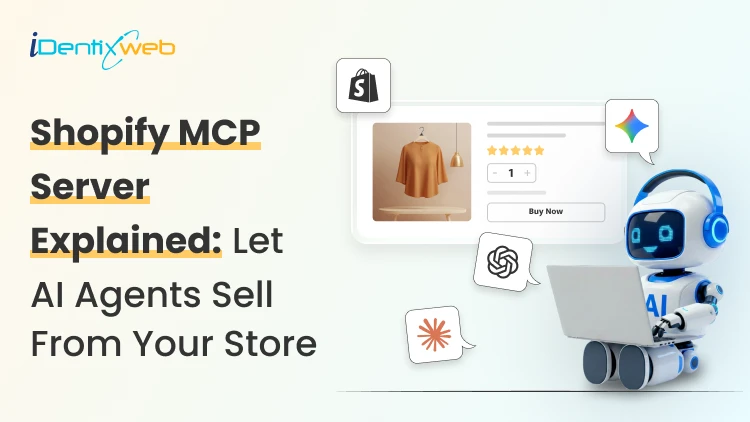
How AI Agents Can Sell From Your Shopify Store (Shopify MCP Server Explained)
Your next shopper may not start on your homepage. They may start in ChatGPT, Microsoft Copilot, Google AI Mode, Gemini, or the Shop app. Shopify Agentic Storefronts and MCP make it possible for these AI experiences to discover products, understand store data, and guide shoppers toward checkout. This is a connective layer that lets AI agents search your catalog, build a cart, and hand a shopper straight to checkout. I have spent the past few months testing this setup on live stores, and this guide covers exactly where things stand today. What is a Shopify MCP server? A simple explanation Model Context Protocol, or MCP, is an open standard from Anthropic that lets AI models talk to outside tools and data using one shared format. In simple terms, UCP defines the shopping flow, and MCP gives AI agents a standard way to call those shopping tools. Shopify uses UCP as the commerce rulebook and exposes those UCP-powered shopping capabilities through Shopify MCP servers. In simple terms, UCP defines the shopping flow, and MCP gives AI agents a standard way to call those shopping tools. UCP is an open framework Shopify co-developed with Google, and it defines how an agent proves who it is, searches a catalog, builds a cart, checks out, and tracks an order, all through a consistent set of rules. Shopify's MCP servers are the implementation of that framework. Here is where a lot of confusion starts. There is no single "Shopify MCP." There are two different things people usually mean when they say “Shopify MCP.” Storefront MCP is for shopping agents. It helps AI agents search products, manage carts, answer policy questions, and move shoppers toward checkout. Shopify AI Toolkit / Dev MCP is for developers. It helps Claude Code, Cursor, Codex, VS Code, and similar tools work with Shopify docs, GraphQL schemas, Liquid validation, CLI workflows, apps, and themes. How does the Shopify MCP server power AI agents? Every eligible Shopify store gets a live Storefront MCP endpoint by default, reachable at https://{yourstore}.myshopify.com/api/mcp, with a second UCP-specific endpoint at /api/ucp/mcp for catalog search. No developer, code, or apps are required here. This single server handles the entire buyer journey in four stages. Stage 1: Negotiate and authenticate Every agent presents a profile that tells Shopify who it is. Based on that profile, Shopify assigns a trust tier, and the tier decides how much an agent can do on its own. Stage 2: Discover products Agents search your catalog through search_catalog, lookup_catalog, and get_product. Shopify also runs a cross-store Global Catalog, so an agent can search millions of products from every Shopify merchant at once, then narrow down to yours. Stage 3: Build a cart and check out The get_cart and update_cart tools let an agent add items and fetch pricing. When the shopper is ready, create_checkout converts that cart into a real checkout session, calculating tax, shipping, and totals against your live store settings. Stage 4: Monitor the order After purchase, get_order and order webhooks let an agent or the shopper check fulfillment status, refunds, and shipping updates without emailing your support team. For the vast majority of agents today, checkout does not complete inside the chat window. The agent receives a continue_url and hands the shopper to your actual Shopify checkout to finish paying. If the shopper is redirected to your Shopify checkout, your normal checkout experience is mostly preserved. But if the shopper uses an AI channel’s Shopify-powered direct checkout, some checkout customizations may not appear, especially upsells, custom fields, loyalty blocks, custom pixels, subscriptions, bundles, digital products, pickup, and local delivery. Shopify storefront MCP vs the Shopify AI toolkit Storefront MCP is consumer-facing. It is what powers a shopper's conversation with an AI agent that wants to buy something from your store. You do not build this. Shopify runs it for you. The Shopify AI Toolkit is a developer-facing project. Shopify open-sourced it in April 2026, and it connects coding assistants like Claude Code, Cursor, and VS Code to Shopify's documentation, GraphQL schema, and CLI so a developer can build themes, apps, and integrations faster. The Toolkit's Dev MCP server gives an AI coding agent live access to Shopify's platform knowledge. This does not include your storefront's live sales data. If someone asks you about MCP for Shopify and mentions building an app or theme, they mean the AI Toolkit. If they mean letting ChatGPT or Claude sell your products to a shopper, they mean Storefront MCP. Shopify's own AI assistant lives inside your admin and helps you run the store rather than helping outside agents sell from it. I go deeper on what Sidekick can actually do in my Shopify Sidekick use case guide if you want the full picture of Shopify's native AI tools. How to get started with Shopify MCP: For store owners Go to Sales channels > Agentic in your Shopify admin. From there you can: See which AI channels have access to your products through Shopify Catalog. This can be ChatGPT, Microsoft Copilot, Google AI Mode, Gemini, and Shopify's own Shop app. Turn off Allow Shopify to manage for me if you want manual control instead of automatic enrollment in new AI channels. Deactivate direct checkout on channels that support it, so shoppers are always redirected to your own checkout instead. Preview how your products actually appear in AI catalog search results. A few requirements gate eligibility: You need your Terms of Service, Privacy Policy, and Return and Refund Policy filled out under Settings > Policies, Your products need to sell to US buyers, You need to accept Shopify's Agentic Storefronts Supplemental Terms of Service. B2B-only products and anything on OpenAI's prohibited list will not surface in ChatGPT results. An agent can only sell what it can understand, so titles, descriptions, variant details, and policy answers need to be complete and specific. This overlaps heavily with answer engine optimization work, and I have a full breakdown of that in my Shopify AEO and GEO guide if you want to tighten up how your store reads to any AI system. Claude Code Shopify MCP: Setup for developers and agencies If you are building something custom, testing the protocol directly, or wiring Claude into your day-to-day store management, this is the section for you. For coding work, the recommended path is the Shopify AI Toolkit plugin. Inside a Claude Code session. claude plugin install shopify-ai-toolkit@claude-plugins-official claude mcp add --transport stdio shopify-dev-mcp -- npx -y @shopify/dev-mcp@latest Restart Claude Code, and the plugin gives your session access to Shopify's live GraphQL schema, Liquid validation, and CLI commands. You need Node.js 18 or higher. The Dev MCP server does not require authentication because it connects to Shopify developer resources such as docs and schemas. However, if you use Shopify CLI or store-execution capabilities to work with a real store, you should expect authentication and permissions to matter. I walked through that exact process end to end, screenshots included, in my Claude and Shopify connection guide. This includes how to scope the token to read-only access so Claude can answer questions without being able to change anything until you are ready to grant write access. What happens at checkout when an AI agent buys from you Merchants ask me this more than anything else. In almost every real case today, the buyer finishes payment on your Shopify checkout, either inside an in-app browser (ChatGPT) or a new browser tab. You remain the merchant of record. The order lands in your admin with channel attribution showing it came from an AI referral, same as any other sales channel. But some checkout blocks, particularly custom fields, upsell prompts, or specific validation rules, may not render inside an agentic storefront's direct checkout the same way they do on your normal storefront checkout. The purchase still completes correctly, but any app-based messaging tied to those blocks might not show up. If you rely heavily on checkout customization for revenue, it is worth auditing this now. My Shopify Checkout Blocks guide covers what each block type does if you need to check what is at risk. To wrap it up, here’s a checklist to get started with Shopify MCP AreaWhat to checkAgentic settingsGo to Sales channels > Agentic and review which channels have Shopify Catalog access.Product dataMake titles, descriptions, variants, images, price, and availability complete. Shopify says these fields are structured for AI channels through Shopify Catalog. PoliciesAdd Terms of Service, Privacy Policy, and Return/Refund Policy. These are required for ChatGPT and direct checkout eligibility.US sellingCheck whether the store sells to US customers. ChatGPT and Copilot require selling to US buyers; Google/Gemini direct checkout is more limitedCheckout customizationsAudit checkout apps, upsells, custom fields, validation rules, local delivery, pickup, subscriptions, bundles, and custom pixels.B2B productsMake sure B2B-only products are not accidentally exposed if using custom B2B logic. Shopify says agentic storefronts support D2C sales only.AI discoverabilityUse Shopify’s Agentic preview/search tool as a directional signal, not a guaranteed ranking result. FAQs 1. What is Shopify MCP? Shopify MCP refers to Shopify's Model Context Protocol servers. It is a layer that lets AI agents like Claude, ChatGPT, and Copilot search a store's product catalog, manage a cart, and complete a checkout using natural language. 2. How to get started with Shopify MCP? Most merchants do not need to build anything. Check Sales channels > Agentic in your Shopify admin to see which AI platforms already have access to your catalog, confirm your store policies are complete, and review your product descriptions so agents have accurate information to work with. 3. What is the difference between Shopify Storefront MCP and the Shopify AI Toolkit? Storefront MCP is the consumer-facing server that lets AI shopping agents browse and buy from your live store. The Shopify AI Toolkit is a separate, developer-facing tool that connects coding assistants to Shopify's documentation and schema so developers can build apps and themes faster. 4. How does Claude Code connect to Shopify MCP? For development work, install the Shopify AI Toolkit plugin inside Claude Code with /plugin marketplace add Shopify/shopify-ai-toolkit followed by /plugin install shopify-plugin@shopify-ai-toolkit. Connecting Claude to your live store data for admin tasks uses a separate Admin API token setup instead. 5. Do AI agents complete checkout without a shopper ever visiting my store? In most current cases, no. Shoppers are handed a link back to your own Shopify checkout to finish payment, so your branding and payment methods stay intact. Only a small number of vetted, high-trust agent partners can complete a purchase directly inside their own interface. 6. Can I stop AI platforms from selling my products? You can turn off Shopify Catalog access per channel from Sales channels > Agentic and disable direct checkout where it is offered. Fully hiding a product from all AI discovery requires Unlisted status or the seo.hidden metafield, both of which also remove it from regular search engines, so it is rarely the right tool for a partial opt-out.

Sajini Annie John
6 Min • 10 February 2026
5933 Views

Sajini Annie John
7 Min • 29 April 2026
6042 Views
Sajini Annie John
3 Min • 10 February 2026
6315 Views

Sajini Annie John
6 Min • 10 February 2026
7608 Views
Sajini Annie John
5 Min • 10 February 2026
6280 Views

Sajini Annie John
6 Min • 12 February 2026
6313 Views
Sajini Annie John
6 Min • 12 February 2026
6881 Views
Sajini Annie John
11 Min • 10 July 2026
6083 Views
Sajini Annie John
1 Min • 10 February 2026
7792 Views
Sajini Annie John
4 Min • 12 February 2026
7136 Views
Sajini Annie John
5 Min • 9 January 2026
5807 Views
Sajini Annie John
5 Min • 27 January 2026
6390 Views