



Shopify Editions Fall 2026 went live on October 28, 2026, under the name "Exponential." The Fall '26 Editions page lists 222 updates across 11 categories, from AI agents and Sidekick to POS, payments, and developer tools.
The timing is deliberate. Adobe expects US online holiday spending to reach $275.1 billion this season, with traffic from AI tools up 130% year over year. Most of the Fall '26 updates are built for that shift.
What Is Shopify Editions Fall 2026?
The Fall '26 Edition is Shopify's newest product release, announced on October 28, 2026. Shopify named it "Exponential" because every merchant, shopper, and developer on the platform makes the network stronger for the next one.
Agentic commerce, payments, and developer tooling get the most attention.
Vanessa Lee, Shopify's VP of Product, summed it up in the official announcement. "Every merchant that joins Shopify benefits from every other merchant that has ever been on Shopify."
Here's how the 222 updates split by category:
| Category | Updates |
| Developer | 57 |
| Payments | 30 |
| Operations | 23 |
| Retail (POS) | 20 |
| Fulfillment | 19 |
| Agentic | 16 |
| Online store | 16 |
| Sidekick | 12 |
| Shop | 11 |
| Merchandising | 9 |
| Marketing | 9 |
Some features are live now. Others carry "coming soon" or "early access" labels, so check the admin before planning around any single feature.
Shopify Editions 2026: How Fall '26 Fits the Year
Shopify shipped three Editions in the 2026 cycle. Each one moved merchants a step closer to selling wherever shoppers use AI.
- Winter '26 "Renaissance" (December 10, 2025): 150+ updates, including Sidekick Pulse, SimGym, Rollouts, and Agentic Storefronts.
Identixweb covered it in this Winter '26 Edition breakdown.
- Spring '26 "Everywhere" (June 17, 2026): 150+ updates, led by Shopify Catalog, the Universal Commerce Protocol, and Campaign Autopilot.
The full recap sits in the Spring '26 Edition guide.
- Fall '26 "Exponential" (October 28, 2026): 222 updates listed on the Editions page. Agents can now complete checkout, Sidekick has been rebuilt, and network data powers fraud defense and discovery.
Shopify Editions News: Agentic Checkout Leads the Fall Release
The biggest Shopify Editions news this fall is checkout inside AI agents. Shoppers can find a product, approve the purchase, and pay with Shop Pay without leaving the chat.
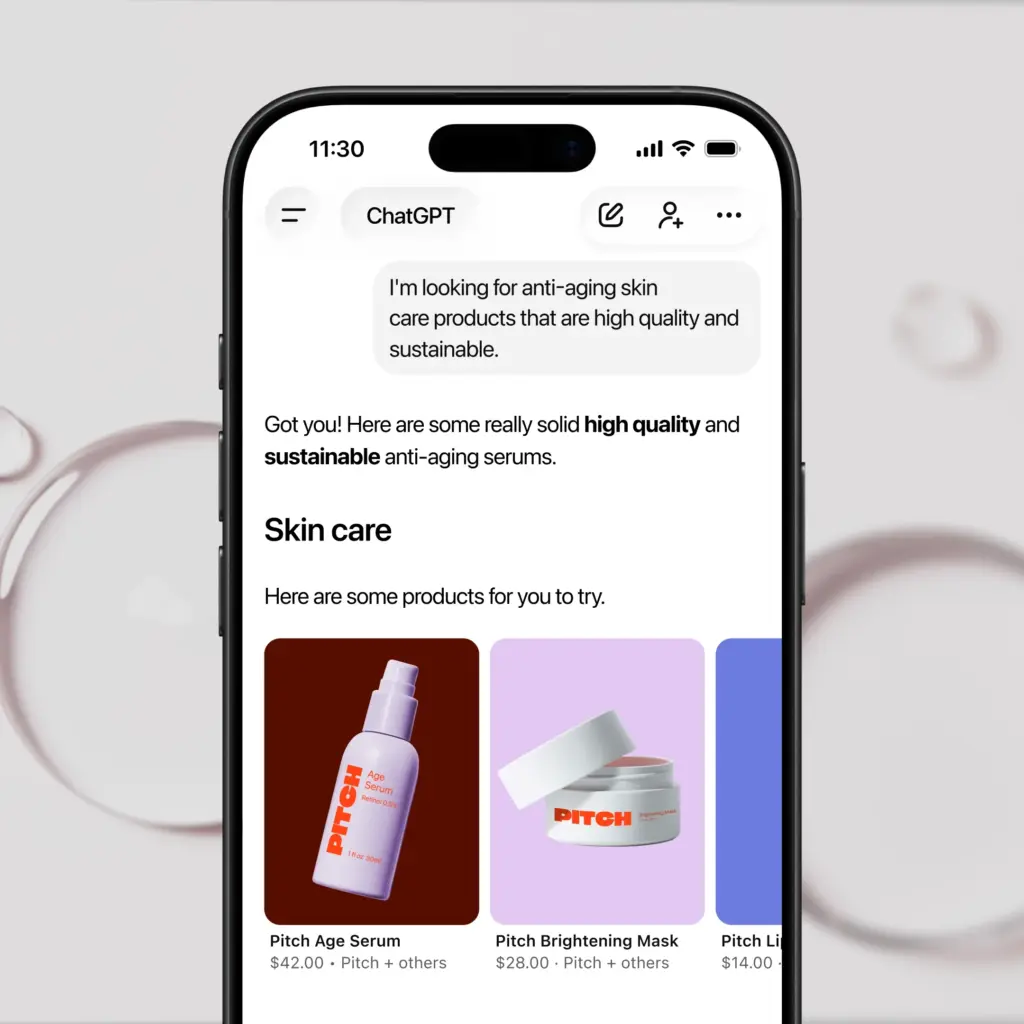
Orders still land in the merchant's admin with the customer's name, email, and shipping details.
- shop.md turns ChatGPT, Claude, or any other agent into a personal shopper. It searches more than a billion products, checks out with Shop Pay, and tracks orders.
- Shop Pay now works inside Muse from Meta, Claude Duet, Grok Bot, and Instinct.
- Google Search, AI Mode, and the Gemini app can sell products with checkout powered by Shopify.
- Compare-at-price flow to AI shopping agents through Shopify Catalog, so markdowns show up with no extra setup.
- Shopify connectors work with nine agents, so merchants can manage orders and inventory from ChatGPT, Copilot, Gemini, Perplexity, and others.
Shopper behavior backs the push. Salesforce forecasts that 20% of 2026 holiday ecommerce traffic will come from AI chat agents.
WebMCP makes every store ready for agents
WebMCP tools now run on every Liquid and Hydrogen storefront and checkout. Browser agents get structured data to search products, update carts, and finish checkout once the buyer approves.
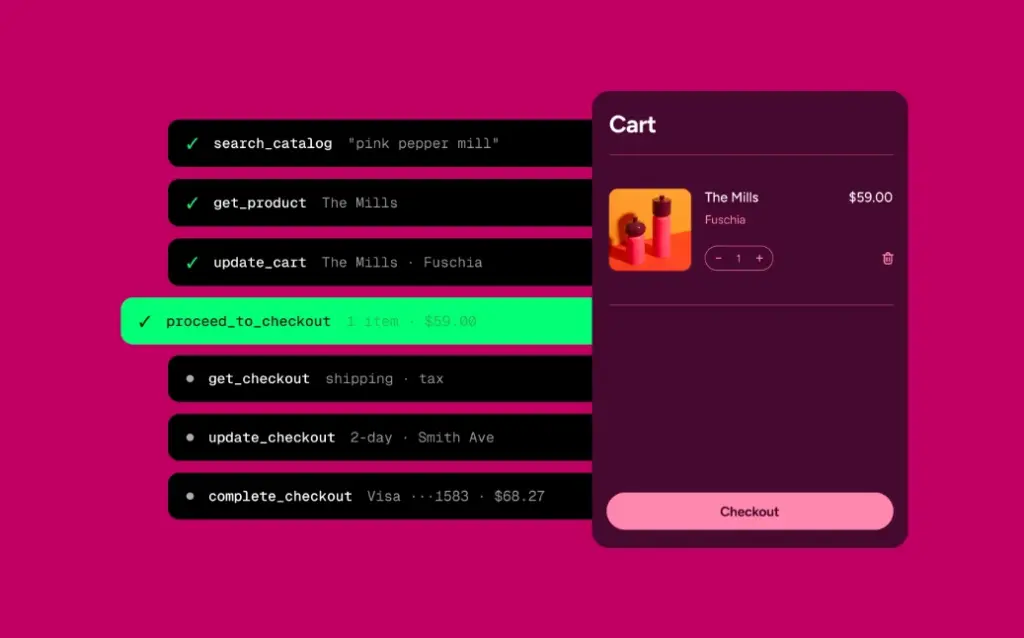
Merchants don't need to install anything. The checkout tools went live on September 28, a month ahead of the Edition.
Catalog eligibility and the knowledge base
A new admin view shows whether a store qualifies for Shopify Catalog, the data source ChatGPT, Copilot, Meta, and other agents use. It also links to fixes for anything in the way. The knowledge base, under Sales channels > Agentic, lets merchants approve what agents learn about return windows and shipping.
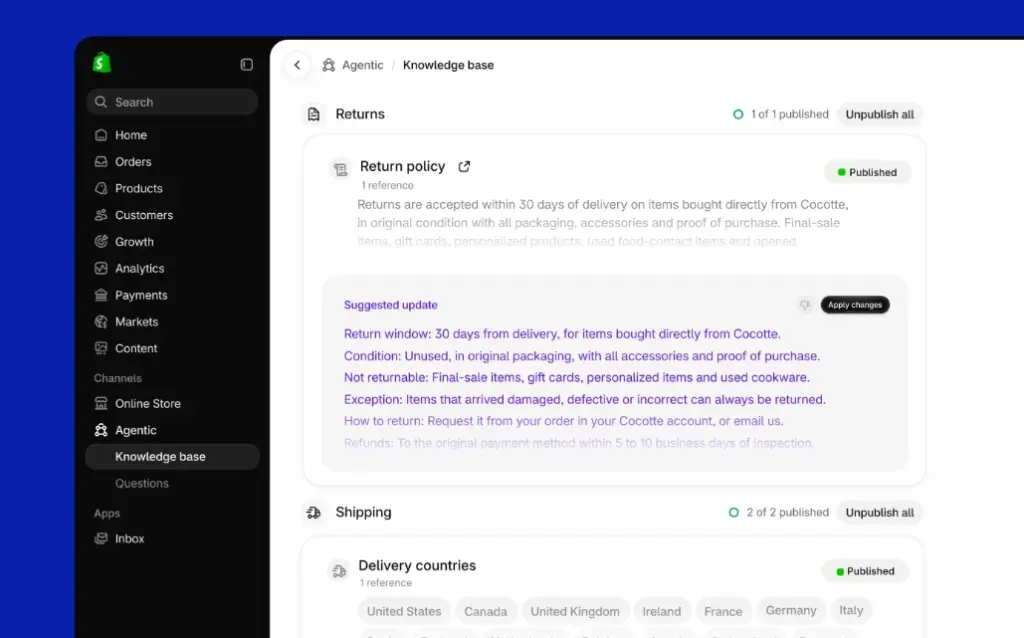
Nothing Shopify drafts reaches an agent until the merchant publishes it.
Sidekick, Canvas, and the Redesigned Admin
Sidekick was rebuilt for Fall '26. It can now run calculations, write code, search the web, and remember what a merchant teaches it. Every change needs the merchant's approval.
Usage is climbing fast. Daily Sidekick sessions grew 4.2x year over year, and Sidekick made more than 25 million theme edits in the first half of 2026.
It can now apply several changes from one approved plan, edit draft orders, and explain why a payout came in lower.
Canvas shows the entire store on one surface. Merchants can edit it directly or ask Sidekick for anything from a small tweak to a full redesign.
Canvas is in early access, and Shopify says stores go from no theme to launch 20% faster with it.
Here’s our guide to Shopify Sidekick use cases for every merchant.
New Theme Architecture: What It Changes for Storefront Builds
Page structure now lives inside the Liquid template instead of a separate JSON file. Themes get blocks, typed contracts, partial updates, markdown files that guide AI agents, and Tailwind styling built in.
Our team saw the problem this solves during a Horizon rebuild. After the Summer '25 Edition introduced Horizon themes and nested theme blocks, the team moved a client's product page onto the new framework.

The merchant loved it. Size guides, care notes, and FAQ blocks could be rearranged in the theme editor with no developer ticket.
The developers had a harder time. Each page was split between a JSON template and a tree of section and block files. Reviewing one product page meant opening several files and piecing them together. Handing the build to a second developer took a full walkthrough call.
The Fall '26 architecture closes that gap. A developer, or a coding agent, can now read a whole page from top to bottom in one file.
Shopify also now delivers only the CSS each page uses, so pages load faster. Hydrogen has been rebuilt to work with any framework, and Vercel Shop gives headless teams a ready Next.js template.
Payments, Fraud, and Checkout Updates
Payments got 30 updates, the most of any merchant category. The headline is Shopify Protect, a set of fraud and dispute tools that learns from signals across millions of stores.
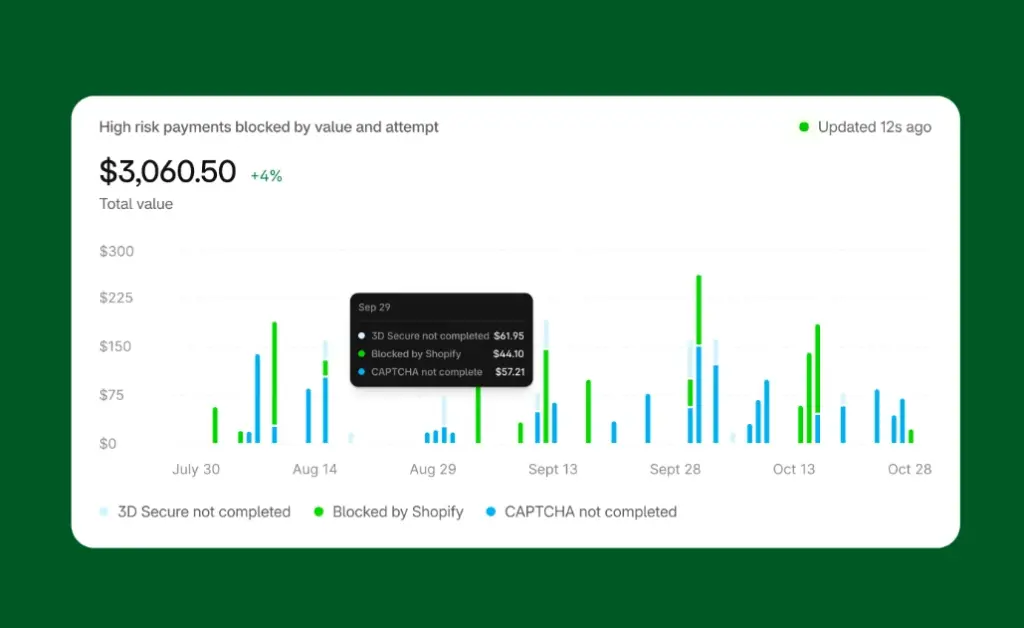
- Shopify Payments stops more than 12,000 high-risk payments every minute, at no extra cost.
- High-risk orders are now blocked before payment is authorized.
- The Shopify Protect Rule Builder lets merchants write fraud rules and test them against past orders.
- AI drafts chargeback responses for each bank, and carrier proof of delivery attaches to disputes automatically.
- Seven local payment methods joined Shopify Payments: Alipay, WeChat Pay, MB WAY, OXXO, Satispay, Scalapay, and GrabPay.
Checkout gets a tiled payment layout and custom fields for gift messages or delivery instructions.
Apple Pay in any browser is coming soon. Shopify Managed Markets now offers prices that include duties and taxes with flat-rate shipping, and Shopify says brands saw 50% higher international conversion.
For the basics, see our guide on Shopify fraud protection tips.
POS, Shop App, and Marketing Highlights
POS can now recognize more store customers who've paid with Shopify Payments elsewhere. A known customer at the counter has over 60% higher lifetime value than an unknown one.
- Carts sync across POS devices, and staff can open a known customer's abandoned online cart at the register.
- Universal Checkout on Shop lets shoppers buy from several brands in one cart, and Shop now has a web home at shop.com.
- Campaign Autopilot adds Microsoft Advertising, Snapchat, and SEO, with X Ads coming soon.
- Shop Campaigns expands to over 35 new markets.
- Shop Promise eligibility grew 20x, and badged products rank higher in Shop search and Shopify Catalog.
- Shopify Messaging adds WhatsApp automations and a ready-to-send Black Friday email campaign.
Shopify now supports 13 more languages, including Bengali, Gujarati, Marathi, Tamil, and Telugu. Storefronts can now launch in Arabic, Hebrew, or Urdu.
Developer and App Deadlines to Watch
Two deadlines can break features on live stores if teams ignore them.
- Script tags. Since October 1, 2026, apps can't create or update storefront script tags. On March 1, 2027, Shopify will stop loading them, per the script tag deprecation notice. Apps must move to app embed blocks or web pixels.
- Expiring access tokens. All public apps must use expiring offline access tokens by January 1, 2027. Apps still on old tokens will hit authentication errors.
Developers also get an app security check in the Shopify CLI and IP restrictions for API calls. Merchants should ask app vendors now whether these migrations are done.
What to Act On Before The Holiday Season 2026
Not every update needs action this month. Focus on discovery, checkout, and fraud during peak traffic.
- Run the Shopify Catalog eligibility check and clear anything it flags.
- Review and publish the knowledge base facts agents will see.
- Set compare prices on sale items so agents show the markdown.
- Bundle the BFCM theme, discount, and catalog changes into one Rollout with automatic rollback.
- Turn on Shopify Protect tools and review risk rules before traffic spikes.
- Confirm no installed app still depends on script tags.
Most store owners don’t have spare hours for these admin changes this close to peak season.
Identixweb’s Shopify store setup and management team can take care of Catalog fixes, Rollout setup, and app checks while merchants focus on selling.
What's Next After Shopify Editions Fall 2026
Shopify reports Q3 2026 results on November 3, 2026, its first earnings update since the Edition launched.
Several features are still marked as coming soon, including Apple Pay in any browser and a store audit log. Shopify hasn't announced the next Edition date.
One gap stands out for us: B2B. Only two of the 222 items mention B2B directly. Wholesale brands that need quoting or approval workflows will still rely on apps or custom builds.
Shopify Editions Fall 2026 points in one clear direction. Stores need clean product data, published policies, and a checkout agents can complete. Merchants who tighten those basics before Black Friday will see the payoff first.
FAQs
1. When was Shopify Editions Fall 2026 released?
Shopify released the Fall '26 Edition, called "Exponential," on October 28, 2026.
2. How many updates are in the Shopify Fall '26 Edition?
The Editions page lists 222 updates across 11 categories. Developer is the largest category with 57, followed by Payments with 30.
3. What’s new in the Shopify Editions Fall 2026?
Major updates include Shop Pay checkout inside AI agents and WebMCP tools that let browser agents shop any store. Sidekick was rebuilt to write code and search the web, and Canvas lets merchants redesign a store with it. Shopify Protect brings new fraud and chargeback tools.
4. What is Shopify Canvas?
Canvas is a design surface that shows a whole store on one screen. Merchants edit it directly or through Sidekick. It's currently in early access.
5. Do merchants need to set up WebMCP?
No. WebMCP tools run by default on every Liquid and Hydrogen storefront and checkout.
6. Which AI agents support Shop Pay checkout?
Shop Pay works in Muse from Meta, Claude Duet, Grok Bot, and Instinct. Shoppers can also use shop.md with ChatGPT, Claude, and other agents.
7. Which Fall ‘26 updates should I act on before Black Friday?
Start with the updates tied to discovery, checkout, and fraud. Run the Shopify Catalog eligibility check, publish knowledge base facts, and compare at prices on sale items. After that, turn on Shopify Protect tools and group BFCM themes and discount changes into one Rollout.
8. Will the script tag and access token changes affect my store?
Only if an installed app still relies on them. Apps can no longer create or update script tags, and Shopify stops loading them on March 1, 2027. Any widget or tracking code still using them will stop working. Public apps must also switch to expiring access tokens by January 1, 2027, while custom apps aren’t affected. Merchants should ask each app vendor to confirm both migrations are done.


About the author
Vineet Nair
Vineet is an experienced content strategist with expertise in the ecommerce domain and a keen interest in Shopify. He aims to help Shopify merchants thrive in this competitive environment with technical solutions and thoughtfully structured content.