


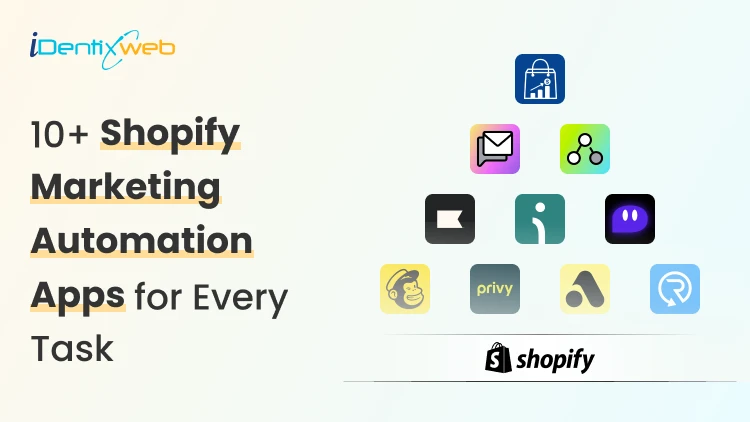
Running a Shopify store in 2026 gets busy fast, especially with Shopify marketing automation in every part of the workflow.
Most new store owners still have the same problem. They get traffic, but they do not follow up at the right time.
A shopper signs up for a discount and never hears from the brand again. Someone adds a product to the cart and leaves. That is where I recommend Shopify marketing automation tools.
As a Shopify expert, I have worked with 100+ stores, and I always suggest that new stores start with a simple automation stack instead of installing too many apps.
What is Shopify marketing automation in 2026?
Shopify marketing automation means using customer behavior to trigger emails, SMS, offers, customer tags, cart messages, or workflows automatically.
A simple example is once a customer signs up. Your store sends a welcome email.
Shopify Messaging can send emails when customers take actions like abandoning a cart or signing up for a newsletter. These automations help merchants spend less time on repetitive sends while reaching customers at key moments.
In 2026, Marketing automation for Shopify is not only about email. It connects many parts of the customer journey.
You can automate:
- Email campaigns
- SMS messages
- Cart recovery
- Browse recovery
- Customer segmentation
- Product recommendations
- Post-purchase follow-ups
- Win-back campaigns
- Cart drawer upsells
- Progress bar offers
- Free gift offers
- Product bundles
Why do new Shopify stores need automation in 2026?
New stores often wait too long before setting up automation. They focus on ads first and customer follow-up later. I do not recommend that.
Traffic without follow-up gets expensive. Every click costs money. Automation helps new stores:
- Save time
- Recover more carts
- Build email and SMS lists
- Improve repeat purchases
- Increase average order value
- Send personalized offers
- Reduce manual work
The best part is that a small Shopify store can start with basic automations and improve them over time.
What Shopify leaders are saying about automation?
Shopify is moving heavily toward AI, smarter workflows, and faster merchant tools.
Shopify President Harley Finkelstein said, “Shopify has entered the AI era with a clear edge,” while discussing Shopify’s commerce intelligence and growth direction in 2026.
Tobi Lütke also shared that “Using AI effectively is now a fundamental expectation” at Shopify.
For Shopify merchants, this matters because Shopify is clearly building toward automation.
Shopify’s March 24, 2026, update on Marketing automations
On March 24, 2026, marketing automations that use Shopify Messaging emails moved to the Shopify Messaging app. Automations that use marketing activities from other apps became available in Shopify Flow. Shopify also said merchants did not need to take action, and existing automations would keep working.
From a merchant’s point of view, this update makes the automation setup cleaner.
Simple email workflows now sit inside Shopify Messaging. Advanced workflows using apps, conditions, and custom actions sit inside Shopify Flow.
10+ Best Shopify marketing automation tools in 2026
The Best Shopify marketing automation tools depend on your store stage. A new store may need email capture, abandoned cart recovery, and a welcome email.
A growing store may need SMS, segmentation, customer journeys, and product recommendations.
Here is a simple comparison.
| App | Best for | Main use case |
| iCart | AI-powered Product Recommendations | Cart drawer upsells, progress bar, bundles |
| Shopify Messaging | New Shopify stores | Email, SMS, templates, segments |
| Shopify Flow | Custom workflows | Trigger, condition, and action |
| Klaviyo | Growing stores | Email, SMS, segmentation |
| Omnisend | Email and SMS in one place | Welcome flows, cart recovery, product recommendations |
| Postscript | SMS-first brands | SMS campaigns |
| Mailchimp | Beginner-friendly email | Email campaigns |
| Privy | List growth | Popups, email capture, SMS capture |
| Attentive | Larger brands | AI-led SMS and email |
| Drip | Behavior-based marketing | Segmentation, emails, popups |
| Recart | SMS list growth | SMS capture and abandoned cart recovery |
1. iCart Cart Drawer Cart Upsell
Most marketing automation apps focus on what happens after a customer signs up, leaves, or buys.
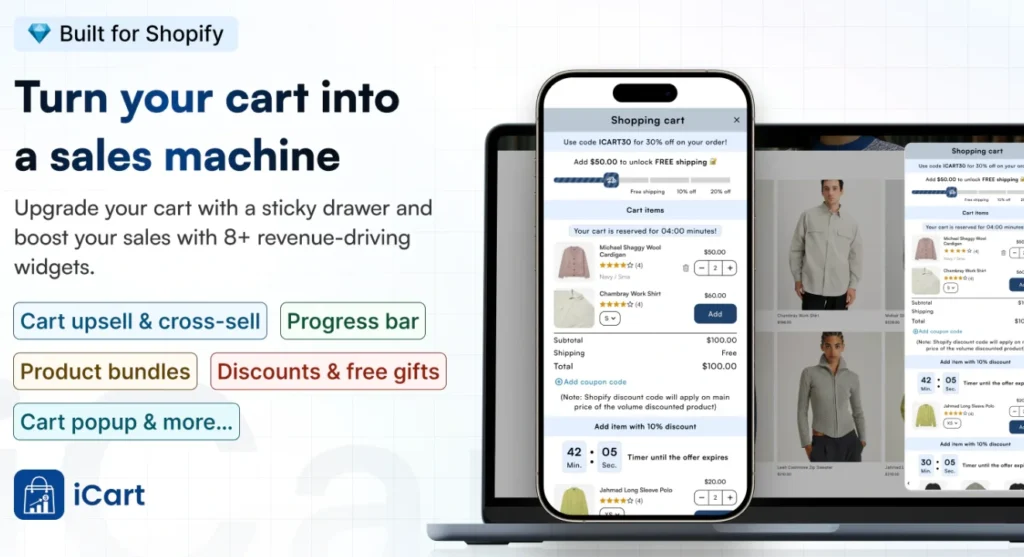
iCart focuses on the cart moment. That matters because the shopper is still active. A relevant offer at that point can increase AOV without waiting for an email or SMS later.
iCart is built for pre-checkout cart upsell automation. It offers cart drawer upsells, cross-sells, product bundles, progress bar, shipping bar, AI-powered product upsells, cart discounts, free gifts, and no-code cart customization.
Here is a simple example.
A customer adds a T-shirt worth $1,500 to the cart. Your store can show a progress bar saying they can unlock a free T-shirt from a selected collection with 30% off when the cart reaches $2,000. The offer depends on the cart total, so it feels relevant.
Best fit: Stores that want cart upsells, bundles, progress bars, and pre-checkout AOV growth.
2. Shopify Messaging
Messaging helps merchants send personalized emails and SMS to customer segments. It also includes templates, Sidekick-assisted email editing, product-focused messages, and performance tracking for clicks and conversions.
Shopify Messaging is useful for:
- Welcome emails
- Product updates
- Simple promotions
- Abandoned checkout emails
- Newsletter campaigns
- Customer segment-based campaigns
Best fit: New & small catalogs stores with simple email and SMS needs.
3. Shopify Flow
Flow is Shopify’s workflow automation tool. It works well when you want custom rules behind your marketing operations.
For example, you can create workflows like:
- Tag a customer as VIP after spending over $500
- Add customers to a segment after buying from a specific collection
- Send an internal alert for high-value orders
- Trigger an app action after a customer places a second order
- Start a flow when a product goes out of stock
- Create rules for loyalty, retention, or post-purchase campaigns
Best fit: Growing stores & Shopify Plus stores that need more advanced workflow.
4. Klaviyo
Klaviyo is one of the strongest apps for Shopify email and SMS automation.
It works well when your store has enough customer data, and you want deeper segmentation. It helps you easily run personalized campaigns through templates and automation.
Klaviyo can support:
- Welcome series
- Abandoned cart flows
- Browse abandonment
- Product recommendations
- Win-back campaigns
- Post-purchase flows
- Customer segments
- Email and SMS campaigns
New merchants should avoid building too many flows at once. Start with welcome, abandoned cart, and post-purchase flows. Improve them after you have enough data.
Best fit: Growing stores, retention-focused brands, data-heavy marketing teams.
5. Omnisend
Omnisend is another strong choice for Shopify stores that want email and SMS in one dashboard.
It helps merchants grow email lists with popups, create emails with templates, and send personalized emails using AI-powered product recommendations and segmentation.
Omnisend is useful for:
- Welcome automation
- Abandoned cart emails
- Browse abandonment
- SMS campaigns
- Product recommendations
- Popups and forms
- Segmentation
- Email templates
I see Omnisend as a good middle option. Shopify Messaging may feel too basic for some stores. Klaviyo may feel too advanced. Omnisend sits nicely between the two for many new and mid-sized brands.
Best fit: New to mid-sized stores that want email and SMS without a complex setup.
6. Postscript
Postscript is built for SMS marketing. It works best when a Shopify store wants SMS to become a serious revenue channel. If you want to execute SMS programs that engage customers through text messages, this is the tool to go for.
Postscript can help with:
- SMS campaigns
- Cart recovery texts
- Customer segmentation
- Promotional messages
- Product launch texts
- Two-way SMS communication
- SMS automation
I would not pick Postscript if email is your main priority. It works better as a focused SMS layer beside an email platform.
Best fit: SMS-first brands, stores with strong mobile traffic, and repeat purchase products.
7. Mailchimp
Mailchimp works well for merchants who already understand the platform and want a familiar tool.
It's good for email campaigns, SMS campaigns, popups, forms, landing pages, abandoned cart emails, browse abandonment, welcome emails, follow-up emails, price drop emails, and back-in-stock emails.
I would suggest Mailchimp for merchants who want simple email marketing and do not need advanced Shopify-first automation right away.
For deeper ecommerce segmentation, Klaviyo or Omnisend may feel stronger. For basic campaigns, Mailchimp can still work well.
Best fit: Beginners, simple email needs, merchants already using Mailchimp.
8. Privy
Privy is a good option for list growth.
Many new Shopify stores struggle because they have traffic but no owned audience. Privy helps with popups, email capture, SMS capture, and cart saver messages.
Privy can support:
- Exit-intent popups
- Discount popups
- Email capture
- SMS capture
- Cart saver texts
- Email and SMS automations
- Drag-and-drop email editing
I like Privy for stores that need to build an email or SMS list before running advanced campaigns. A good pop-up strategy can fix that early.
Best fit: New stores, list building, pop-up campaigns, discount capture flows.
9. Attentive
Attentive is better suited for larger brands that want advanced SMS and email.
It is an AI-powered mobile email and SMS marketing platform for personalization at scale. It also helps with list growth, segmentation, personalized messaging, and compliance support.
I would not place Attentive as the first option for a small new store. It makes more sense when the brand has traffic, subscribers, and a serious owned marketing strategy.
Best fit: Larger Shopify brands, SMS-heavy brands, and retention teams.
10. Drip
Drip works well for behavior-based email marketing.
It helps stores grow revenue with automated emails, newsletters, abandoned cart flows, popups, and customer data in one app. It also helps with real-time dynamic segmentation and customer behavior-based automations.
I would choose Drip when a merchant wants email automation based on actual customer activity. It is especially useful when customer behavior matters more than basic newsletter sends.
Best fit: Stores that want smarter segmentation and behavior-based email flows.
11. Recart
Recart focuses on SMS list growth and cart recovery.
It helps with custom popups for desktop and mobile, direct-to-text and email capture, automations for welcome flows, abandoned cart rescue, reorders, AI tools, analytics, and compliance support.
Recart can help with:
- SMS list growth
- Email capture
- Abandoned cart recovery
- Welcome flows
- Reorder reminders
- SMS automations
- AI-assisted content and send times
I would consider Recart when SMS cart recovery is a key goal. It is a stronger fit for stores that already get enough traffic to build a meaningful SMS list.
Best fit: SMS list growth, cart recovery, reorder-focused stores.
Which Shopify marketing automation tool should you choose?
The best Shopify marketing automation apps depends on your current store stage.
A new store should not install too many apps at once. Start with the flows that can create the fastest impact.
For most new Shopify stores, I would begin with:
- Welcome email
- Abandoned cart recovery
- Browse abandonment
- First purchase follow-up
- Win-back email
- Basic SMS capture
- Cart upsell offer
That is how marketing automation for Shopify becomes useful. It saves time, improves follow-up, and helps your store grow without adding more manual work.
FAQs
1. Can I automate my Shopify store?
Yes. You can automate many parts of your Shopify store, including emails, SMS, cart recovery, customer tagging, order workflows, inventory alerts, and cart upsell offers.
2. Does Shopify have marketing automation tools?
Yes, Shopify has built-in tools like Shopify Messaging and Shopify Flow for marketing automation. Shopify Messaging supports email and SMS campaigns for customer segments, while Shopify Flow helps merchants build custom trigger-based workflows without code.
3. Which is the best Shopify marketing automation app for email marketing?
For advanced email marketing, I would choose Klaviyo because it works well for segmentation, personalized email campaigns, SMS, and customer data-driven automation. For new stores, Omnisend is a strong option because it supports email campaigns, popups, abandoned cart workflows, welcome automation, segmentation, and AI-powered product recommendations.
4. Which are the best Shopify marketing automation apps for SMS?
For SMS automation, Postscript and Omnisend are strong options depending on your store size and goals. Postscript is better for SMS-first brands, and Omnisend works well when you want email and SMS together.

About the author
Vineet Nair
Vineet is an experienced content strategist with expertise in the ecommerce domain and a keen interest in Shopify. He aims to help Shopify merchants thrive in this competitive environment with technical solutions and thoughtfully structured content.