





I have worked with a lot of Shopify stores since the start of 2026. The one category that comes up most times is skincare. Most new Shopify skincare stores had the same problem. Traffic comes in, but sales don’t.
I've spent years building and optimising skincare brands on Shopify. The product and branding are almost always great. But the store loses visitors at every step from discovery to checkout. Conversion rates sit at 1-2% when they should hit 3-4% or higher.
Skincare is a different beast from any other Shopify niche. Your customer is putting something on their face. They want proof it works, know every ingredient, and want to see real results from real people who look like them.
Shopify e-commerce skin products sales strategies need to be built specifically for how skincare buyers think and shop in 2026.
Why is selling skincare on Shopify a different game?
Skincare buyers in 2026 are sharper than they've ever been.
They Google ingredients before buying, scroll TikTok for dermatologist reviews, and read every label. The "skincare-first" consumer trend has reshaped beauty ecommerce, with skincare now outpacing makeup as the fastest-growing category in DTC.
So when I work with skincare Shopify stores, I throw out the generic ecommerce playbook. What converts for a t-shirt brand will tank for a serum. Every strategy below is built around that reality.
Proven sales strategies for Shopify skincare products
1. Bundle products into routines
Skincare buyers think in routines. Cleanser, serum, moisturiser, SPF. Morning and night.
So sell the routine. Build "Morning Routine" and "Night Routine" bundles. Build concern-based kits: an acne kit, a hyperpigmentation kit, a sensitive skin kit. Average order value jumps 35-60% when bundles are positioned as complete solutions instead of "buy 3, save 10%."
The discount matters less than the framing.
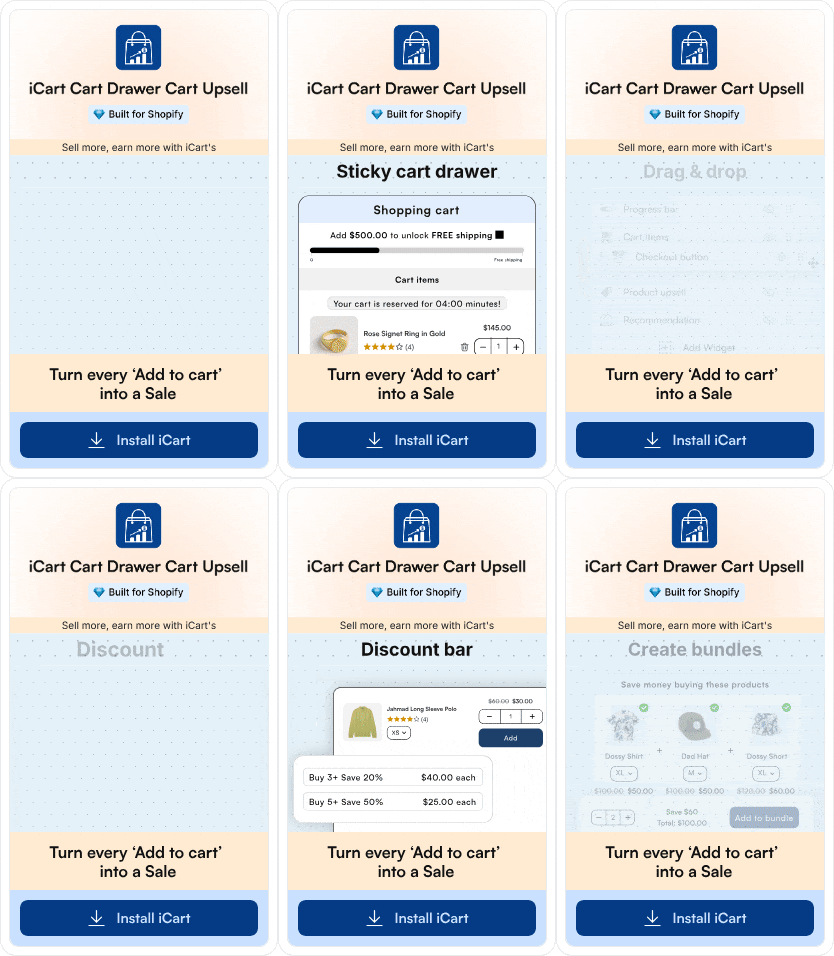
Apps that work well for this: iCart, bundler, Shopify Bundles (native and free), and Rebuy for smarter bundle recommendations.
The Only Bundle App for Skincare Brands With Free Plan
See how top Skincare brands like Anua installed iCart Cart Drawer Cart Upsell to boost their revenue.
2. Pick a Shopify theme built for Skincare storytelling
Your theme is doing 40% of the selling job before a customer reads a single product description.
For new skincare Shopify stores, I keep recommending the same handful of themes. Dawn and Sense (free), Studio, Prestige, and Beyond. Each one handles image-heavy storytelling well, loads fast on mobile, and gives you the section flexibility skincare needs.
Look for these features in any skin care Shopify theme you pick:
- Ingredient tabs or expandable sections on product pages
- Before-and-after image blocks
- Sticky add-to-cart bars (huge for mobile)
- Customisable hero sections for routine storytelling
- Page load speed under 2 seconds
If your theme can't handle these, swap it. I've seen stores double their conversion rate from a theme change alone.
3. Build Product pages that sell the outcome
Skincare buyers aren't buying a serum. They're buying clear skin. Less redness. Hydrated skin that glows.
Lead with the outcome. Back it with ingredients.
Here's the product page structure I use for every skincare brand I work with:
- Hero headline focused on the result ("Fade dark spots in 8 weeks")
- Sub-headline naming the hero active ("Powered by 10% niacinamide")
- Full ingredient list, visible without clicking (consumers expect this)
- "How to Use" section with step-by-step photos
- Skin type tags so shoppers self-qualify in seconds
- Reviews with photos sitting above the fold
The "How to Use" block is underrated. Adding it cuts skincare returns by 20-30% in the stores I've optimised because customers actually use the product correctly.
I love Kylie Cosmetics’ product page. Their hero and ‘how-to-use’ section needs to be studied by Shopify skincare stores.
4. Use skincare FAQs to solve the "Is this right for me?" problem
An FAQ section works great for skincare brands. Skincare has a massive "will this work on MY skin?" objection.
Build a 5-7 question covering skin type, top concern, current routine, and budget. At the end, serve personalised product picks. You can also create this in the form of a quiz. The conversion rate on quiz-takers runs 20-40% higher than cold visitors in every store I've measured.
Apps I trust:
- Octane AI (the most flexible)
- Shop Quiz by Powr
- Visely (good for larger catalogues)
Drop the quiz on your homepage, your product collection pages, and in your welcome email. Make it impossible to miss.
5. Stack social proof until it's impossible to ignore
Reviews with photos beat plain-text reviews by 2-3x in skincare.
Your customers want to see real people with real skin getting real results. The closer those people look to them, the higher your conversion rate climbs.
Here's how I layer social proof for a Shopify store skin products sales boost:
- Photo reviews on every product page, sorted by skin type
- Star ratings on collection pages, not just product pages
- Dermatologist endorsements or clinical study badges, where relevant
- "Cruelty-free," "vegan," and "clean beauty" certifications are displayed clearly
- TikTok and Instagram UGC embedded inside product descriptions
- A reviews carousel on the homepage
Tools that handle this well: Yotpo, Judge.me, and Loox. Loox is my pick for new stores because of how cleanly it surfaces photo reviews.
6. Turn first-time buyers into subscribers
Skincare is a refill business. If you're not running subscriptions, you're leaving most of your revenue on the table.
A subscriber is worth 4-7x more than a one-time buyer in skincare.
Offer "Subscribe and Save 10-15%" on every product that gets used up (serums, cleansers, moisturisers, SPF). Build flexibility into the experience. Let people skip a month, swap products, or pause without calling support.
For Shopify subscription apps, I lean on:
- Recharge (industry standard for scaling brands)
- Shopify Subscriptions (native, free, solid for new stores)
- Bold Subscriptions
Start with the native option if you're under $1M ARR. Move to apps when you outgrow them.
7. Master SEO and AEO for skincare buyer intent
78% of skincare buyers research on Google before they buy. Your store needs to show up.
Long-tail keywords are where new skin care Shopify stores win. Phrases like "best serum for combination skin," "vitamin C for melasma," or "fragrance-free moisturiser for rosacea" have lower competition and higher buying intent than head terms.
Here's the content stack I built for every skincare brand:
- Pillar pages around each skin concern (acne, ageing, hyperpigmentation, sensitivity)
- Blog posts answering specific ingredient questions ("Can I use retinol with vitamin C?")
- Product schema markup (Shopify doesn't do this perfectly by default — install a schema app)
- Internal linking from blog posts to product pages
For 2026, AEO matters as much as SEO. Structure your content so AI Overviews and ChatGPT search can cite you.
8. Run Smart Upsells and Cross-Sells at the right moments
Timing is everything with upsells.
Post-purchase upsells outconvert pre-purchase ones in skincare. I've seen 60% lift in some stores by moving the upsell offer to the thank-you page instead of the cart.
A few upsells that consistently work:
- "Frequently bought together" on product pages (cleanser + serum)
- "Add SPF for $12 more" to the cart, framed as protecting the investment
- Post-purchase: "Customers who bought this also added our eye cream add it to your order for 20% off"
Apps I use: iCart, Rebuy, UpCart, and ReConvert for post-purchase flows.
9. Launch SMS and email flows built for skincare buyers
Email and SMS are where the long-term money lives.
Build these flows first:
- Welcome flow: skin quiz results → personalised product picks → social proof → first-purchase offer (give the discount on email 3, not email 1)
- Abandoned cart flow: 3 messages, escalating urgency, no discount until the third
- Post-purchase flow: thank you → how to use the product → review request 14 days in
- Replenishment flow: 30 days before product runs out, send "Your serum's running low" with a one-click reorder
Klaviyo is the standard for email. Postscript or Attentive for SMS. Get the welcome and abandoned cart flows live in week one. They'll pay for the rest of your apps.
Common mistakes I see new skincare stores make
A few patterns kill new skincare stores faster than anything else:
- Hiding ingredient lists in tiny fonts or behind extra clicks
- Generic "luxury" branding with no actual point of view
- Pricing is too cheap, which signals "this won't work" in skincare
- Skipping mobile optimisation when 70%+ of skincare shoppers buy on their phones
- Treating Shopify like set-and-forget instead of testing weekly
Fix these before you spend another dollar on ads.
Your 30-Day Shopify skincare sales strategy
If you're staring at this list wondering where to start, here's the exact order I'd run:
- Week 1: Audit your product pages. Install a skin quiz.
- Week 2: Build your first routine bundle. Turn on subscriptions.
- Week 3: Set up review collection automation. Launch one post-purchase upsell.
- Week 4: Publish your first SEO content cluster around one skin concern.
Shopify skincare product sales strategies are needed in 2026
Growing a skincare brand on Shopify is stacking small wins.
Every brand I've worked with started somewhere. Most started messily. The ones that scaled didn't have better products than their competitors. They had sharper product pages, smarter bundles, and tighter email flows.
Pick two Shopify skincare store sales strategies from this list. Use them this week and measure in 30 days. That's how new skincare Shopify stores break out.
FAQs
1. What are the best Shopify ecommerce skincare sales strategies?
The strategies that move the needle for skincare brands are skin quizzes, routine-based bundles, subscriptions, photo reviews, and SEO content built around skin concerns.
2. What are the best skin care Shopify themes to increase sales?
Dawn, Sense, Studio, Prestige, and Beyond are the themes I recommend most often for skincare brands. They handle image-heavy storytelling well, load fast on mobile, and give you the section flexibility skincare needs.
3. What are the best skin care Shopify stores to study in 2026?
Fenty Beauty, Rhode, Glossier, Dieux, Cocokind, and Kosas are the ones I keep going back to for inspiration. Browse their product pages, sign up for their emails, and reverse-engineer what's working.
4. Which are the best Shopify apps to use for skincare brands?
My core stack for skincare Shopify stores is Octane AI for quizzes, Loox or Yotpo for photo reviews, Recharge or Shopify Subscriptions for refills, iCart for bundles and upsells, and Klaviyo for email.
About the author
Vineet Nair
Vineet is an experienced content strategist with expertise in the ecommerce domain and a keen interest in Shopify. He aims to help Shopify merchants thrive in this competitive environment with technical solutions and thoughtfully structured content.