

Shopify Apps
Gather knowledge about the latest insights, updates, tips, and tricks in the Ecommerce industry.

5 Min • 29 April 2026
How Anua Unlocked 5X AOV Growth with iCart’s Smart Cart Features
delivery customization Challenges Solutions drive results Scale business delivery customization Challenges Solutions drive results Scale business delivery customization Challenges Solutions drive results Scale business delivery customization Challenges Solutions drive results Scale business Anua is a globally recognized Korean skincare brand known for its minimalist philosophy and focus on gentle yet effective formulations. Built on the idea of simplifying skincare routines, Anua develops products that deliver visible results while avoiding harsh or irritating components, making them suitable for sensitive skin types. Initially using a traditional full cart experience, Anua transitioned to iCart’s side cart solution in August 2025, to create a more seamless and engaging shopping journey. This shift allowed customers to easily explore complementary skincare products without disrupting their browsing flow, making it more intuitive to discover items that fit into a complete routine. By surfacing relevant recommendations directly within the cart, the brand enhanced product visibility across its range. Challenges Before implementing iCart’s side cart solution, Anua faced limitations with their existing full cart experience, which created friction in the customer journey. The traditional cart setup redirected users away from product pages, interrupting their browsing flow and reducing opportunities to explore additional products. As a skincare brand built around routines rather than single-item purchases, this made it difficult to effectively showcase complementary products and encourage customers to build complete regimens. Additionally, the lack of in-cart personalization and strategic upsell opportunities meant that customers were often unaware of related products that could enhance their skincare results. This limited the brand’s ability to increase average order value (AOV) and fully leverage its diverse product range. Anua needed a more dynamic and intuitive cart experience that could seamlessly introduce relevant recommendations while maintaining a smooth and engaging shopping journey. ❌ Cart Value Barriers Low average order value (AOV) due to single-item focus Most customers completed purchases with one primary product instead of building multi-step routines. Cart abandonment near shipping thresholds Customers were not clearly informed or motivated to reach free shipping or discount thresholds. Missed savings opportunities Customers were unaware of potential value in purchasing bundled routines or multiple complementary products. ❌ Absence of Progress-Based Incentives No free shipping or discount progress bar Customers were not motivated to increase their cart value due to lack of visible incentives. Missing tiered rewards system There were no structured milestones (e.g., “Spend more to unlock offers”), reducing upsell opportunities. ❌ Ineffective Cart UI/UX (Pre-Side Cart) Full-page cart disrupted shopping flowCustomers had to leave their browsing journey, increasing friction and drop-offs. No quick add/remove functionality Users couldn’t easily modify their cart or add suggested products without navigating away. Solution To overcome these challenges, Anua implemented iCart’s side cart solution to transform their traditional cart into a high-converting, interactive experience. By replacing the full-page cart with a seamless side cart, the brand ensured that customers could continue browsing while viewing their cart, significantly reducing friction in the shopping journey. Additionally, features like product recommendations & progress bars for free shipping and discounts motivated customers to increase their cart value. By combining personalization, incentive-driven messaging, and a user-friendly interface, Anua successfully turned their cart into a powerful revenue-driving touchpoint rather than just a checkout step. To maximize their cart effectiveness, they implemented two powerful features: ✅ Progress Bar with Multi-Reward Incentives Implemented a tiered progress bar to encourage higher cart value Customers are guided with a clear message like “Add $3.10 to unlock secret offer,” motivating them to continue adding products. Generated over $5M+ in revenue through incentive-driven cart progression Used product-based rewards to align with customer intent Instead of generic discounts, Anua incentivized purchases with relevant skincare items like Dark Spot Pads and mini serums. Built visual motivation for routine expansion As customers add products, they can clearly track progress toward unlocking multiple rewards, encouraging them to build a complete skincare routine. ✅ Product Recommendations Implemented “Frequently Bought Together” recommendations Customers adding a single product (e.g., toner) are shown complementary items like serums, moisturizers, or pads to complete their routine. Generated over 275K revenue through in-cart recommendations Encouraged full skincare regimen building Instead of isolated purchases, the cart suggests step-by-step product combinations aligned with common skincare routines. Increased product discovery at the final stage By surfacing relevant items directly in the cart, Anua ensured customers explore more of their catalog without leaving the checkout flow. Results Achieved in Last 180 Days 22932 Total Store Orders 45101 Total iCart Orders 5X iCart Generated AOV 65.70% Upsell Affected Conversion Rate These improvements reflect a clear shift in customer behavior on Anua’s store. Cart abandonment reduced as shoppers discovered complementary skincare products and felt encouraged to build complete routines. Engagement also increased, with customers interacting more with in-cart recommendations and exploring relevant product pairings. Results & Impact And...Results is Our Main Clarification By implementing iCart’s cart drawer, product recommendations, and progress bar, Anua transformed its cart into a high-performing conversion touchpoint. Shopping Experience Enhancement The improved cart experience encouraged customers to discover complementary products and understand the value of sustainable beauty routines. For instance, the clear presentation of subscription savings alongside one-time purchase options helped customers make more informed decisions about their long-term hair care needs. As Anua continues to optimize its cart experience, the brand is closely monitoring: Routine-based purchasing behavior - tracking how customers move from single items to multi-step regimens Engagement with in-cart recommendations - measuring interaction with suggested products Cart value progression - analyzing how incentives influence higher spending [related_cases_slider] Ready to Write Your Success Story? Try icart App Join successful businesses like Anua and Master your delivery scheduling Delight customers with precise timing Grow your special occasion orders Expand your delivery reach
Read Blog
2 Min • 29 April 2026
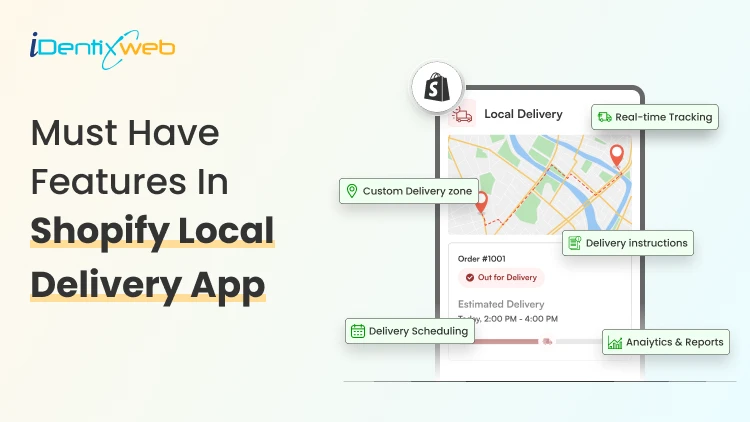
Shopify Local Delivery App: 7 Must-Have Features for Scalable Scheduling & Operational Efficiency
Running a delivery-based business on Shopify can be exciting, but as your order volume grows, so do the operational challenges. Managing deliveries manually quickly becomes overwhelming, leading to delays, confusion, and unhappy customers. This is where a powerful Shopify Local Delivery App becomes essential. It helps automate your workflows, improve delivery efficiency, and provide a better customer experience. In this blog, we’ll explore the most important features you should look for in a Shopify local delivery app. Why You Need a Shopify Local Delivery App At the beginning, many store owners handle deliveries manually using spreadsheets, phone calls, or basic tools. But as your business grows, this approach starts to fail. You may face: Missed or delayed deliveries Poor communication with customers Inefficient routes and higher fuel costs Difficulty managing drivers Lack of visibility into operations A Shopify local delivery solution helps you automate these tasks, reduce human errors, and handle more orders without increasing stress. Must Have Features In Shopify Local Delivery Apps 1. Smart Delivery Scheduling Delivery scheduling is one of the most important parts of your operations. Without proper scheduling, even a small increase in orders can create chaos. A good Shopify local delivery app should allow you to: Set daily delivery limits Manage same-day or next-day delivery options Add cut-off times for orders With smart scheduling, you can distribute orders evenly across time slots, ensuring that your delivery team is not overloaded.
4 Min • 8 January 2026
Find The Best Local Delivery App For Shopify: Stellar vs Bird Comparison
Finding the best local delivery app for Shopify stores to rely on is no longer optional - It is important for all Shopify merchants. For those Shopify stores that offer same-day delivery, in-store pickup & shipping, sometimes meeting customer expectations can become complicated. But picking up the right local delivery Shopify app can directly impact your store’s conversions and order accuracy. In this comparison, let’s break down their features, pricing, use cases and more to help you decide which solution is the perfect fit for your business needs. Who is this comparison for? This comparison is especially useful if you: Manage time-sensitive orders (food, florist, grocery, bakery, retail) Offer local delivery, in-store pickup, or scheduled shipping Want to reduce fulfillment errors, support tickets, and missed delivery windows Why does this comparison matter? Choosing the right local delivery app for Shopify directly impacts how smoothly your store handles delivery and pickup orders. Small differences in features and flexibility can affect both customer experience and daily operations. Most Shopify apps look similar at first, but many struggle due to the shortage of some features like accurate delivery dates, lack of pickup options, non-transparent estimated delivery dates & more. And the result? Poor order management, frustrated customers, missed order deliveries, etc. Common Delivery Problems Shopify Stores Face Many Shopify merchants struggle with delivery and pickup workflows as soon as order volume increases. Common issues include: Customers do not know when their order will arrive Missed or incorrect delivery windows Manual coordination between orders, routes, and staff Limited checkout customization for delivery dates Confusion between pickup, delivery, and shipping orders These problems directly affect customer satisfaction, internal efficiency, and repeat purchases. What Most Local Delivery Apps Miss At first glance, many local delivery apps appear similar. However, several gaps tend to emerge after implementation: No checkout-level delivery date selection, especially on Shopify Plus Lack of transparent estimated delivery dates, leading to customer confusion Weak order editing and fulfillment controls Limited flexibility for complex delivery rules (product-based, ZIP-based, or method-based) Poor visibility into delivery schedules for internal teams Side-by-Side Feature Comparison: Stellar Delivery vs Bird Pickup FeaturesStellarBirdShopify PlusCheckout Optimization✔✖Estimated Delivery Date & Time✔✖No developersetup required✔✔Advanced delivery rules(product/ZIP/method)✔✔Multi-locationdelivery management✔✔Shipping integrations(FedEx, UPS)✖✖Advanced ordercontrols & edits✔✖Advanced analytics& reporting✖✖ A Simple Tick-List for Choosing Stellar Delivery Date & Pickup ✔ Let customers select delivery or pickup dates at product, cart, or checkout✔ Offer local delivery, store pickup, and shipping options in one app✔ Display estimated delivery dates and times to reduce support inquiries✔ Flexible order scheduling calendar for smooth fulfillment planning✔ Shopify Plus compatible: show the delivery calendar directly on checkout✔ Translate the delivery date calendar into your store’s language for global customers✔ Schedule deliveries seamlessly with an intuitive route planner✔ Minimize operational mistakes and missed delivery windows✔ Launch quickly - no developer setup required✔ Perfect for food, florist, grocery, and bakery stores managing in-store pickup and delivery A Quick Recap Before You Decide The problem: Shopify merchants struggle with delivery clarity, scheduling accuracy, and operational efficiency What matters most: Checkout-level visibility, flexible scheduling, and reliable order management Why Stellar fits: It addresses these challenges directly with delivery date control, pickup flexibility, and Shopify Plus compatibility Real Feedback, Real Impact Ready to Upgrade Your Order Management Experience? Install Stellar Frequently Asked Questions 1. Does Stellar work with Shopify Plus and POS?Yes. Stellar Delivery Date & Pickup supports Shopify Plus and can display the delivery calendar directly on checkout. It also integrates with POS for seamless in-store pickup management. 2. Which types of stores benefit most from Stellar?The app is ideal for food, florist, grocery, and bakery stores that manage local delivery and in-store pickup, but it can work for any Shopify store offering scheduled delivery or pickup. 3. Do I need a developer to set it up? No. The app is designed to be ready-to-use with minimal setup, automated rules, and no custom coding required. 4. Can I translate the delivery calendar for my store’s language?Absolutely. You can customize the delivery date calendar text to match your store’s language and localize the experience for international customers.
![Which Shopify Cart Type Works Best In 2026? [Backed by Real Merchant Data]](https://www.identixweb.com/wp-content/uploads/2026/02/13-02-Fri-Blog-Which-Shopify-Cart-Type-Sells-More_-Based-on-Merchant-Data-Compressify.io_.webp)
7 Min • 19 February 2026
Which Shopify Cart Type Works Best In 2026? [Backed by Real Merchant Data]
According to our Shopify Cart Type Benchmark Report, Cart Drawer outperformed Full Cart and Pop-up Cart in terms of revenue generation. If you just launched your Shopify store, you’re probably thinking about themes, product pages, and ads. But it is your Shopify cart type that quietly decides your revenue. In our 2026 Shopify Cart Type Benchmark Report, we analyzed 10,000+ Shopify merchants using iCart from January to December 2025. We tracked what happened inside different cart experiences and how those choices translated into revenue. Merchants generated a 2.57X increase in revenue before checkout & 73.8% AOV boost with iCart's smart cart upsells. Not from new traffic. Not from new products. From the cart experience itself. But the wrong cart type can hurt you: This article is about one thing: Which Shopify cart type generates more revenue? [Backed by Real Merchant Data] By the end of this article, you’ll know exactly which cart type fits your stage, your niche, and your revenue goals. Why Cart Optimization Delivers Faster ROI Than Ads? Most Shopify merchants focus on traffic acquisition, but cart optimization delivers compounding returns with no incremental ad spend. According to our Shopify 2026 commerce trends report, on cart type, a 10% improvement in cart conversion outperformed a 20–30% increase in paid traffic. This is because: The shopper already has intent Cart-level decisions happen in seconds Upsells don’t increase CAC In our report, merchants who optimized cart experience first saw revenue lifts within 14 days, compared to weeks or months for ad optimization. Across cart-level interactions analyzed in our dataset, stores using optimized cart experiences recorded an average cart-to-checkout conversion rate of 5.66% compared to the global ecommerce average of 3%. Upsell Placements (Where Do Merchants Sell Products?) The Average Order Value (AOV) of Shopify comes between the range of $85 - $92, depending on the niche and age of the store. Because AOV is calculated as total revenue divided by the number of orders, increasing what each customer spends becomes a powerful growth lever. That makes upsell placements critical in the buying journey. What you show, and where you show it, can significantly shift cart value. Key Placements for Upsell & Why They Work? PlacementWhy It’s ValuableProduct PageRight when the shopper is deciding, showing relevant upgrades or complementary items influences what goes into the cart.Cart DrawerOnce items are added, the customer is already engaged. This is a strong moment to suggest related gifts, add-ons or higher-value alternatives. Full Cart PageThis gives a full view of the cart. Complementary items make upsells more attractive, especially if the total crosses a threshold. CheckoutAn ideal moment for “one-click upsell” because the user is already in a buy mindset.Thank You PageBuyers are done with payment. This is a good time to offer add-on deals or subscription/upsell offers for the next purchase. For the Shopify cart type, there are different Shopify cart examples that merchants use. A Shopify store, Dice Dungeons, using iCart's cart drawer. In our Shopify commerce trends 2026 report on cart type, we saw some staggering revenue generated from the placements of products using iCart. PlacementGrowth MultipleFull Cart2.2XCart Drawer3.2XPopup Cart1.95XFull + Side2.75XFull + Popup2.75X It is pretty evident that for the discussion on Shopify cart page vs drawer, cart drawer wins. The cart drawer feature of iCart has been the number one choice for the Shopify cart type for merchants. This is because: It avoids page reloads, reducing friction Keep shoppers anchored in the buying flow Create a “micro-decision moment” without commitment pressure Our report also found that our AOV through iCart is staggering at $1578.88. Cart Experience. How to Optimize Your Shopping Cart? Swad, a Shopify food and beverage store, is using cart items and the product recommendations feature of iCart. Shopping cart optimization is the process of improving every element inside the cart to reduce cart abandonment, increase AOV, and guide shoppers smoothly toward checkout. By enhancing key components, you turn the cart from a drop-off point into a revenue engine. ElementWhy is it valuable?Cart ItemsDisplays the products added to the cart and is the best place to highlight quantity options, variants, and suggestions.DiscountLet shoppers apply or unlock discounts and increase the likelihood of completing the purchase.Checkout ButtonGuides the customer toward completing the order, making it a crucial point for reducing drop-offs.Product RecommendationSuggests related or high-value items the customer is likely to buy based on what’s already in the cart.Product UpsellOffers an upgraded, premium, or higher-value version of the item already in the cart.Progress BarMotivates customers to complete purchases by showing rewards or milestones like free shipping or discounts. According to our survey, the progress bar generated the highest revenue, followed by the product upsell feature. WidgetRevenue IncreaseCart Items85%Discount140%Checkout Button110%Product Button95%Product Recommendation165%Product Upsell190%Progress Bar260% How Should Shopify Merchants Prioritize Their Cart Optimization? Number #1 Progress Bar Drives urgency without discounting and sets clear rewards. A Shopify clothing store, Garb Classics, is using the progress bar feature of iCart Number #2 Product Upsells (In-Cart) Works best for apparel, beauty, and accessories where bundles feel natural. Number #3 Product Recommendations Anua is a Shopify beauty store that is using iCart for the product recommendation feature. Expands discovery without increasing decision fatigue. Shopify Commerce Trends 2026 Report on Cart Type: Key Findings 1️⃣ Your Shopify Cart Type Directly Impacts Revenue 10,000+ Shopify merchants increased their revenue by 2.57X before checkout & boosted their AOV by 73.8% with iCart's smart cart upsells That revenue didn’t come from more traffic. It came from better cart experiences. 2️⃣ Cart Optimization Beats Traffic Growth A 10% improvement in cart conversion outperformed a 20–30% increase in paid traffic. 3️⃣ Cart Drawer (Slide Cart) Outperformed Everything Revenue generated by Cart Drawer is significantly higher than that of the Full Cart and Pop-up Cart. 4️⃣Progress Bar Generated the Most Revenue The Progress Bar feature outperformed every other feature. Close second and third are Product Upsell and Product Recommendations FAQs for Shopify Cart Type 1. Shopify cart type drawer or page, which one should merchants go for? If you’re a new store, start with a cart drawer because it keeps shoppers in the buying flow and reduces “back-and-forth” friction. Still keep a cart page accessible for shoppers who want a full review before checkout. 2. What is the difference between cart type drawer and page? A cart drawer (mini cart) slides in without leaving the product/collection page, so shoppers can adjust quantities and checkout faster. A cart page takes shoppers to a page where they get a fuller, more detailed summary of items just before checkout. 3. How to change the cart style in Shopify? Go to Online Store > Themes > Edit Theme, then open Theme settings > Cart, and choose Drawer, Page, or Popup notification (if your theme supports it). 4. What is the cart feature on Shopify? Shopify’s cart is the place where shoppers review items, update quantities, see totals, and move toward checkout. Many stores also use accelerated checkout buttons (like Shop Pay, Apple Pay, Google Pay) to reduce steps for buyers who want a faster path. 5. What is the best Shopify app for cart customization? If you want fast setup with strong revenue features, look for an app that supports drawer + page layouts, in-cart upsells, and a progress bar. Options merchants commonly use include iCart (drawer/popup/page, upsells, bundles, progress bar), UpCart, and Rebuy Smart Cart for cart personalization.
Sagarika Das
5 Min • 27 January 2026
8452 Views
Sagarika Das
6 Min • 14 July 2026
9436 Views
Sajini Annie John
2 Min • 10 February 2026
7331 Views
Sajini Annie John
6 Min • 20 August 2026
8012 Views
Sajini Annie John
3 Min • 11 November 2025
12403 Views
Sajini Annie John
6 Min • 3 April 2026
10020 Views
Sajini Annie John
5 Min • 10 February 2026
8270 Views

Sajini Annie John
6 Min • 12 February 2026
14613 Views
Sajini Annie John
10 Min • 12 February 2026
8611 Views

Sajini Annie John
3 Min • 10 February 2026
7717 Views
Sajini Annie John
7 Min • 12 February 2026
12720 Views

Sajini Annie John
2 Min • 10 February 2026
7824 Views