



Did you know that each new customer costs you five times more than retaining an existing one?
Since existing customers trust you, there is a 60-70% potential for repeated purchases. But you have only a 5-20% chance with a new visitor.
That's why so many Shopify brands focus on retaining customers. As a Shopify expert, I have seen that loyalty programs are a big win when it comes to customer retention.
In this article, I answer the most common question 'How to reward loyal customers' in 6 proven ways. I have seen these strategies work in many Shopify stores, and I will share them with you here.
How to Reward Loyal Customers? Proven Reward Strategies for Shopify Stores
1️⃣ Make them feel special
Loyal customers don’t just come back for discounts. They come back because your store makes them feel seen.
The goal here is simple: make repeat buyers feel like insiders. Once they feel they are a part of the team, they will feel special.
Start by acknowledging loyalty in small ways. A “Welcome back, [Name]” message, a thank-you note inside the package, or an email that references what they bought last time can instantly change how your brand feels.
Then give them perks that feel personal, not generic. Think early access to a new drop, a private sale link, or a “VIP” bundle that only repeat customers can buy. It doesn’t have to be expensive. It just needs to feel exclusive.
You can also surprise them at the right moments. A small freebie on their 3rd order, a birthday reward, or a bonus gift when they hit a spend milestone works because it feels unexpected and thoughtful.
Even your support experience can reinforce this strategy. If a repeat customer has an issue, prioritize them. Faster replies and a smoother resolution makes them feel valued, and that’s what turns a happy customer into a loyal one.
2️⃣ Feature a customer of the week/month/year
Everyone likes to be recognized for their contributions. Your customers are no different.
Suppose there is someone who purchases in your store more often than others. Or maybe you have a customer who recommends your store on socials regularly.
Feature such a consumer on the main page of your website, socials, or email digest. To enhance the effect of a title, you provide an exclusive discount.
Here is an excellent example of this approach from the Poplar Home Waterproofing store:
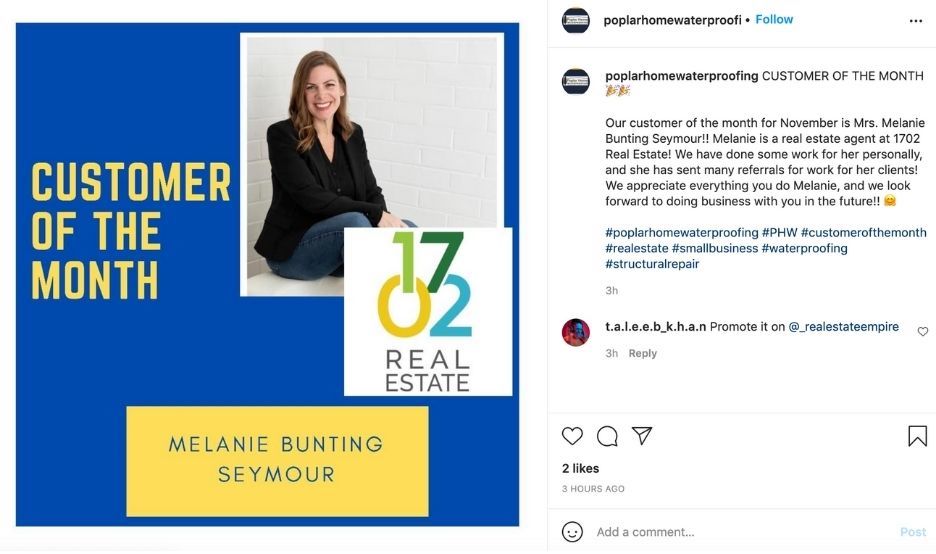
Image source.
Each month, they highlight top customers on Instagram. In addition to a photo, they also write a word of thanks for the customer's support.
As a result, other customers can be excited to take this honored place next time.
Use this method to make more buzz around your brand, increase following on socials, and get more customers involved in your business's success.
3️⃣ The buy X, get X free program
This proven approach is also called BOGO. When a customer gets something for free after spending a specified amount of money. Just look at Anua, a Shopify beauty store that uses this strategy.
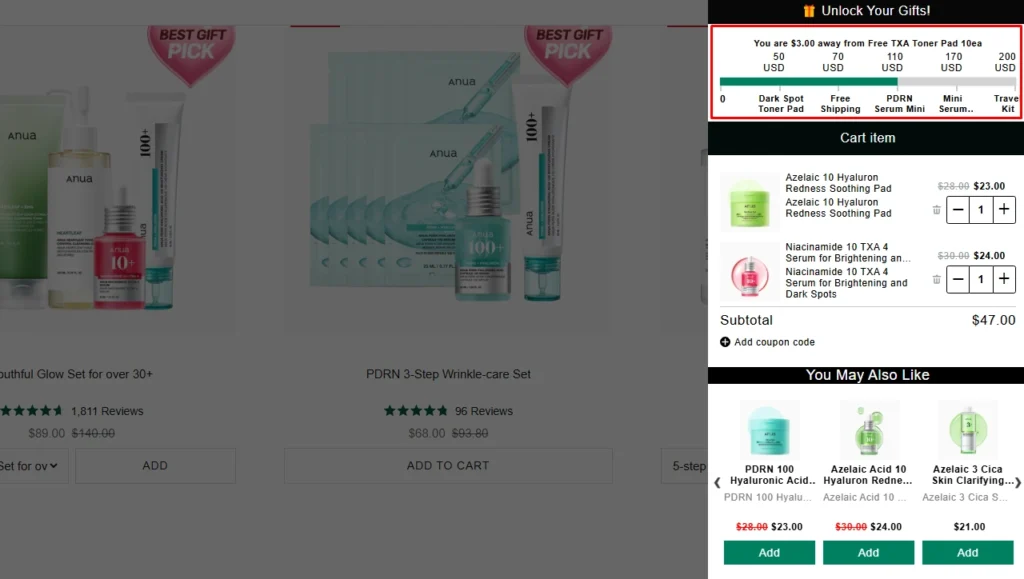
BOGO Shopify apps like iCart let you run BOGO-style promos right inside the cart, so shoppers see the deal while they’re still deciding.
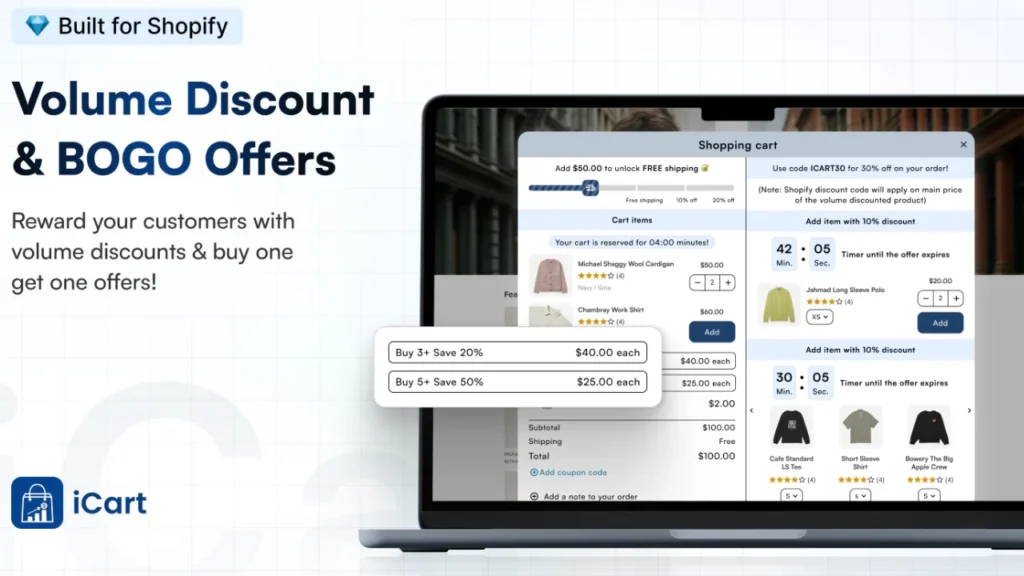
Shopify merchants can present the BOGO offer in their slide cart/sticky cart/cart popup to keep the shopping experience smooth.
- BOGO in-cart visibility: show the BOGO offer where shoppers are most likely to add the extra item (cart drawer/full cart/pop-up cart)
- Pairs well with “buy more” promos: iCart groups BOGO with “buy more, save more” and volume-discount style offers for AOV growth.
- Drive urgency around the deal: use timers/urgency elements in the cart to push completion when the shopper is close to converting.
4️⃣ Points Program
In this reward strategy, your store visitors will get points for every purchase. Then, they can exchange it for discounts, goods from your store, vouchers, etc.
For this, you need to provide people with personal accounts or an app to track how many points they have.
Points programs are well-known among restaurants, cafeterias, and retail environments. Starbucks is a great example of a brand providing a points system to its customers.
If you run a Shopify store, loyalty rewards apps like iWeb Loyalty Rewards help with a rewards and points system.
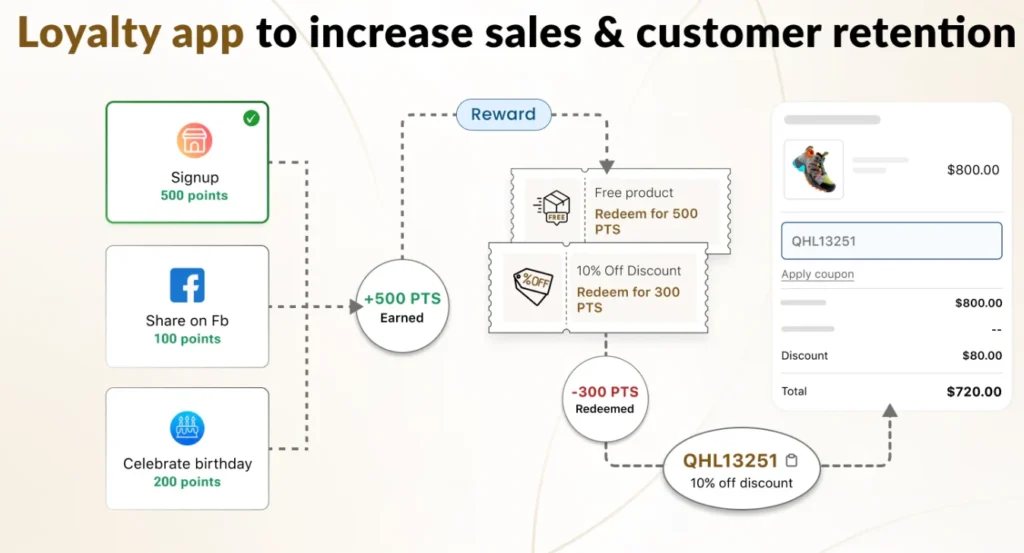
iWeb Loyalty Rewards lets you create a simple points-based loyalty program where customers earn points on purchases (and other actions like sign-up or birthday)
Customers can redeem those points for rewards like discounts or store credit. It keeps the whole earn and redeem flow clear, so new stores can push repeat orders without overcomplicating things.
You can copy this strategy to your Shopify store as well. Points systems has proven time and again to be one of the best loyalty program strategies for brands.
5️⃣ Paid membership
In this strategy, consumers pay one time or buy a subscription and then get access to their rewards: early admission, exclusive offers, discounts, etc. The rewards are the key to success.
When you know the pain points of your target audience, you can use them as a great benefit to justify the membership cost.
For example, customers of Swanson Vitamins may forget to buy dietary supplements in time. With that knowledge in mind, the store created the My Auto Delivery loyalty program in addition to regular discounts and free shipping.
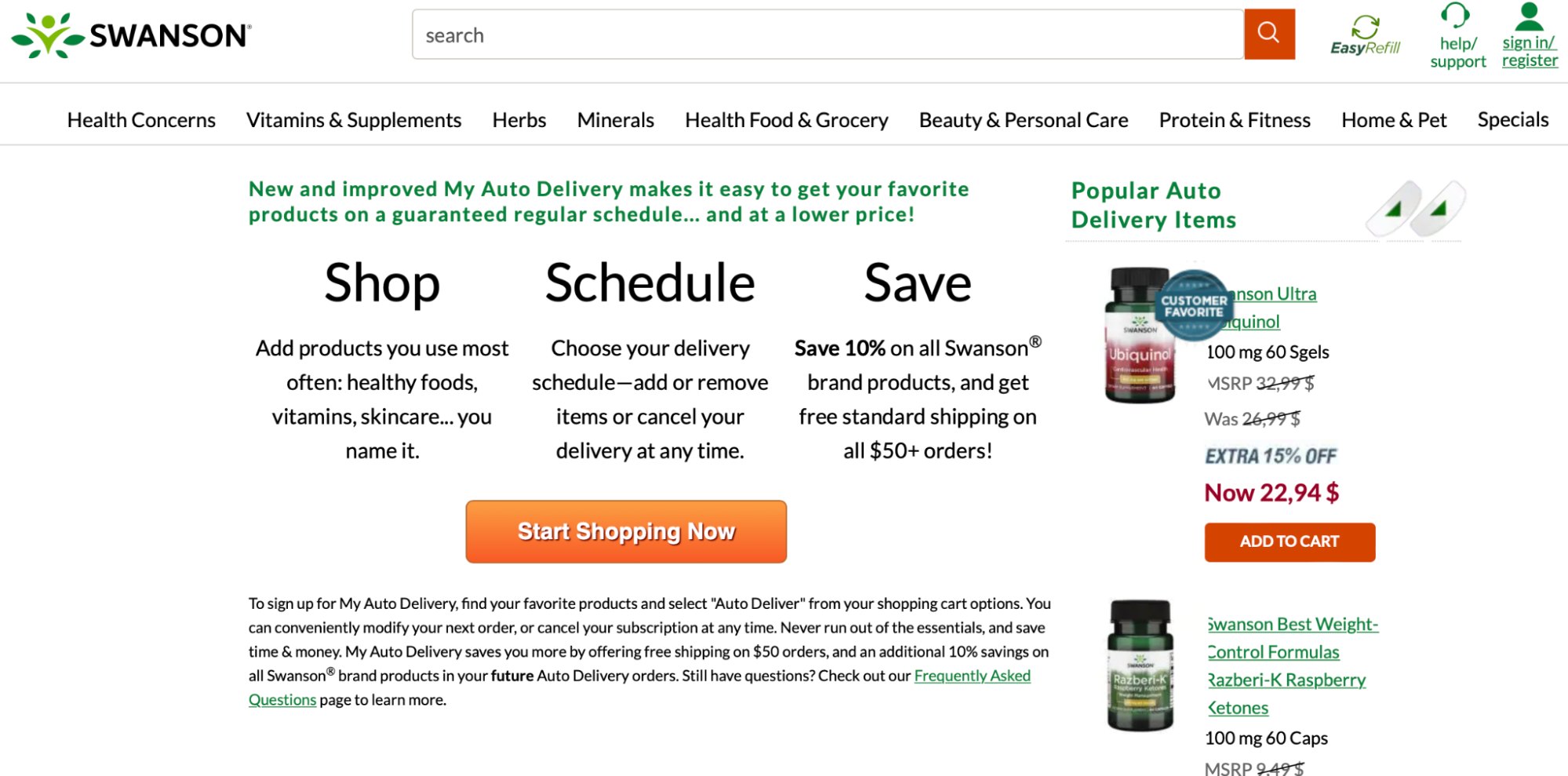
Subscribers of this program pay upfront and set up the desired frequency of vitamins purchase. The system sends them customized packages of supplements and vitamins automatically.
In such a way, consumers save time and never run out of supplements.
6️⃣ Value-based loyalty program
This program is based on a deep connection with consumers beyond financial relationships. Thus, it isn't about rewarding customers but about donating a percentage of purchases to welfare or charity, which has a substantially higher value.
That's why businesses tend to combine it with other loyalty programs.
Sephora, a Shopify stores is a great example. This beauty store provided its clients with an opportunity to donate their reward points to the National Black Justice Coalition. It caused an immediate public reaction on socials:
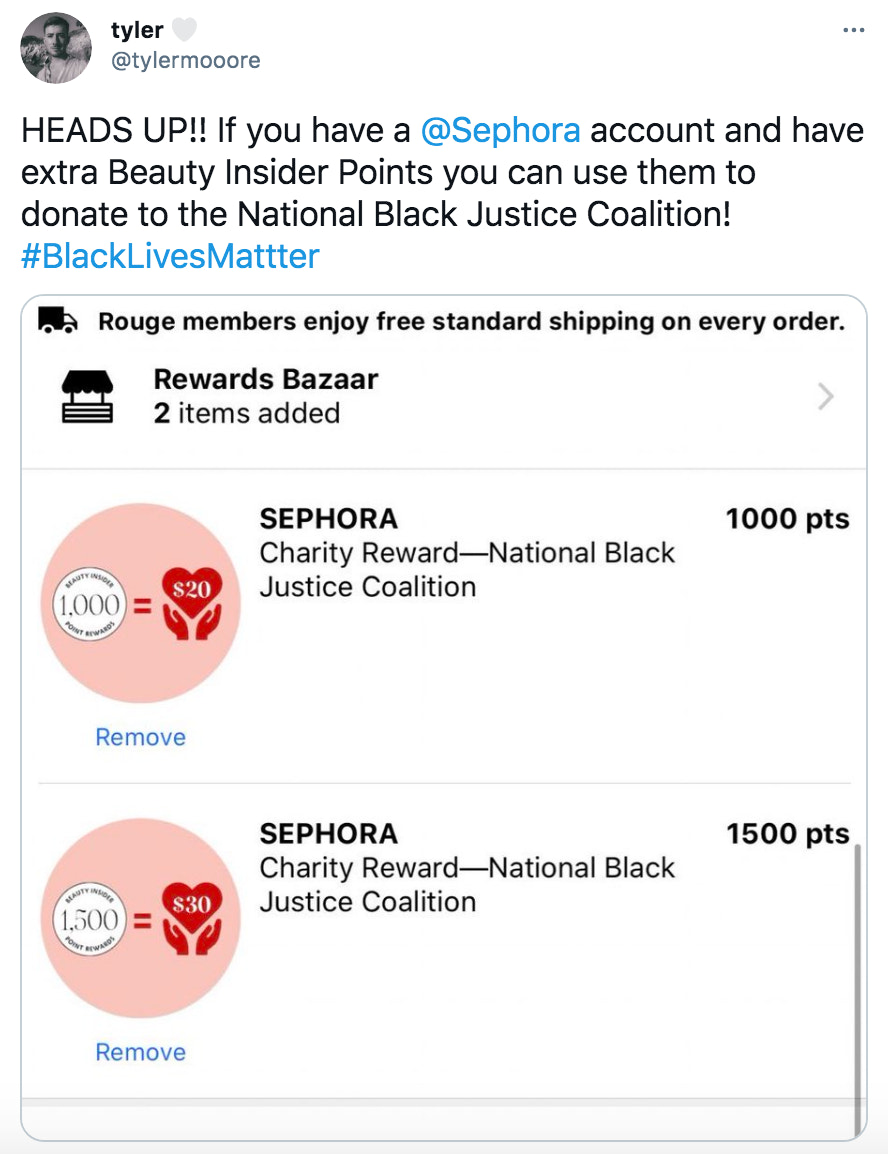
Thus, when Sephora customers have enough points to spend, among other options, they can donate it in cash equivalent to the National Black Justice Coalition.
To Sum Up: Customer Loyalty Goes Beyond Branding
Still trying to figure out where to start?
Relevance is key to a loyalty program's success. It's essential to customize your program to serve your customers and your business goals. So choose wisely. Here is a short strategy to help you.
1. Consider the company values you want to highlight.
2. Set goals beyond sales increase: capture data, test a new product, improve reputation, etc.
3. Know your customers' interests and pain points to offer them the best customer loyalty benefit. Ask what they want from a rewards program in a survey or poll.
4. Choose the base of your loyalty program strategy: free or paid membership.
5. Will it have loyalty levels or not?
6. What customer activities do you want to reward: the number of purchases, membership time, and money spent?
7. Pick a standout name for your program.
FAQs for How to Reward Loyal Customers?
1. What is the most direct cause of customer loyalty?
The most direct driver of true loyalty is an emotional connection built on trust, not just “satisfaction.” Customers stay loyal when your brand consistently makes them feel understood, valued, and confident they’ll have a great experience again.
2. How to measure customer loyalty?
Track a mix of behavior + sentiment: repeat purchase/retention, plus advocacy metrics like Net Promoter Score (NPS). NPS is calculated as %Promoters minus %Detractors, and it’s widely used to monitor loyalty trends over time.
3. How to reward loyal customers?
Reward loyalty with benefits that feel exclusive and earned: tiered perks (VIP access, early drops), personalized rewards based on past purchases, and occasional surprise-and-delight moments. Make earning and redeeming simple, and focus rewards on the behaviors you want more of (repeat buys, higher basket, referrals).
4. How to increase customer loyalty in a restaurant?
Build habits: reward frequency and convenience, and make the program effortless to join and use across dine-in, takeout, and delivery (mobile-first works best). Pair that with personalization (favorite items, timed offers) so the loyalty experience feels relevant, not generic.
5. How to build customer loyalty in a grocery industry?
Grocery loyalty wins with personalized offers and value-focused benefits that match shopping patterns (weekly staples, household size, preferred brands). The strongest programs combine easy-to-understand rewards with targeted promotions that increase repeat spend and basket size.
6. Do customer loyalty programs really work?
Yes, when designed well: strong programs drive measurable lifts in spend, frequency, and engagement, especially when the value is clear and redemption is easy. Research and industry analysis also show that “members-only” models (including paid loyalty) can increase spending likelihood more than basic free programs.

About the author
Julia