


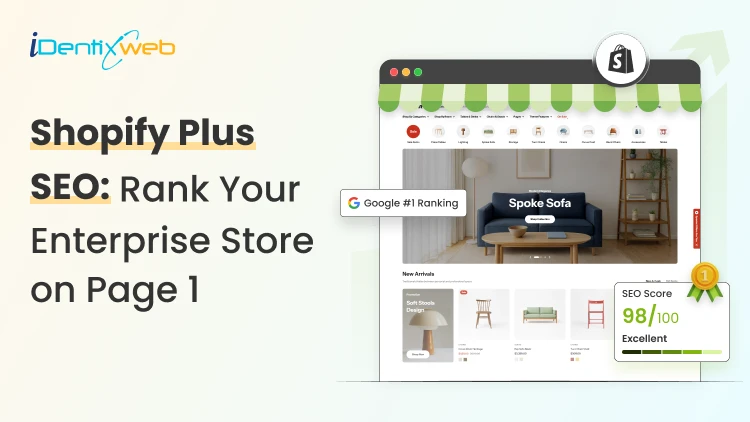
Shopify Plus gives enterprise brands a strong ecommerce base. But rankings do not come from the platform alone.
I have seen many Shopify Plus stores with great products and strong branding still struggle on Google. The reason being their SEO system does not scale with the store.
Common issues I experience is large catalogs create duplicate URLs, product schema breaks after theme changes, and international stores create the same content across multiple markets.
Shopify Plus SEO is about fixing all of that. For enterprise ecommerce stores, every technical issue gets bigger because the store has more products, collections, scripts, and more stakeholders involved.
As a Shopify Plus SEO expert, I look at SEO as a full growth system. It includes site structure, technical SEO, collection optimization, speed, schema, content, internal links, and conversion-focused user experience.
Speed matters because slow pages hurt users, conversions, and organic growth. At Identixweb, we also offer Shopify speed optimization services and have helped 300+ merchants worldwide improve store performance.
If you want your enterprise store to rank on page 1, you need to follow Shopify Plus SEO best practices. I have written this blog to do exactly that.
What is Shopify Plus SEO?
Shopify Plus search engine optimization is the process of optimizing an enterprise Shopify store so that search engines can crawl, understand, index, and rank its most important pages.
It is different from basic Shopify SEO.
A small Shopify store may focus on titles, descriptions, product images, and a few blog posts. A Shopify Plus store needs a deeper SEO setup because it operates on a much larger scale.
For me, SEO services for Plus stores includes:
- Technical SEO audits
- Collection page SEO
- Product page optimization
- Store speed optimization
- Core Web Vitals improvement
- Structured data setup
- International SEO
- Blog and content hub strategy
- Crawl and indexation management
- Organic revenue tracking
A good Shopify Plus SEO agency should understand both SEO and Shopify’s technical structure. That includes Liquid, Shopify themes, app scripts, collection filters, canonical tags, redirects, structured data, Shopify Markets, and performance issues.
Shopify Plus SEO experts need to know where organic growth is getting blocked. Most of the time, the issue sits in one of four places:
- Google cannot crawl the right pages properly.
- Google can crawl the pages, but the content is weak.
- The pages are useful, but they load too slowly.
- The store has authority, but the internal structure does not pass it on well.
Shopify Plus SEO best practices: Top 2026 trends
Search has become intent-driven in 2026. AI Overviews are changing the search results page and affecting how people click. Google is getting better at understanding helpful content, product data, page experience, and topical authority.
For Shopify Plus stores, these are the trends I would watch closely.
1. Core Web Vitals matter more for large stores
Enterprise stores often carry heavy code. Review apps, personalization tools, upsell widgets, analytics tags, A/B testing tools, heatmaps, and third-party scripts can slow down the storefront.
I recommended strong Core Web Vitals for both user experience and search performance. The recommended targets include LCP within 2.5 seconds, INP under 200 milliseconds, and CLS below 0.1.
In my Shopify Plus audits, I usually check:
- Unused apps
- Heavy JavaScript
- Render-blocking CSS
- Oversized images
- Lazy loading setup
- App scripts loading sitewide
- Poor mobile performance
- Theme code bloat
- Slow collection and product templates
SellMore, the only app Plus stores need
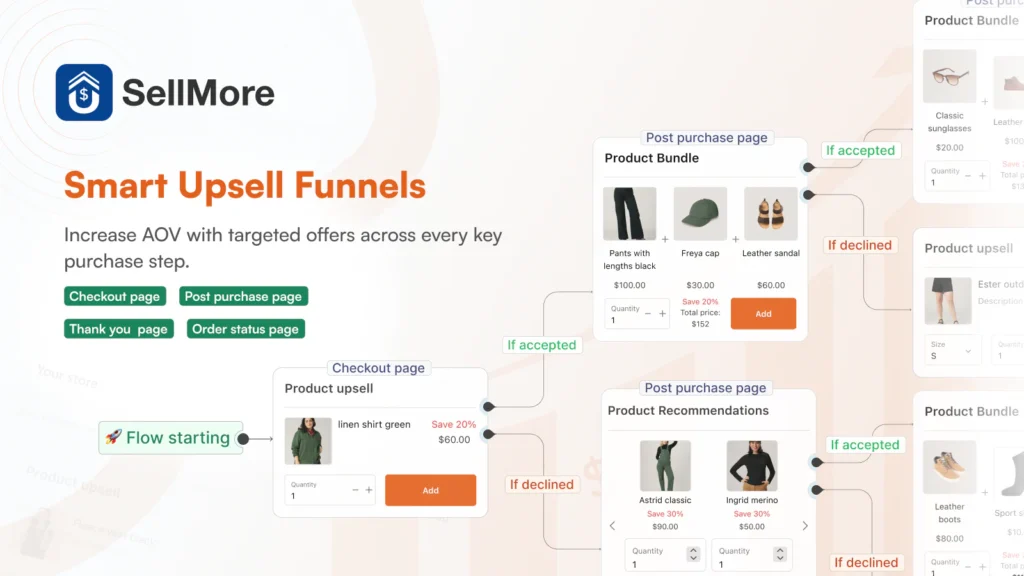
Shopify Plus brands need smart offers across checkout, post-purchase, and thank-you pages without disturbing the buying flow.
SellMore helps stores increase AOV with post-purchase upsells, cross-sells, product bundles, AI-driven recommendations, and detailed analytics. For high-volume Plus stores, that means more revenue from the same traffic without making the customer journey feel heavy.
Speed optimization is part of Shopify Plus SEO best practices. A faster store gives users a better experience and gives Google a cleaner page to process.
2. Answer Engine Optimization (AEO) needs answer-first content
AI search results reward content that answers questions clearly.
Shopify Plus stores should not write only for traditional blue links. They should also structure content for direct answers.
That means your pages should include:
- Clear definitions
- Short answer blocks
- Helpful FAQs
- Comparison sections
- Buying advice
- Product education
- Expert input
- Structured data
For example, a collection page for ‘premium leather bags’ should explain materials, use cases, care tips, size options, and buying factors.
Creating people-first content and highlighting experience, expertise, authoritativeness, and trustworthiness as key quality signals.
3. Collection pages are becoming SEO growth assets
For enterprise stores, collection pages often bring more SEO value than product pages.
Why?
Because collection pages match broader buying intent.
A customer searching “best running shoes for women” may not want one exact product. They want options. A strong collection page can rank for that search if it has the right structure, products, content, internal links, and schema.
A high-performing Shopify Plus collection page should include:
- One clear H1
- SEO-friendly title tag
- Helpful intro copy
- Product filters that do not create indexation issues
- Internal links to subcollections
- FAQ content
- Unique copy below the product grid
- Fast mobile loading
- Strong product merchandising
4. URL and indexation control are becoming more important
In my experience, large Plus stores often create too many low-value URLs. Filtered collections, product variants, search pages, tags, pagination, and tracking parameters can all create crawl waste.
A poor ecommerce URL structure can make crawlers retrieve duplicate content, miss useful content, or spend time on unnecessary pages. Google also recommends minimizing alternative URLs that return the same content and using descriptive URL paths.
5. E-E-A-T matters for ecommerce too
Google and AI search engines want helpful, reliable content. For Shopify Plus stores, E-E-A-T can come from:
- Expert buying guides
- Real product testing
- Brand story
- Customer reviews
- Transparent policies
- Author bios for editorial content
- Trust badges
- Clear return and shipping details
- Original photos and videos
- Product comparison content
Core SEO pillars for Plus stores
1. Technical SEO foundation
When Shopify Plus SEO experts audit a store, they start with crawl behavior. Technical SEO is the first pillar because Google needs to access the right pages before anything else can work.
A Shopify Plus technical SEO audit should check:
- Crawl errors
- Index coverage
- XML sitemap
- Robots.txt.liquid
- Canonical tags
- Redirect chains
- Broken links
- Duplicate content
- Pagination
- Collection filters
- Internal search URLs
- JavaScript-rendered content
- Theme code issues
2. Site architecture and internal linking
A clean store structure helps both users and search engines.
Your homepage should link to the main collections. Main collections should link to subcollections. Blogs should support collections. Product pages should link to related products and buying guides.
A strong internal linking setup helps Google understand which pages matter most.
3. International SEO for Shopify Plus
Many Shopify Plus brands sell across countries. International SEO needs careful setup because duplicate content can appear across markets.
Key areas include:
- Shopify Markets setup
- Hreflang
- Localized content
- Currency display
- Country-specific URLs
- Local keyword intent
- Regional collection pages
- Duplicate content checks
- Local shipping and return details
Search behavior changes by country. Product language changes by market. Buying objections also change by region. International SEO for enterprise brands should match local intent.
4. SEO analytics and reporting
SEO should connect to revenue. Traffic alone does not tell the full story.
Always track ecommerce KPIs like organic sessions, revenue, and conversion rate, top landing pages, collection page rankings, indexed & non-indexed pages, crawl errors, Core Web Vitals, and CTR.
Use Google Search Console to track clicks, impressions, ranking movement, and indexation issues. Use GA4 to connect organic traffic with revenue and conversion behavior.
Limitations for Shopify Plus SEO
Shopify Plus is powerful, but it still has SEO limitations. Knowing these limits helps you plan better.
1. Shopify URL structure has fixed rules
Shopify uses fixed URL paths such as:
- /products/
- /collections/
- /pages/
- /blogs/
You cannot fully customize URL structure like you can on some open-source platforms. That means Shopify Plus works smarter with handles, redirects, internal links, canonicals, and collection structure.
2. Duplicate product URLs can appear at scale
Shopify products can appear across multiple collections when you have a large-scale store. That can create different paths to the same product. Canonical tags usually help, but internal linking still matters.
I prefer linking to the clean product URL wherever possible.
For example: /products/product-name. Instead of relying only on collection-based product paths. Clean internal linking helps Google understand the preferred version faster.
4. Apps can slow down SEO performance
Shopify Plus brands often use many apps, and that's not an issue, to be honest. Apps can support reviews, search, loyalty, subscriptions, upsells, personalization, shipping, analytics, and product discovery.
But every app can add scripts. If you have apps with overlapping features it can slow down the store. Remove what you do not use. Limit what you need. Load scripts only where they matter.
5. JavaScript-heavy content can create issues
Some custom themes rely heavily on JavaScript.Google can process JavaScript, but important SEO content should still be easy to access.
If collection copy, product details, internal links, or reviews depend too much on delayed scripts, Google may not process them as cleanly as expected.
For Shopify Plus stores, I prefer keeping important SEO content available in the HTML wherever possible.
Implement Shopify Plus SEO the right way
Shopify Plus SEO best practices only work best when every part of the store supports the same goal.
Your technical setup helps Google crawl the right pages. Collection pages target high-value search intent. Product pages build buyer confidence. Your structured data helps Google understand your products. Speed improvements keep users engaged. Your content builds authority.
Identixweb, one of the top Shopify Plus SEO agencies that helps Shopify merchants improve store performance through speed optimization, theme improvements, app script management, and mobile-focused fixes. For Shopify Plus stores, that performance layer can make a real difference in SEO, user experience, and conversions.
Also read
Shopify VS Shopify Plus: Which One Is Right for You?
10+ Successful Shopify Plus Websites You Need to See in 2026
The Best Shopify Plus Apps Enterprise Stores Need in 2026
10+ Reasons to Shift from Shopify to Shopify Plus: When & How to Upgrade?
FAQ
1. What is Shopify Plus SEO?
It is the process of optimizing an enterprise Shopify store so Google can crawl, index, understand, and rank its most important pages. It covers technical SEO, collection page SEO, product page optimization, site speed, structured data, internal linking, and international SEO.
2. Do I need Shopify Plus SEO experts to handle SEO?
Yes. If your store has a large catalog, custom themes, heavy apps, or complex filters. Shopify Plus SEO experts understand both search engines and Shopify’s technical setup, so they can fix crawl issues, speed problems, duplicate URLs, schema errors, and collection page gaps without hurting the store experience.
3. What are the top tools for Shopify Plus?
I would suggest Google Search Console, GA4, PageSpeed Insights, Screaming Frog, Semrush or Ahrefs, Google Merchant Center, and Shopify’s built-in SEO settings.
4. Which is the best Shopify Plus SEO agency?
Identixweb, Go Fish Digital, OuterBox, Eastside Co are some top agencies providing SEO services for enterprise stores.

About the author
Vineet Nair
Vineet is an experienced content strategist with expertise in the ecommerce domain and a keen interest in Shopify. He aims to help Shopify merchants thrive in this competitive environment with technical solutions and thoughtfully structured content.