





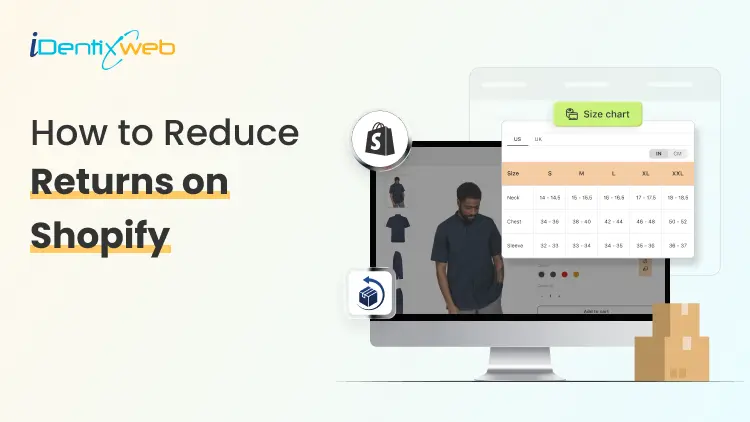
Returns on Shopify are one of the quietest profit leaks in ecommerce. The sale shows up in your dashboard, you feel good for a minute, and then the refund request hits a week later. Shipping is paid both ways, the product comes back used or damaged, and the margin you thought you earned is gone.
The good news? Most returns on Shopify are preventable. They come down to a few fixable things: unclear product pages, weak sizing info, delivery confusion, and a return policy that does more harm than help. This guide walks you through each lever, in plain language, so you can keep more of every sale you earn.
Why Returns on Shopify Hurt More Than You Think
A return is never just a refund. Every product that comes back carries hidden costs that stack up fast:
- Two-way shipping - you often pay outbound and return labels.
- Restocking labour - someone has to inspect, clean, repackage, and shelve it.
- Lost inventory value - around 40% of returned items can no longer be sold as new.
- Customer support time - back-and-forth emails, refund processing, and follow-ups.
- Lost trust - a bad return experience can stop a customer from buying again.
Industry data from Shopify suggests reverse logistics now eats up around 30% of operational costs for many online stores. Cutting your return rate by even three or four points can free up serious cash you can put back into product, ads, or growth.
The Top Reasons Customers Return Products on Shopify
Before you fix returns on Shopify, you need to know why they happen. The numbers are surprisingly consistent across studies:
- The product did not match the description or photos
- Wrong size or fit
- Quality below expectations
- Changed mind or buyer's remorse
- Wrong item shipped
- Damaged in transit
- "Bracketing" - buying multiple sizes to keep one
Did you notice something? Almost every reason on this list traces back to a gap between expectation and reality. Close that gap, and your shopify order return volume drops with it.
9 Proven Ways to Reduce Returns on Shopify
Here are the nine levers that move the needle most. You do not need to do all of them at once. Start with the two or three that match your top return reasons.
1. Write Product Descriptions That Set Honest Expectations
Most product pages are written like ad copy. They list features and lean on adjectives. The pages that actually reduce returns read more like an honest friend describing the product.
- Cover the boring details people actually care about:
- Exact measurements (length, width, depth, weight)
- Materials and what they feel like
- Care instructions and washing guidance
- What the product is not, or who it is not for
2. Add a Clear Shopify Size Chart to Every Apparel Product
If you sell anything that has to fit a body, your shopify size chart is the single biggest return-reduction tool you have. Around 45% of apparel returns happen because of sizing alone. Fix that one thing and you can cut your return rate almost in half.
- A strong size chart does three things:
- Shows actual garment measurements, not just S/M/L labels
- Lists values in both inches and centimetres
- Includes a short "how to measure" guide with a visual
The problem? Building a clean, mobile-friendly size chart in Shopify by hand is painful. You end up with broken tables on phones, ugly styling, or charts that do not update across products. This is where a dedicated table app makes life easier, you build the chart once and reuse it everywhere.
3. Set Clear Delivery Expectations Before Checkout
A shocking number of returns are not about the product at all. They are about delivery. The order arrives late, on the wrong day, or after the event the customer needed it for. They do not want it anymore, so back it goes.
Show estimated delivery dates clearly on the product page, in the cart, and at checkout. Let customers pick a slot when it makes sense cakes, flowers, perishables, gifts, and big-ticket items all benefit from this.
4. Use High-Quality Photos and Video From Multiple Angles
One photo is never enough. Customers buy with their eyes, and when reality does not match the image, the product comes straight back.
A solid product gallery includes:
- Front, back, and side views on a clean background
- Close-ups that show texture and stitching
- Lifestyle shots that show scale and context
- A short video (15-30 seconds) of the product in real use
A Shopify guide on returns notes that user-generated photos and videos build the strongest trust because they show the product as buyers actually receive it.
5. Let Real Customer Reviews Do the Talking
Reviews are the closest thing to a try-on experience your store has. Encourage them, sort them, and surface the ones that mention fit, quality, and use case.
- Make reviews work harder for you by:
- Asking for photo reviews after delivery
- Adding filters like "runs small" or "true to size"
- Highlighting reviews from people with similar body types or use cases
- Replying to negative reviews honestly, it builds trust
6. Improve Packaging and Quality Control Before Shipping
Around 5-12% of returns are caused by damage in transit or the wrong item being shipped. Both are entirely within your control.
- Tighten the basics:
- Inspect every order before it leaves the warehouse
- Use protective packaging that suits the product weight and shape
- Double-check size, colour, and variant against the order
- Add a small "how to use" insert for products with a learning curve
7. Offer Exchanges Before Refunds
When a customer wants to return, your first response should not be "refund issued". It should be "would an exchange work?"
- Save the sale by making exchanges easier than refunds:
- Offer free shipping on exchanges
- Provide a small store credit bonus (5-10%) for choosing exchange
- Suggest the next size or a similar product right inside the return flow
- Let customers swap colours, sizes, or variants without re-ordering
Frequently Asked Questions
1. What is a good customer return rate on Shopify?
Most Shopify stores see return rates between 17% and 20%. Apparel stores can hit 30-40%, while electronics often stay under 10%. A healthy target is to land below your category average and trend downward each quarter.
2. How do I check my return rate in Shopify?
Inside your Shopify admin, go to Analytics > Reports and open the "Orders and returns by product" report. You can also calculate it manually: divide the number of returned items by the number of items sold in the same window, then multiply by 100.
3. How do I edit the order status page on Shopify?
Go to Settings > Checkout > Order status page in your Shopify admin. You can add additional scripts, custom messages, FAQs, and post-purchase content. Many merchants use this space to add tracking widgets, support links, and upsell offers.
4. How can I reduce sizing-related returns on Shopify?
Add a clear size chart with actual measurements, include a "how to measure" guide, surface fit-related reviews, and consider a size recommendation quiz.
5. What is bracketing and how do I stop it?
Bracketing is when a customer buys multiple sizes or colours intending to return all but one. You can reduce it by offering strong sizing tools, accurate fit reviews, and gentle policy nudges like a restocking fee on multi-size orders.
Final Thoughts
Returns on Shopify will never hit zero, and that is fine. The goal is not perfection. It is reducing the avoidable ones.
Start with the two or three changes that match your biggest return reasons. Add a size chart if you sell apparel. Rewrite your top product descriptions. Edit your order status page. Offer exchanges before refunds. Each of these small fixes compounds, and three months from now, your return rate will look noticeably healthier.
Post Tags
About the author
Sajini Annie John
Meet Sajini, a seasoned technical content writer with a passion for e-commerce and expertise in Shopify. She is committed to helping online businesses to thrive through the power of well-crafted content.