




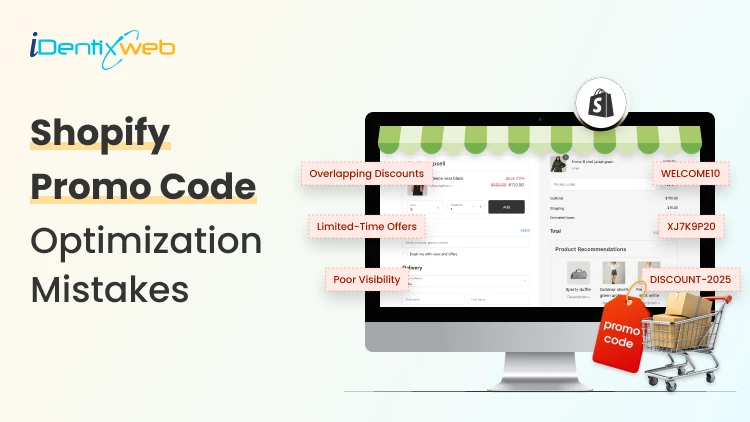
Thousands of Shopify merchants run promotions every week and walk away with mediocre results, not because their offer was bad, but because small, fixable mistakes were quietly killing their conversion rates.
Here's what most guides won't tell you: a Shopify promo code is not just a discount; it's a conversion tool. And like any tool, how you use it matters more than the tool itself.
In my 7 years of experience, I have audited over 100+ Shopify stores and reviewed their discount strategies. The same 5 mistakes keep showing up, killing revenue silently. Let's fix them one by one.
Why Your Shopify Promo Codes Aren't Converting?
Mistake #1: Using Generic Promo Codes That Anyone Can Share
You've seen it. "SAVE10." "WELCOME20." "SUMMER15." These codes feel easy to create and they are. But that ease comes with a serious hidden cost.
What's happening behind the scenes: When you use a generic, shareable promo code for Shopify, it escapes your ecosystem. It gets posted to coupon aggregator sites like RetailMeNot, Honey, and Coupert. From that moment on, your discount is available to every visitor including people who had zero intention of buying without it.
This destroys two things:
- Your margins - You are giving discounts to customers who would have paid full price.
- Your data - You can't tell which channel actually drove the conversion.
The Fix: Switch to unique, single-use discount codes for any campaign targeting known customers (email subscribers, loyalty members, retargeted visitors). Shopify's bulk discount code generator makes this easy. You can create thousands of unique codes at once and assign them individually.
Mistake #2: Setting No Expiry in Promo Code for Shopify Customers
"We'll run it through the end of the quarter." This is one of the most common mistakes merchants make with Shopify promo codes.
Why it kills urgency: Human psychology is simple: if there's no deadline, there's no reason to act now. A shopper who sees your promo code thinks, "I'll come back later." And later almost never comes. Always show a countdowm timer with your discounts to boost cart value.
There are so many popular apps like iCart which comes with this feature. Once you show a countdown timer with your discount offers, chances are high that customers will definitely buy your products as it creates an urgency.
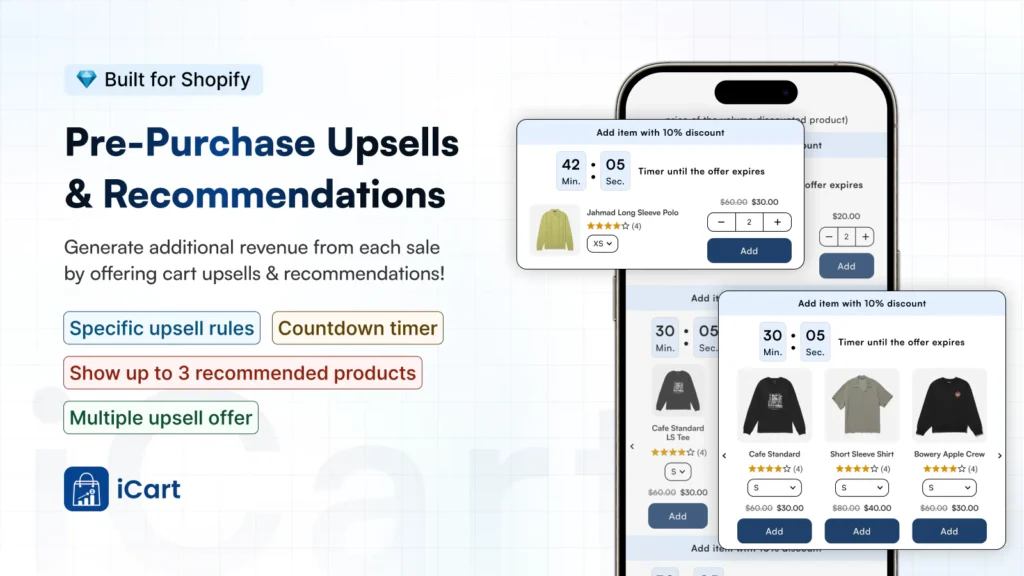
The Fix: Use countdown timers on your store to make the deadline visible. Pair it with a reminder email 4 hours before expiry - this single tactic has been shown to lift conversions by 8 -15% on abandoned cart flows.
Mistake #3: Not Segmenting - You're Sending the Same Code to Everyone
Here's a scenario that plays out every day on Shopify:
A merchant sets up one discount code, puts it in one email campaign, and sends it to their entire list - new subscribers, loyal customers who've bought 10 times, lapsed customers from 18 months ago. One message. One offer. Everyone.
Why this underperforms: Different customers are at completely different points in their relationship with your brand. What motivates a first-time visitor is completely different from what re-engages a lapsed buyer. A blanket Shopify promo code ignores this entirely.
The Fix: Build segmented discount flows for at least three audience tiers:
Tier 1 - New Subscribers / First-Time Visitors Goal: Get the first purchase. Offer: 10–15% welcome discount, short expiry, single-use code.
Tier 2 - Active, Repeat Customers Goal: Increase order frequency or AOV. Offer: Loyalty reward (free product, free shipping threshold, early access).
Tier 3 - Lapsed Customers (90+ days since last purchase) Goal: Win back. Offer: Your most aggressive discount (20-25%) with a "We miss you" message. Make them feel seen, not just marketed to.
Mistake #4: Burying the Promo Code in the Checkout Process
A shopper gets your email, sees the promo code, and navigates to your store. They add items to their cart. They reach checkout.
And then they can't find where to enter the code. Or worse - they find the field, but the code doesn't work (expired, wrong format, minimum not met), and there's no helpful error message. They abandon.
According to Baymard Institute research on checkout UX, discount code fields can actually hurt conversion rates when they're too prominent because customers without a code will leave to search for one. But hiding them entirely creates friction for customers with a code.
The Fix: Shopify gives you control over the checkout experience. Here's the optimal approach:
- For direct campaigns (email, SMS, ads): Use automatic discounts wherever possible. Shopify's automatic discount feature applies the discount without requiring the customer to enter anything the code is embedded in a unique URL that activates it at checkout. Zero friction.
- For public promotions: Keep the discount field visible but not dominant. Make sure error messages are specific: "This code requires a minimum order of $50" is far more helpful than "Invalid code."
Mistake #5: Not A/B Testing Your Promo Code Strategy
Most merchants pick a discount percentage based on gut feeling. "20% feels right." "Let's try $10 off."
But what if 15% off converts better than 20% off? What if free shipping outperforms a percentage discount at your AOV? You will never know without testing.
What to A/B test with your Shopify promo codes:
- Discount format: % off vs. fixed $ amount vs. free shipping (Rule of thumb: for orders under $100, fixed $ amounts feel more valuable; for orders over $100, percentages feel bigger)
- Minimum order threshold: Does requiring a $75 minimum increase AOV, or does it kill conversion entirely at your price points?
- Code presentation timing: Promo in the first email vs. revealed only after a browse-abandonment trigger
- Landing page with vs. without promo banner: Does showing the discount on the page help or attract discount-only buyers?
Shopify natively doesn't support A/B testing of discount experiences, but tools like Convert, VWO, or Google Optimize (via GTM) integrated with Klaviyo flows can help you run clean experiments.
Final Thoughts
The merchants who consistently drive strong conversion rates from their Shopify promo codes don't just offer bigger discounts. They offer smarter ones.
They know which customers to target. They build urgency without desperation. They protect their margins while still giving buyers a reason to act. They test relentlessly and measure what actually matters.
A promo code for Shopify is not a magic button. It's a tool and in the right hands, with the right strategy, it becomes one of the most powerful levers in your entire growth engine.
Fix these 5 mistakes. Run leaner, smarter campaigns. And watch your conversion rates reflect the difference.
Frequently Asked Questions
1. What is promo code optimization in Shopify?
Promo code optimization in Shopify means setting up and presenting discount codes in a way that encourages more shoppers to complete their purchase. It is not just about offering a discount, but about making the code easy to understand, easy to apply, and relevant to the customer.
2. Where should I show promo codes on a Shopify store?
The best places usually include the announcement bar, product page, cart drawer, and cart page. The key is to show the offer early enough to influence the purchase without interrupting the checkout flow.
3. Is it better to use percentage discounts or fixed amount discounts?
Both can work, but the better choice depends on your product pricing and audience.
4. How do I track whether a Shopify promo code is working?
You can track promo code performance through Shopify discount reports, conversion data, average order value, and campaign-level analytics.
About the author
Sajini Annie John
Meet Sajini, a seasoned technical content writer with a passion for e-commerce and expertise in Shopify. She is committed to helping online businesses to thrive through the power of well-crafted content.