






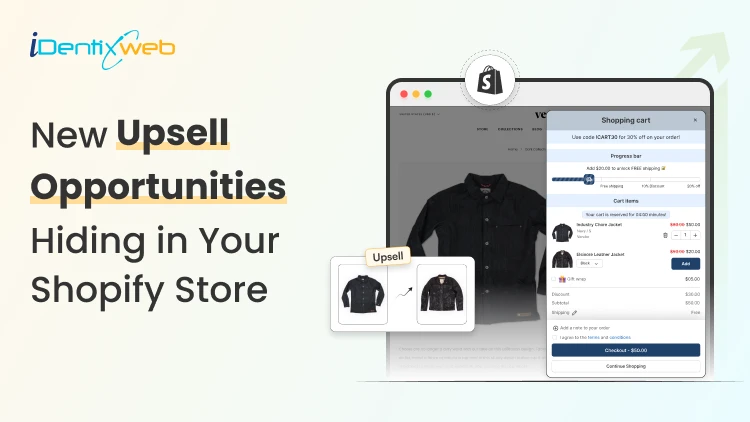

Shopify stores lose sales because of high cart abandonment and a lack of trust. You need to identify upsell opportunities in different places in your store to increase conversions. Places like product page, cart page, checkout page, and thank you page are best places for upselling.
Are you putting money into your Shopify store, but still losing sales?
Maybe you’re getting visitors. Maybe some people are even adding products to their cart. But the revenue is not matching the effort.
In our years of being a Shopify expert, a lot of new stores are not losing sales because no one is interested. They’re losing sales because they are missing upsell opportunities in their storefront.
In simple words, shoppers are ready to buy, but the store is not helping them buy more value.
That’s why this guide focuses on one thing:
How to identify upsell opportunities in your Shopify store before you spend more?
Why Shopify Stores Keep Losing Money? [An Expert’s Opinion]
As a Shopify expert, there are 4 main issues I saw when auditing Shopify stores that are losing revenue
- They focus on traffic before fixing conversion leaks. More visitors won’t help much if product pages, cart flow, or checkout experience are weak.
- They miss upsell opportunities at high-intent moments. Shoppers are ready to buy, but the store does not show a relevant upgrade, bundle, or add-on.
- Their cart only acts like a summary page. No free shipping goal, no product recommendations, and no clear reason to add one more item.
- They don’t track where buyers drop off. Without checking the add-to-cart, checkout starts, and completed purchases, they keep guessing instead of fixing the real problem.
How Identifying Upselling Opportunities Helps Stores?
Upsell opportunities are the points in your Shopify store where a shopper is already ready to buy, but you are not showing a relevant upgrade, offer, bundle, or add-on.
New stores usually lose revenue on product pages, in the cart, and before checkout.
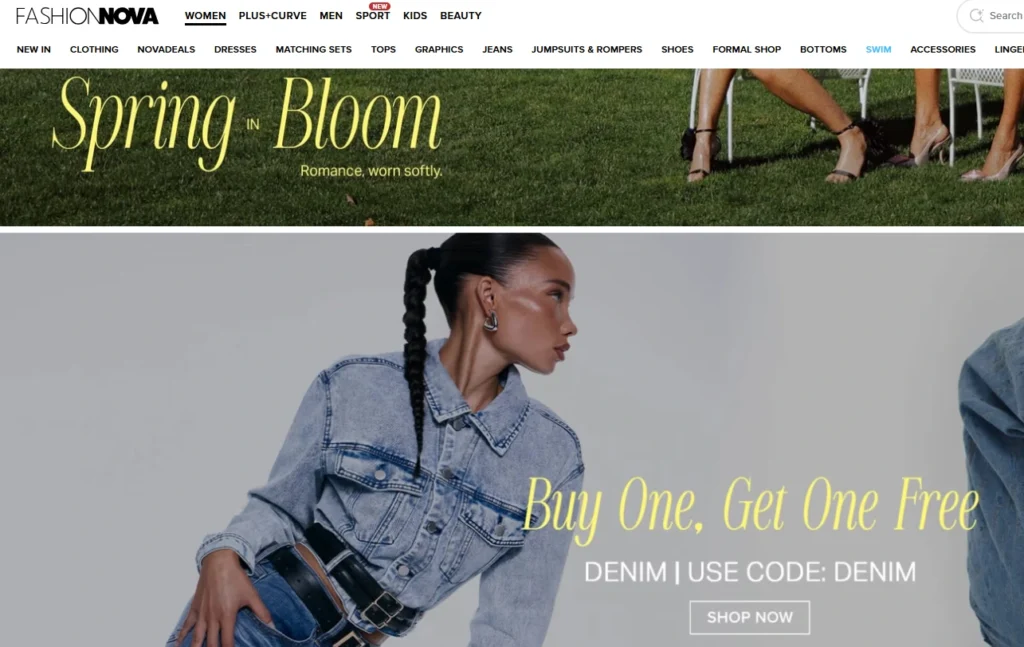
For example, look at the Shopify store Fashion Nova's homepage. They have a buy one get one free section at the front.
There are many other common examples of upsell opportunities that include:
- A better version of the same product
- A bundle with better value
- A low-cost add-on in the cart
- A discount offer with free shipping
This is important because many Shopify stores lose shoppers during checkout and cart flow.
Baymard says the global average cart abandonment rate is 70.19%, which shows how much revenue can leak after buying intent is already there.
A lot of Shopify store owners think most upsell opportunities are at checkout. That’s not true.
Let’s go through stage-by-stage upselling examples of places that help to increase conversion.
Upsell Opportunities: Every Place Where You Can Upsell?
Stage 1: The Home Page
Your homepage may not be the final buying page, but it strongly affects what shoppers do next.
What usually goes wrong:
The homepage is often too general. It shows banners and categories, but no clear path to high-value shopping decisions.
Common misses:
- No “most popular” products section
- No category-level add-on ideas (for example, “Complete your setup”)
This creates a problem early in the journey. Shoppers click around randomly instead of being guided toward better-value purchases.
What upsell opportunities look like here
Homepage upsell opportunities are more about direction than direct selling.
Good options:
- Featured bundle section (starter kits, combos, sets)
- Best-seller section
- Shop by need (helps shoppers discover add-ons naturally)
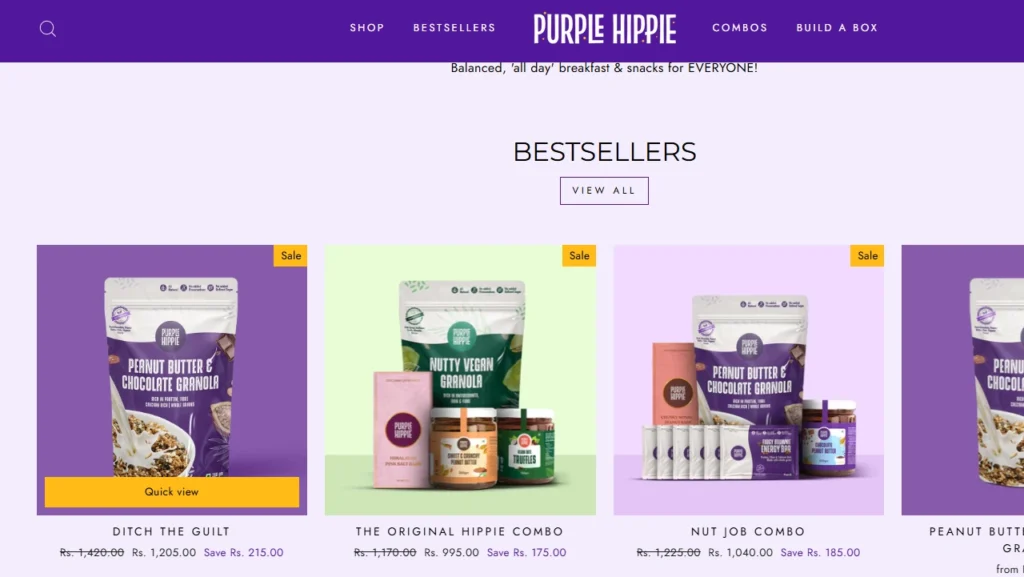
Here’s a great example of Purple Hippie’s homepage, where they have a bestsellers section.
Stage 2: The Product Page (Before Add to Cart)
This is the big place where intent starts. The customer reads all the necessary information before making a decision.
What usually goes wrong
A lot of product pages are too flat. They show the product, price, and button, but no value-based options.
Common misses:
- No complementary products that fit the product.
This creates a problem. The customer often loses interest even when they may have been open to buying.
What upsell opportunities look like here
Product page should feel helpful, not pushy. You are giving the shopper a better fit, better value, or better result.
Good upselling techniques in product page:
- Multi-pack (buy more and save)
- Product customization add-on (gift wrap, engraving, personalization)
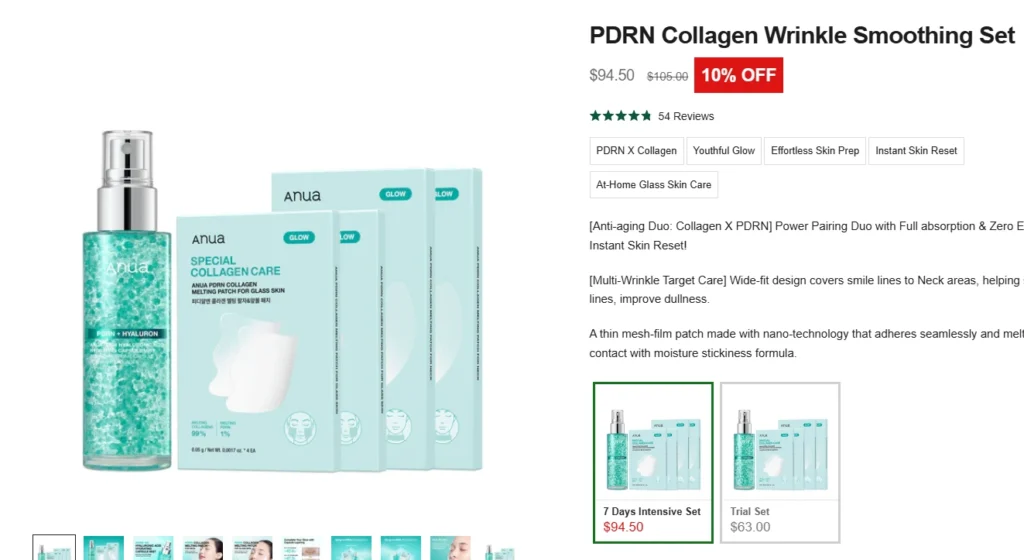
Anua, a Shopify skincare brand, provides a multi-pack option for customers.
Stage 3: Cart Page / Cart Drawer (Most Missed Opportunity)
This is where stores lose the most revenue, and our report on the Shopify cart type backs it.
If your cart only lists items and a checkout button, you are likely missing out.
What usually goes wrong:
A lot of new stores treat the cart like just a tool for product management.
Common problems:
- No incentive to add one more item
- No product recommendations
- No bundle or upgrade prompt
Opportunities for upselling here
Cart-level upsells work well because the shopper can already see their total. Now they are more likely to respond to value-based prompts.
Strong opportunities include:
- Free shipping threshold progress. Example: “You’re $12 away from free shipping.”
- Bundle upgrades. Example: upgrade from a single item to a combo pack and save.
These offers work best when they reduce friction, not increase confusion. The customer should understand the benefit in one quick glance.
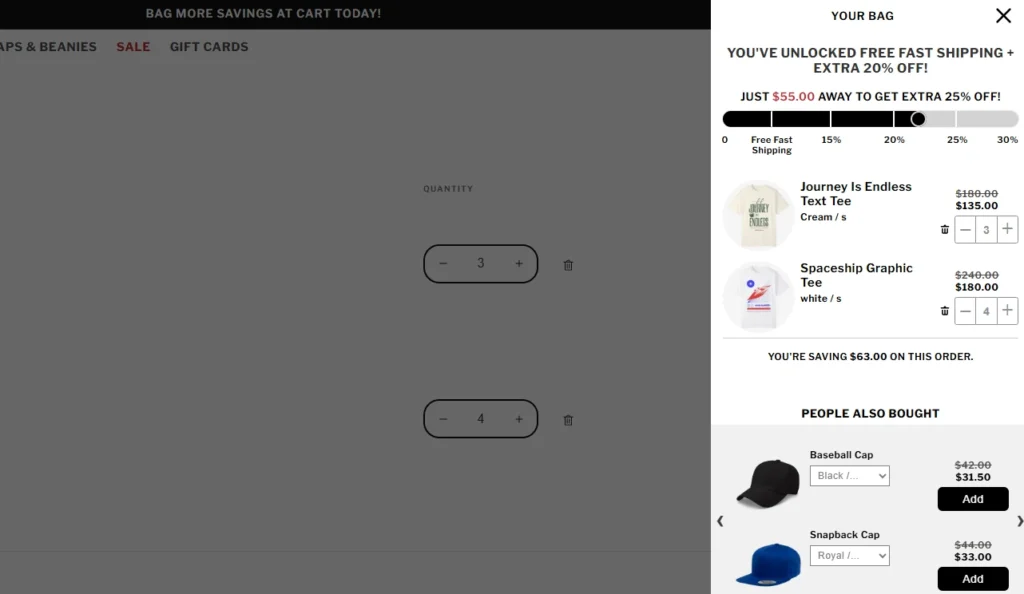
Garb Classics, a Shopify clothing store using cart drawer.
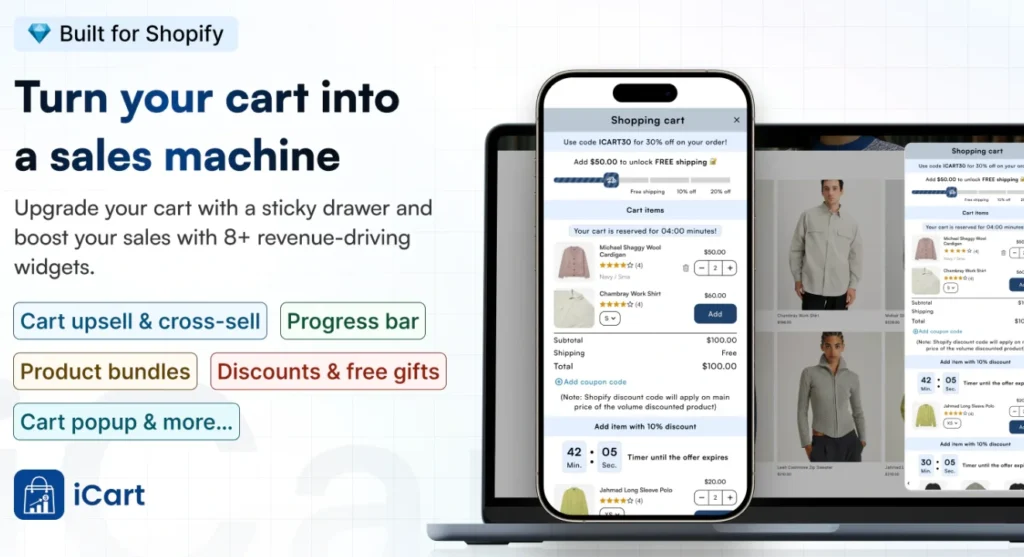
This store uses the Shopify in-cart upsell app iCart Cart Drawer Cart Upsell to show the cart drawer. Merchants like Garb Classics and more have selected iCart to easily set up a cart drawer and increased conversions.
Its drag-and-drop feature and easy customization features have helped merchants to boost AOV.
Stage 4: Checkout Upsells
Checkout is another high-intent stage because the customer is very close to paying.
That also means this stage is sensitive. A good checkout upsell can increase AOV, but a bad one can hurt conversions.
What usually goes wrong
- Showing irrelevant offers
- Adding too many choices
- Interrupting the checkout flow
What upselling opportunities look like here
- Small complementary add-on (gift wrap, warranty, care item)
- Shipping protection (if relevant to the product/category)
- Priority processing / express handling (if your store offers it)
Stage 5: Post-Purchase Upsells
Most new store owners ignore this stage. That is normal, especially when they are still fixing product pages and cart flow.
This stage can work well because purchase intent just happened. Trust is at its highest point in the journey.
What usually goes wrong
- No follow-up offer after purchase
This is a missed opportunity because the customer has already trusted you enough to buy.
Upselling opportunities for stores
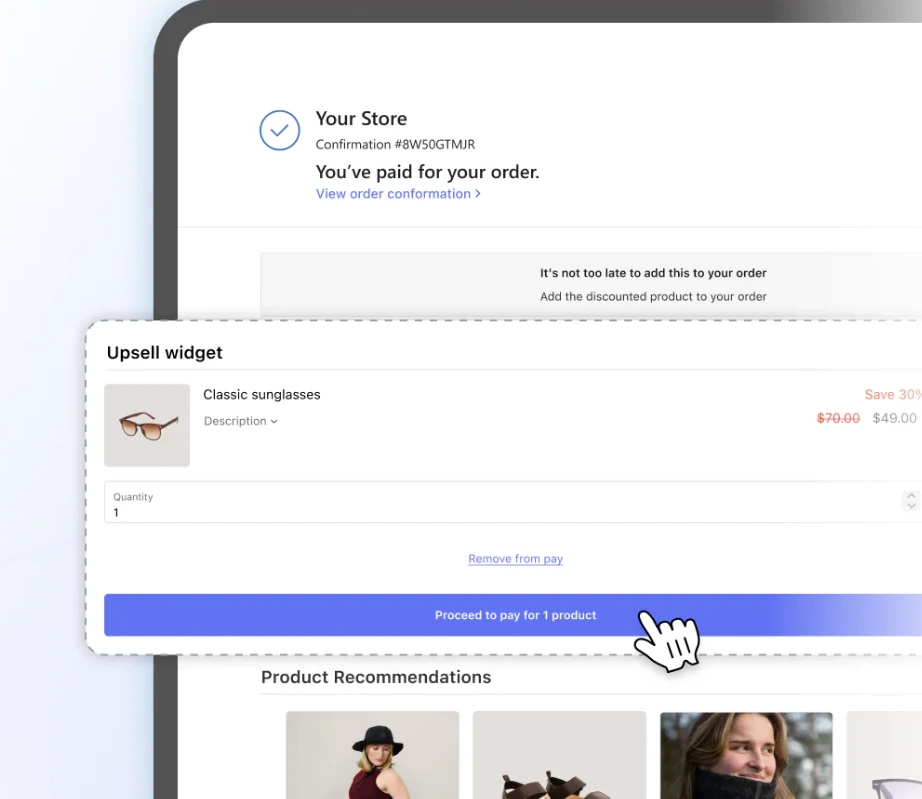
Post-purchase offers should be simple and highly relevant. They should feel like a smart follow-up, not a random extra sale.
Common examples:
- Refill/replacement items (great for consumables)
- Limited-time post-purchase add-on (small upgrade or extra item)
Conclusion
If your Shopify store is getting visitors but your sales still feel low, do not assume the only answer is more traffic.
In many new stores, the real issue is missed upsell opportunities. A shopper shows buying intent, but the store does not guide them to a better version, a useful add-on, or a smarter bundle.
The goal is not to push more products. The goal is to make buying easier and more valuable for the customer.
FAQs for Upsell Opportunities
1. What are upsell opportunities?
Upsell opportunities are moments in the customer journey where a shopper already shows buying intent, and you offer a better version, larger quantity, or higher-value option of what they’re considering.
2. How to identify upsell opportunities?
Start by mapping your funnel (homepage → product page → add to cart → cart → checkout → purchase) and checking where people drop off. Based on the data, identify the best upsell opportunities.
3. Which is the best stage for upselling?
For most new Shopify stores, the best stage is usually the add-to-cart/cart stage, because the shopper has already said “yes” and is still making decisions, so a relevant add-on or bundle feels natural.
4. Which is the best upsell app for Shopify?
The right Shopify upsell app depends on your stage, budget, and where you want to upsell (product page, cart, checkout, or post-purchase). Most popular options include iCart Cart Drawer Cart Upsell, Bold Upsells, and ReConvert.
5. Why Shopify stores lose money?
Shopify stores lose money because they do not find opportunities where they can upsell on their website. You need to upsell in product page, cart page, checkout page, and thank you page stop losing revenue.
About the author
Vineet Nair
Vineet is an experienced content strategist with expertise in the ecommerce domain and a keen interest in Shopify. He aims to help Shopify merchants thrive in this competitive environment with technical solutions and thoughtfully structured content.