






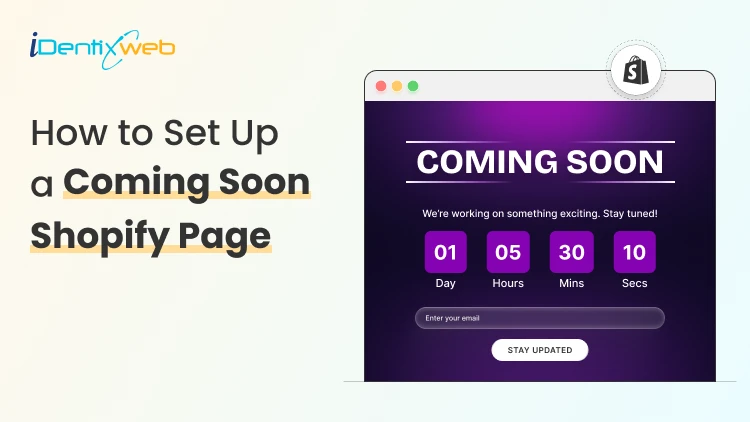
Here's the situation most new Shopify merchants find themselves in: Your store isn't live yet. And you already have people friends, followers, potential buyers who want to know when they can shop from you.
What do they see when they visit your store URL right now?
If it's a blank screen, a Shopify "store not ready" page, or worse a password-protected default page with zero context you're already losing potential customers before your store has earned a single dollar.
A coming soon Shopify page changes that completely. It tells visitors: We're real. We're coming. Don't miss it. This guide is written for merchants who want to do it right from day one.
What Is a Coming Soon Shopify Page?
A coming soon Shopify page (also called a pre-launch page or under construction page) is a temporary front-facing page that visitors see before your store is officially open. Instead of letting people hit a dead end, you give them something to engage with.
At minimum, a good Shopify coming soon page includes:
- A clear message that the store is launching soon
- A countdown timer or expected launch date
- An email capture form to collect leads
- Your brand name, logo, and a strong tagline
- Social media links or a way to follow your journey
At its best, a coming soon page is your first marketing asset, something that builds excitement, collects pre-launch emails, and makes your actual launch day significantly more profitable.
Why a Coming Soon Page Matters
1. It Captures Pre-Launch Email Subscribers
Email marketing consistently delivers the highest ROI of any digital channel some studies cite $36 for every $1 spent. A coming soon page with an email opt-in form lets you build that list before launch. When you go live, you're not starting from zero you're sending launch-day emails to people who already raised their hand.
2. It Signals Legitimacy
Customers are skeptical of new online stores. A professional, branded coming soon page immediately tells visitors: this isn't a fly-by-night operation. You've invested in a domain, you have branding, and you have a real launch planned. That trust signal matters.
3. It Gives You Something to Promote
Running pre-launch ads? Posting on Instagram? Emailing your personal network? You need somewhere to send people. A coming soon page gives you a real destination, something worth clicking and something worth sharing.
4. It Protects Your Brand During Development
While you're still building out product pages and policies, your coming soon page keeps random visitors from seeing an incomplete store. No more awkward "dummy product" pages or placeholder text accidentally going public.
How to Set Up a Coming Soon Shopify Page: Step-by-Step
1. Go to the Shopify App Store and search "coming soon page"
2. Install your preferred app and grant necessary permissions. Here we will show about LaunchX app.
3. After installing the app, complete the onboarding steps.
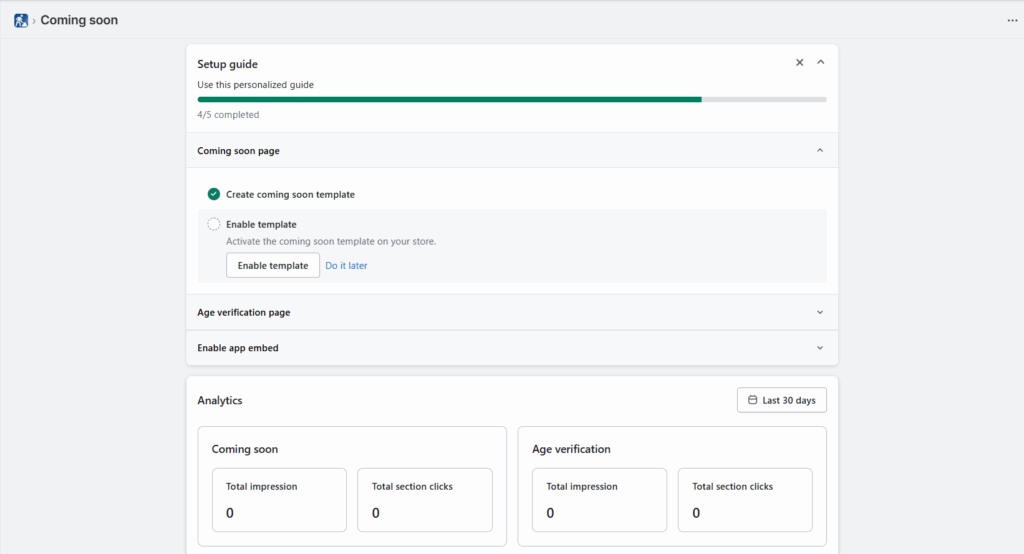
4. Go to the app settings and enable the app.
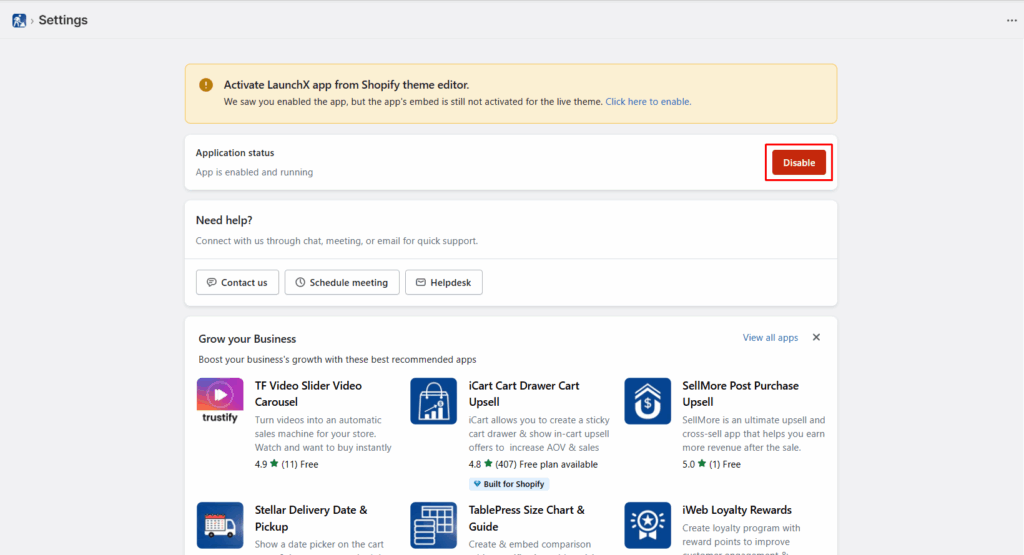
5. You will get a set of pre-built templates. You can go with it and customize the template.
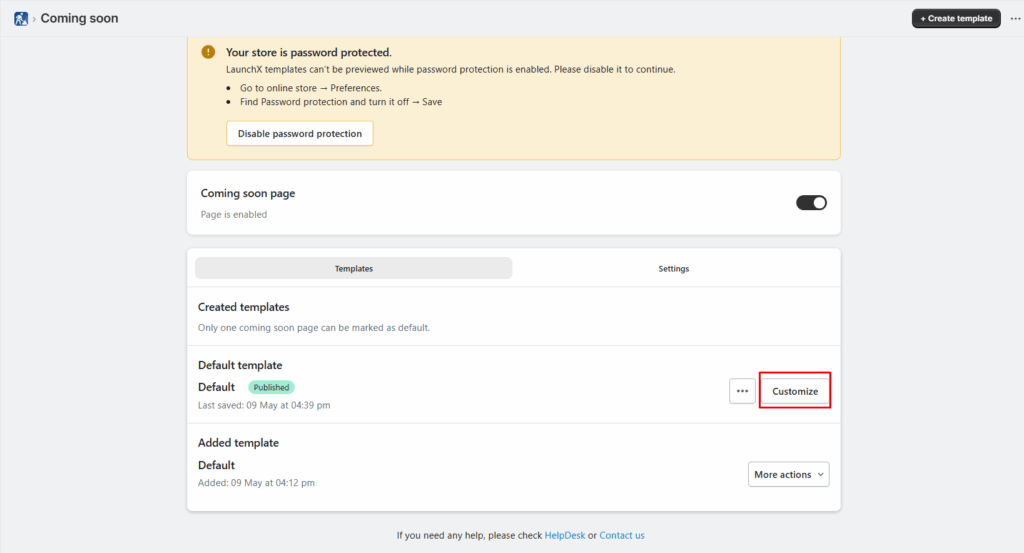
6. Editor will open up with preview of the template and interface to edit the template. You can customize the template based on your needs.
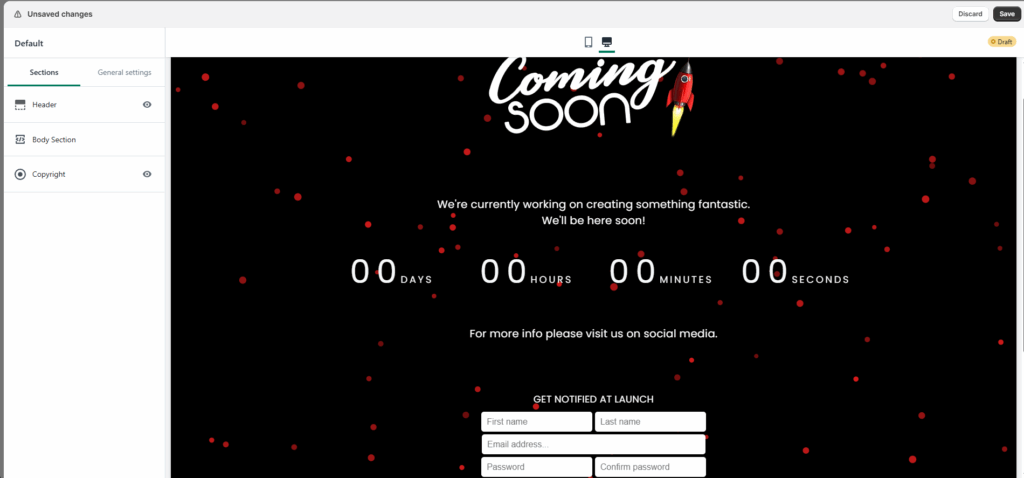
7. Preview on both desktop and mobile before publishing. And save the changes.
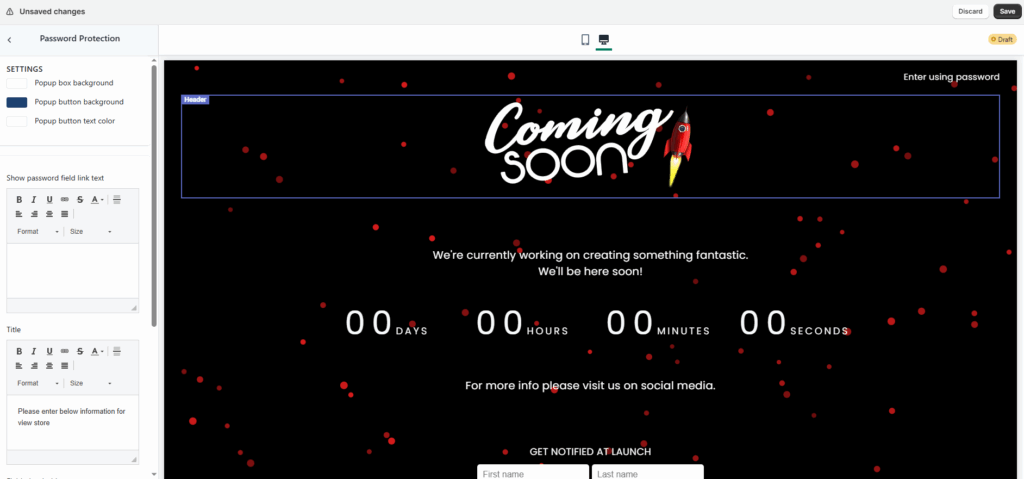
8. You can also make the coming soon page password protected from the general settings. Enable the password protection and add your required options in it using the fields given as shown below:
Common Mistakes Merchants Make With Coming Soon Pages
1. Launching without any email capture The entire point of a pre-launch page is to build a list. If you don't have a form, you have a dead end.
2. No early-bird incentive Asking someone to give you their email "just because" is a hard sell. Give them a concrete reason: early access, a discount, free shipping, or exclusive bonuses.
3. Forgetting mobile Preview your coming soon page on your phone before going live. If the form is broken, the text is cut off, or the countdown is invisible; fix it.
4. Being too vague about what you sell "Something amazing is coming" tells visitors nothing. Be specific about your product category and your unique angle.
5. Not promoting the page A coming soon page sitting unpromoted on the internet collects zero leads. Share it on your personal social channels, run a small ad campaign, post in relevant communities drive traffic to it.
6. Not having a launch date A countdown timer with a real date creates urgency. "Launching soon" creates nothing. Pick a date and commit to it.
Final Thoughts
Here's the uncomfortable truth: you'll never feel completely ready to launch. There will always be one more product to add, one more page to polish, one more thing to figure out.
That's exactly why your coming soon Shopify page should go live the moment you have a domain and a clear value proposition even if your store is weeks away from opening. Start with a coming soon page. Build your list and make your launch matter.
Frequently Asked Questions
1. Can I have a coming soon page on Shopify without disabling my whole store?
Yes. Shopify's password protection feature keeps your store private while your coming soon page (or the built-in password page) is visible to the public. If you use an app or a custom page, you can route all public traffic to the coming soon page while your full store remains password-protected and accessible only to you.
2. How long should I keep my coming soon page up?
There's no universal rule, but 2–6 weeks is a common pre-launch window. Long enough to build a meaningful email list and generate buzz, short enough that you don't lose momentum or overpromise a launch date you can't keep.
3. Will my coming soon page hurt my SEO?
A well-set-up coming soon page won't significantly hurt your SEO, especially since you're in a pre-launch state with little to no existing rankings. That said, use proper meta titles and descriptions on the page. Don't let it stay live long after launch, and use a 302 (temporary) redirect if needed so Google knows the page will change.
![How to Create a Discount Code on Shopify [Easy New Tutorial]](https://www.identixweb.com/wp-content/uploads/2026/03/26-03-Thu-Blog-How-to-Easily-Create-a-Discount-Code-on-Shopify_-2.webp "How to Create a Discount Code on Shopify [Easy New Tutorial]")
About the author
Sajini Annie John
Meet Sajini, a seasoned technical content writer with a passion for e-commerce and expertise in Shopify. She is committed to helping online businesses to thrive through the power of well-crafted content.