





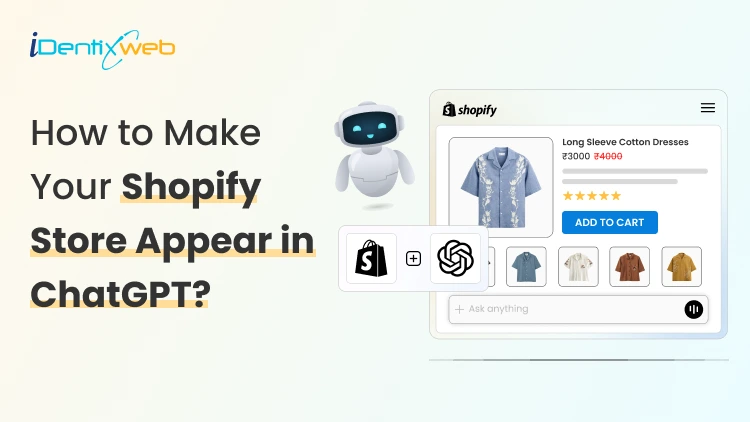

To help ChatGPT discover your products, keep your site open to OpenAI’s search bot, add structured data using Schema.org, and write clear, human-friendly product descriptions. You can also submit your products through the official OpenAI Product Discovery form or connect tools like Google Merchant Center, so your product pages stay detailed, accurate, and ready for features like Instant Checkout.
For ChatGPT to recommend your Shopify business, you need to start with one simple truth:
“ChatGPT can only recommend what it can actually find and understand on the web”
If your Shopify pages are blocked from crawling, ChatGPT’s search experience may never see them.
In this guide, you’ll learn the simple checklist for search product discovery on ChatGPT and the steps to be followed to get your products on AI platforms.
Quick “Do this first” checklist (Shopify owners)
- Read the new Shopify 2026 Winter Edition for the latest AI updates.
- Confirm your store is not password-locked and product pages are publicly accessible.
- Add robots.txt.liquid, and allow OAI-SearchBot (keep Shopify’s default rules intact).
- Implement schema markup for your product data
- Publish 2–5 buying guides that link to your top collections/products.
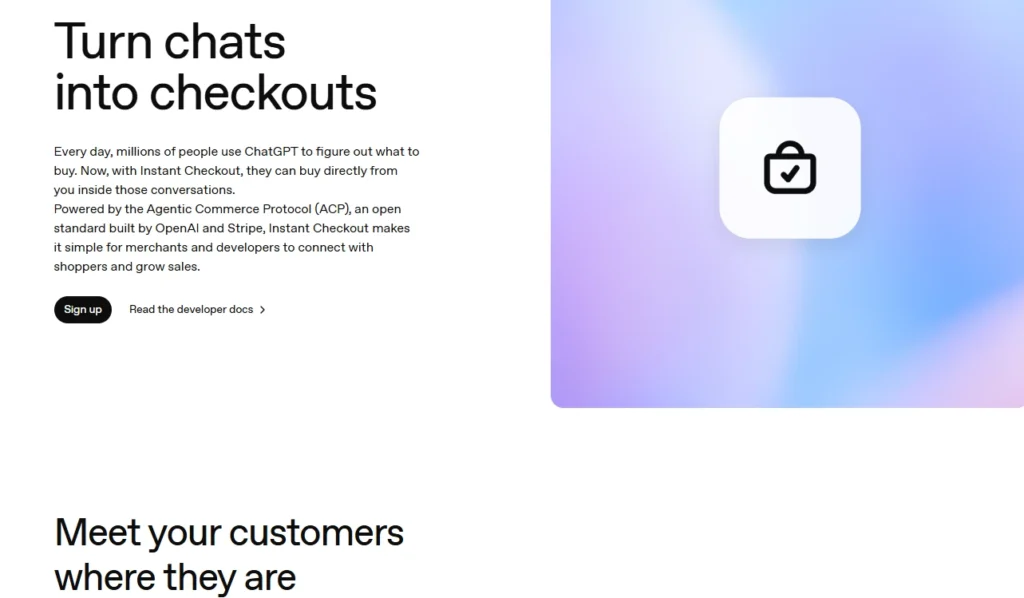
- Sign up for ChatGPT for Merchants to enable instant checkout.
How to help ChatGPT discover your products in 2026?
Allow OAI-SearchBot access (robots.txt)
OpenAI has a crawler called OAI-SearchBot that’s used to surface pages in ChatGPT’s search features. If you block it, your pages generally won’t show up in those search results.
What to do:
- Make sure your store is live (not password protected).
- Customize robots.txt file and make sure you’re not blocking OAI-SearchBot. Shopify supports robots.txt.liquid for this.
Use structured data (Schema.org) on product pages
Why it matters: Structured data helps systems understand “this is a product,” “this is the price,” “this is in stock,” and more. This is why applying schema markup for product information is crucial for ChatGPT product recommendations.
What to include at minimum (best practice):
- Product name
- Product images
- Offer details (price, currency)
- Product availability (Currently available or out of stock)
- Product reviews
Clean URLs & metadata
Goal: Make it easy for both people and crawlers to understand each page.
- Keep product URLs readable and stable.
- Use clear page titles and meta descriptions that match what shoppers actually search.
Focus on content optimization
Unlike content optimization for SEO, optimization for product discovery for ChatGPT requires clear user-focused queries. Think of your product page as the complete answer to:
- What is it?
- Who is it for?
- What problems does it solve?
- What are the specs?
- What’s included?
- What’s shipping/returns like?
This helps both:
- ChatGPT-style question queries (ex, “best waterproof hiking backpack under $100”)
- Shopping comparisons where the details between you and your competitors decide the sale.
A good tip here is to write content in a way that is human-friendly. Research on how users search for your products and optimize content based on that.
Publish buying guides that link to products
This is one of the best methods that I have seen work to get ChatGPT product recommendations.
A few examples of guides you can publish include:
- “Best [category] for [use case]”
- “X vs Y: which should you buy?”
- “Beginner guide to [problem] + recommended products”
These guides and comparison posts help you rank for different types of queries, and they create internal links to help ChatGPT discover your products.
Direct merchant feeds (the “official” method OpenAI ChatGPT search product discovery)
OpenAI provides Product Feed specifications, allowing Shopify stores to structure their data for AI agents.
Shopify merchants can also sign up for Instant checkout for merchants. Feeds support gzip-compressed CSV or JSONL, can be updated frequently, and are used for ingestion and indexing.
Google Merchant Center (great for product data quality & reach)
Google Merchant Center is Google’s dashboard where you upload and manage your product catalog so your items can appear in places like Google Shopping.
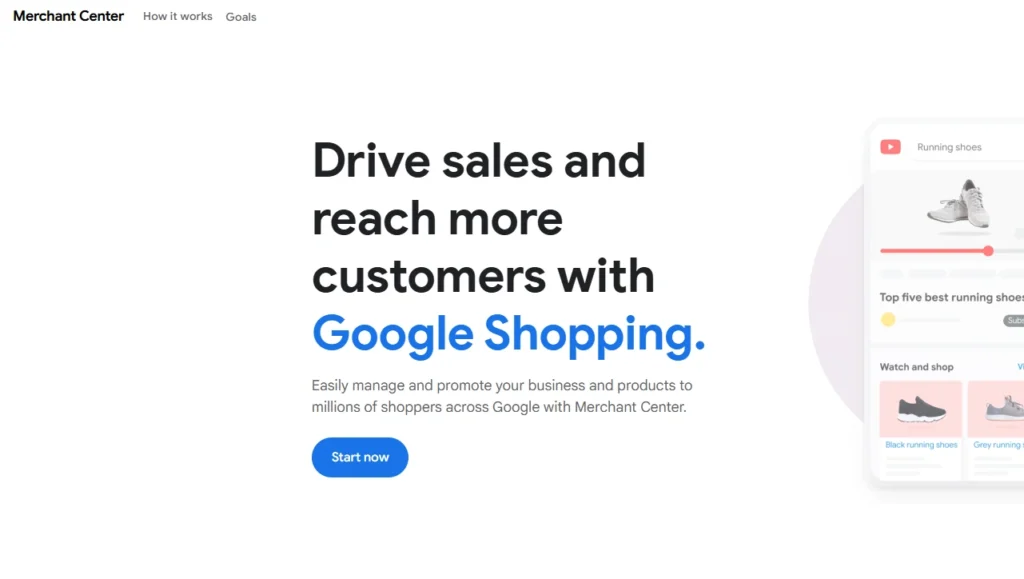
Shopify’s Google & YouTube channel can automatically sync your Shopify products into Google Merchant Center, and you can manage feed settings from Shopify.
Here’s how to set up the Google & YouTube channel for your Shopify store.
Important note: OpenAI does not promise that Google Merchant Center feeds directly power ChatGPT shopping.
Still, Merchant Center is worth exploring because it forces you to maintain clean product, categories, pricing, and policy compliance, which improves the quality of your product data.
If you can prepare product feeds in CSV & API format
A Shopify product feed is a file that lists your products with details like title, price, availability, images, and URLs. Platforms like Google Merchant Center, Facebook/Meta use it to import and keep your product catalog updated.
Prepare your product catalog in a format that other platforms can “read” automatically. CSV and API formats work great.
A CSV feed is basically a spreadsheet-style file listing each product with columns like title, price, availability, image URL, and product URL.
An API feed is the same idea, but it updates automatically by sending the latest product data from Shopify to that platform on a regular basis.
Check out Google’s product data specification. It shows how strict product feeds can be (IDs, titles, identifiers, condition, etc.)
Track referrals from ChatGPT
In analytics, watch for:
- Referrals from chatgpt.com
- Landing pages that receive this traffic (often guides and bestsellers)
If you submit product URLs via a direct feed, you can usually add UTMs to those URLs so your reports clearly attribute the clicks (example: utm_source=chatgpt.com).
Provide details for business-focused queries
If you sell products that require a higher specific description details to make the purchase, add proof points that help AI agents verify you:
- Warranty details
- Compliance or safety certifications (if relevant)
- Clear return/refund policy
- Business contact details and location
Final thoughts
If you want ChatGPT to show your products, start with the basics: don’t block OAI-SearchBot, and keep your Shopify product pages public and crawlable.
Then make your product pages easy to understand with clear specs, high-quality images, and human-friendly content.
If you want to check brand visibility on ChatGPT, sign up for Instant Checkouts for merchants.
FAQs to Help ChatGPT Discover Your Products
1. Can ChatGPT discover your products?
Yes, ChatGPT can discover and show your products when it crawls and understands your public pages. OpenAI says ChatGPT Search uses a crawler called OAI-SearchBot, so blocking it in robots.txt can prevent your site from appearing in ChatGPT search answers.
2. What is the new shopping feature in ChatGPT?
ChatGPT now offers shopping research, which turns product discovery into a conversation by asking questions and pulling details from the web. OpenAI also supports shopping results that link to retailer sites, with Instant Checkout, which is currently availablefor merchants in certain regions.
3. What is Shopify agentic commerce?
Agentic commerce means an AI agent can help a shopper buy products by initiating checkout steps on the shopper’s behalf. OpenAI’s Agentic Commerce Protocol (ACP) powers Instant Checkout while keeping the merchant in control of orders, payments, and post-purchase experience.
4. What is the product feed for ChatGPT?
A ChatGPT product feed is a structured catalog (for example csv.gz or jsonl.gz) file that contains your product details like titles, prices, availability, and media. OpenAI indexes this feed for product discovery.
5. Can you submit your Shopify product feed to ChatGPT?
Yes. You can apply for Instant Checkout for merchants, then provide a feed that matches OpenAI’s product feed specifications so ChatGPT can use accurate, up-to-date product data to show customers that searches for products in your niche.
6. How to get ChatGPT to recommend your business?
Make your site easy to crawl (do not block OAI-SearchBot), publish clear product pages and helpful buying guides, and keep product info detailed so ChatGPT can match you to shopper questions.


About the author
Vineet Nair
Vineet is an experienced content strategist with expertise in the ecommerce domain and a keen interest in Shopify. He aims to help Shopify merchants thrive in this competitive environment with technical solutions and thoughtfully structured content.