






In today’s fast-paced ecommerce space, Shopify stores have experienced tremendous growth. As a Shopify store, one of your top priorities is ensuring timely order delivery to keep your customers satisfied and maintain a positive reputation.
However, even with the most meticulous planning, shipping delays can occur due to various reasons beyond your control.
Dealing with shipping delays is a critical aspect of managing a Shopify business successfully. When packages don't arrive on time, it can lead to frustrated customers and negative reviews.
So, whether you are a seasoned Shopify entrepreneur or just starting your Shopify journey, join us as we dive into the world of order delivery and shipping delays. We will also provide proven steps to navigate through these obstacles like a pro.
What Problems are Faced Due to Shipping Delays?
Several problems are faced due to delays in order delivery and shipping.
- Customer dissatisfaction: Delayed deliveries can lead to customer frustration and dissatisfaction. Customers who expect their orders to arrive within a certain timeframe may become upset when their items are delayed, leading to negative reviews, lower customer retention, and potential loss of future sales.
- Negative reviews and reputation damage: Unhappy customers may leave negative reviews on your Shopify store or on social media, tarnishing your brand's reputation. Word-of-mouth spreads quickly in the digital age, and a series of delayed deliveries can lead to a decline in customer trust and confidence.
- Increased customer inquiries: Shipping delays often trigger an influx of customer inquiries regarding the status of their orders. Handling a large volume of inquiries can be time-consuming and take your team's focus away from other essential tasks, affecting overall customer service efficiency.
- Financial losses: In some cases, shipping delays may result in customers cancelling their orders, leading to financial losses for the store owner. Additionally, providing compensations or refunds for delayed orders can further impact profit margins.
- Impact on inventory management: Shipping delays can disrupt inventory management, causing products to be out of stock or leading to overstock situations. This can result in lost sales opportunities or increased storage costs.
What are the Major Reasons for Shipping Delays?
Carrier capacity issues and peak-season overload
During BFCM, holidays, or big sale events, carriers simply run out of capacity. Volumes spike, sorting hubs get backlogged, and parcels sit in depots for 1–3 extra days (or more) before even moving.
For Shopify merchants, this can he a hassle, especially during the peak holiday season.
What you can do:
Ship early, show realistic cut-offs on your site, offer pickup/local delivery where possible, and add a banner about potential delays during peak season.
Supply chain disruptions and global events
Port congestion, rerouting routes during any events, fuel price spikes, and container shortages all increase transit times.
These delays usually affect the ocean/air freight before the parcel even reaches the local carrier.
What you can do:
Keep a safety stock of fast movers, diversify suppliers/warehouses where possible, and avoid promising aggressive delivery times on products still in transit to you.
Extreme weather and natural disasters
Storms, floods, heatwaves, snow, and wildfires regularly shut down airports, highways, and carrier hubs, causing regional delays even for “Express” shipments.
For your customers, tracking during these times often shows confusing updates.
What you can do:
Use your announcement bar and order-status emails to proactively call out weather-related delays in affected regions. This is to avoid over-promising delivery dates during events like natural disasters.
Labor shortages, strikes, and operational disruptions
Shortage of warehouse staff, driver attrition, or strikes at carriers and logistics firms lead to slower sorting and missed delivery windows.
Even if you dispatch on time, an understaffed warehouse can push deliveries several days out.
What you can do:
Work with more than one carrier if possible, keep an eye on news/alerts from your main carriers, and update your shipping policy page whenever such events hit.
Incorrect or incomplete shipping addresses
Wrong house numbers, incorrect PIN/postcode, or typos in street names are one of the most common reasons for shipping deliveries.
Carriers then need to re-route, contact the recipient, or return the parcel, all of which slow everything down.
What you can do:
Use address-validation at checkout, make “Apartment / Suite / Landmark” a required field for certain countries, and clearly show customers how to update address info before fulfillment.
Technical and human errors
Errors in the order fulfillment process can also contribute to shipping delays. Technical glitches, such as system malfunctions or software syncing issues, can lead to orders being incorrectly processed or missed entirely.
On the human side, mistakes like incorrect labeling, packing errors, or wrong shipment choices can cause delays in shipping and lead to returned or misrouted packages.
What you can do:
Implement quality control checks during the picking and packing process. Invest in reliable order management Shopify apps, and regularly train staff to avoid common errors.
How can the Shopify app, Stellar, become a solution for shipping delays?
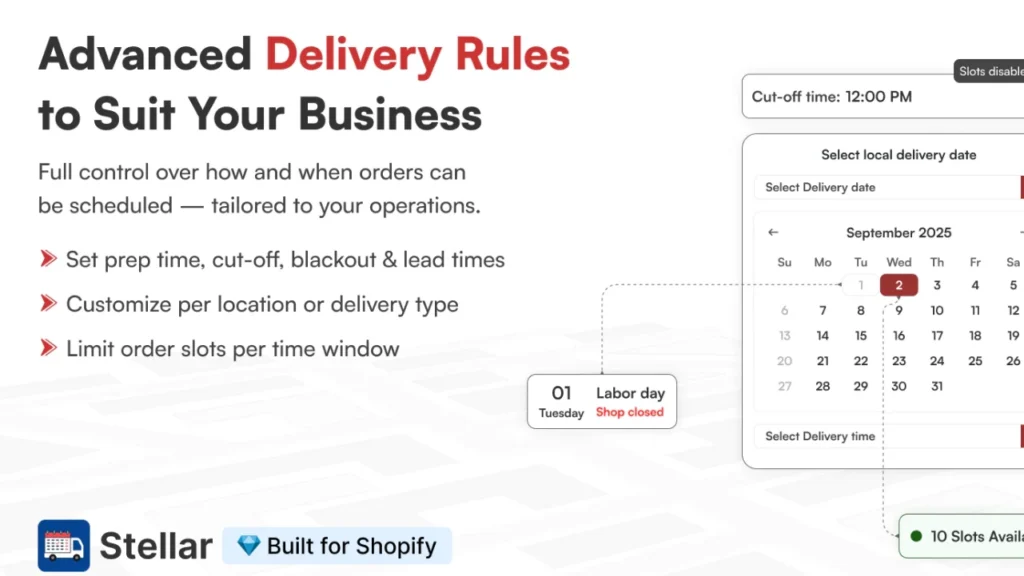
Customizable delivery cut-off times:
Stellar allows you to set multiple cut-off times for different days, ensuring you have enough time to process orders and avoid last-minute delays. This helps in streamlining operations and ensuring timely dispatch
Holiday & non-working day blockers
By blocking out holidays and non-working days on the delivery schedule, you can prevent customers from selecting dates when you cannot fulfill their orders. This reduces confusion and ensures that delivery expectations align with your operational capacity.
Estimated delivery date & time display
Showing a customized estimated delivery date and time to customers allows them to plan better, reducing the risk of missed delivery expectations. This also helps in managing customer expectations and improving overall satisfaction.
Delivery route optimization
Stellar provides the ability to optimize delivery routes, which can help reduce delays in last-mile delivery. This ensures faster, more efficient deliveries, particularly for businesses offering local delivery services.
Conclusion
Delays in shipping can be a major headache for Shopify store owners, affecting customer satisfaction, brand reputation, and overall business performance.
Reasons for shipping delays are a handful; however, by employing proactive strategies, transparent communication, and efficient shipping apps for Shopify, you can mitigate some of these challenges and turn potential setbacks into opportunities to improve your shipping processes.
Remember, taking steps to address shipping delays promptly and professionally can make a significant difference in retaining customer loyalty and maintaining a positive brand image.
So, embrace the challenge, embrace the opportunity, and let your Shopify store shine as a beacon of reliability and excellence in the face of order delivery and shipping delays
Shipping Delay Reasons FAQs
1. How can I prevent order delivery and shipping delays in my Shopify store?
Install the Stellar Delivery Date & Pickup app and let customers decide their delivery date and time to fix the problem of shipping delays.
2. What should I do if a shipping delay occurs in my Shopify store?
If a shipping delay occurs, the key is to communicate proactively with your customers. Reach out to inform them about the delay, provide a new estimated delivery date, and offer any compensation if necessary.
3. Should I notify customers of potential shipping delays during peak seasons like BFCM?
Yes, it's crucial to be transparent with customers about potential shipping delays during busy periods.
4. What are the reasons for shipping delays right now?
Major reasons for shipping delays include carrier capacity issues, especially during peak seasons, ongoing global supply chain disruptions, port congestion and labor shortages.
5. How to deal with shipping delays?
To manage shipping delays, communicate proactively with customers about expected delivery times and provide real-time tracking updates to reduce frustration. Additionally, optimize your inventory management and diversify carriers to mitigate risks and ensure faster processing during peak seasons.




About the author
Sajini Annie John
Meet Sajini, a seasoned technical content writer with a passion for e-commerce and expertise in Shopify. She is committed to helping online businesses to thrive through the power of well-crafted content.