



Yes. Pre-built Shopify stores are absolutely worth it.
A pre-built Shopify store promises the one thing every new entrepreneur wants: a shortcut.
Skip the setup and guesswork, and buy something that already looks finished.
I have reviewed dozens of these listings over the years, and the honest answer is a bit complicated.
This guide covers what these stores actually are and the most important question of all: Are pre built Shopify stores worth it?
What are pre-built Shopify stores?
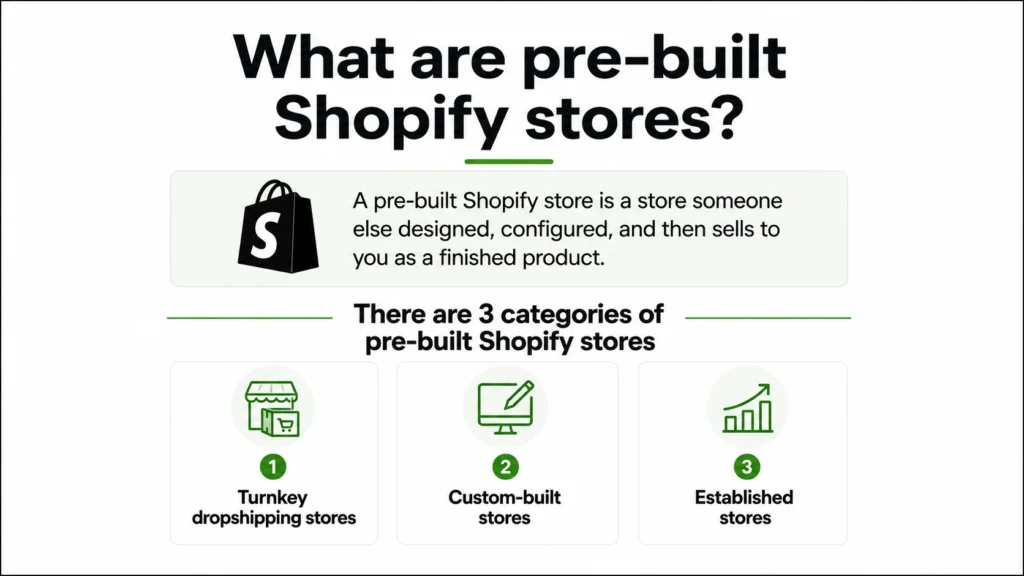
A pre-built Shopify store is a store someone else designed, configured, then sells to you as a finished product.
These listings fall into three real categories.
- Turnkey dropshipping stores. A provider builds a store around a niche, loads it with products, and hands you the login. No sales history, no customers, just a ready-to-market store.
- Custom-built stores. A freelancer or agency builds a store to your spec. You get more input on design and product selection, but you're still starting from zero revenue.
- Established stores. These come with real sales history, existing customers, and traffic. You're buying an operating business
Do pre-built Shopify stores work?
Yes, it does. A pre-built store gives you a working storefront on day one. But the traffic and customer base have to be earned after purchase.
I have seen turnkey stores generate real revenue within weeks, and I have seen identical templates from the same provider sit at zero sales for months.
The difference almost never comes down to the store itself. It comes down to what the buyer does with it afterwards: product testing, ad spend, and consistent marketing.
If you buy a one-product turnkey store expecting it to sell itself, read my guide on building a one-product Shopify store first. It explains why focus and offer clarity matter more than the store's design.
How to vet a seller before you pay?
- Ask for read-only access to Google Analytics and Search Console if the listing claims traffic. Screenshots can be faked; live dashboard access is much harder to fake convincingly.
- Check the domain's history using a WHOIS lookup tool. A domain registered last month can't have "three years of organic traffic."
- Request an export of order history if you're buying an established store with sales claims.
- Ask why they're selling. A vague or evasive answer about a declining niche is worth more than any pitch deck.
- Use a marketplace with built-in escrow whenever the deal size justifies it, rather than paying a stranger directly.
- Confirm what you're actually inheriting. Products, theme, apps, domain, social accounts, email list. Get it in writing.
Do not buy a pre-built Shopify store if you see these red flags
- The seller refuses to give you a live demo link or read-only admin access before purchase.
- Revenue or proof of traffic comes only as screenshots, with no way to verify them independently.
- Payment is only accepted via wire transfer or crypto, with no escrow option.
- The seller pressures you to decide within hours.
- You can't find any independent reviews of the provider outside their own website.
Best websites to buy pre-built Shopify stores in 2026
1. BeBiggy
BeBiggy sells ready-made Shopify dropshipping stores across niches such as fashion, pets, beauty, home products and coffee.
Its stores include a completed design, imported products and connections to dropshipping suppliers. This makes it suitable for beginners who do not want to build everything from the beginning.
Best for: Beginners looking for an affordable, ready-to-launch dropshipping store.
2. Dropbuild
Dropbuild provides custom Shopify dropshipping stores rather than selling the same basic template. Its packages include product research, suppliers, advertising materials and a strategy for launching the store.
This may be a better choice when you want more assistance with product selection and store setup. However, carefully check exactly what is included in your package because advertising, content creation and ongoing store management may still require additional work.
Best for: Merchants who want a more customized store with launch support.
3. Zendrop
Zendrop offers AI-built Shopify dropshipping stores that come with a theme and products selected by its product discovery team.
Its pre-built store service is connected to the wider Zendrop platform, which helps merchants source and fulfil dropshipping products.
This option is useful when you want your store and supplier system in one place. However, being connected to one supplier platform can reduce your flexibility. So review product costs, shipping locations and delivery times before choosing your products.
Best for: New dropshippers who want store creation and product fulfilment under one platform.
4. Flippa
Flippa is different from basic pre-built store providers. It is a marketplace where you can find stores and other online businesses for sale. Some listings are new starter stores, while others have existing traffic, customers and revenue.
The benefit is that you may be able to purchase more than a website design. You could acquire a domain, customer list, supplier relationships, social media accounts and sales history.
However, Flippa is an open marketplace, so buyers must independently verify revenue, profit, traffic and ownership before making an offer.
Best for: Buyers who want a wider range of starter and established Shopify stores.
5. Empire Flippers
Empire Flippers focuses on established and profitable online businesses, including Shopify-based ecommerce stores. Its listings can include information about revenue, net profit, business age and operating model, and the platform follows a more selective vetting process than a general marketplace.
Stores listed here usually cost significantly more than newly created turnkey stores because you are purchasing an operating business rather than just a Shopify theme with imported products.
It is more suitable for experienced merchants or investors with enough capital to acquire a proven business.
Best for: Buyers looking for a vetted Shopify business with real operating history.
Are pre-built Shopify stores worth it? My verdict
It depends on what you're optimizing for. If you want to skip the setup and you understand you're still doing the marketing work, a budget turnkey store can be a reasonable starting point.
If you have a budget and want lower risk with proven numbers, buy an established store bought through a real business marketplace.
What doesn't hold up anymore is buying a pre-built Shopify store to avoid technical setup. That specific problem is largely solved by Shopify itself now.
Whatever you choose, treat the purchase like buying any small business. Verify everything, use Shopify's official transfer process, and budget for the marketing work that starts the day you take ownership.
FAQs
1. Do pre-built Shopify stores work?
They can, but they don't run themselves. A pre-built store gives you a working storefront, not traffic or customers. Success still depends on product validation, ad spend, and ongoing marketing after you take ownership.
2. Are pre-built Shopify stores worth it?
It depends on your goal. They're worth it if you want to skip technical setup, but understand the marketing still falls on you. They're less worth it if avoiding setup work was your only reason to buy, since Shopify's own AI tools can now build a functional store in a fraction of the time.
3. What are the best websites to buy Shopify pre built stores?
Some popular websites for buying pre-built Shopify stores include BeBiggy, Dropbuild, Zendrop, Flippa and Empire Flippers. BeBiggy, Dropbuild and Zendrop are better for new, ready-to-launch stores, while Flippa and Empire Flippers are more suitable for buying established ecommerce businesses.
4. Can I buy a pre-built Shopify store?
Yes, you can buy a pre-built Shopify store that already includes a theme, products, supplier connections and basic store setup. However, always verify store ownership, app costs, supplier reliability, sales data and included assets before making the purchase.

About the author
Vineet Nair
Vineet is an experienced content strategist with expertise in the ecommerce domain and a keen interest in Shopify. He aims to help Shopify merchants thrive in this competitive environment with technical solutions and thoughtfully structured content.