



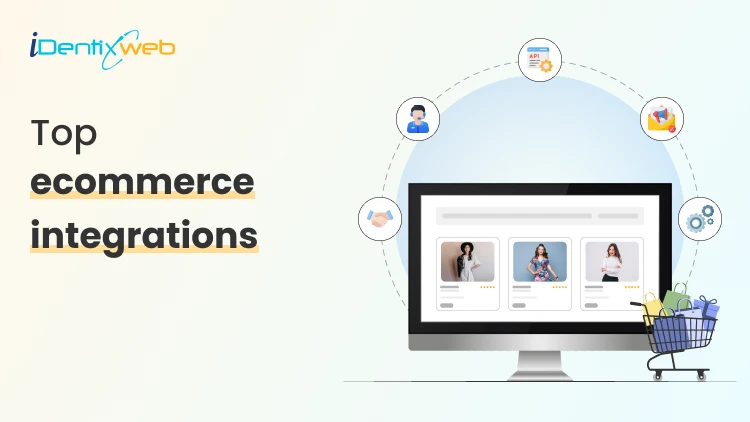
The top ecommerce integrations every online store needs include: payment gateway integrations (Stripe, PayPal, Shop Pay), ecommerce CRM integration (Klaviyo, HubSpot), inventory and ERP sync, shipping and logistics integrations (ShipStation, Easyship), customer support tools (Gorgias, Zendesk), marketing automation, and analytics platforms.
In this guide, we are breaking down the best ecommerce integration softwares for Shopify merchants, why they matter, what pain points they solve, and how to choose the right ones without blowing your tech budget.
What Is Ecommerce Integration
It is the process of connecting your Shopify store with other software systems payment gateways, CRMs, ERPs, shipping tools, analytics platforms so they can share data automatically, without you manually exporting spreadsheets at midnight.
Without proper integrations, your business looks like this:
- You copy-paste order details from Shopify into your shipping platform
- Your CRM doesn't know a customer just purchased again
- Your accountant is updating inventory manually and hating their life
- Customers get abandoned cart emails four days late
Must Have Integration Methods for Shopify Stores
1. Ecommerce Payment Integration
The Pain Point
From a research report mentioned by BigCommerce, it stated that customers abandon carts 70% of the time. A big chunk of that? Checkout friction. Slow payment processing, limited payment methods, lack of trust signals all of it kills conversions.
What Ecommerce Payment Integration Solves
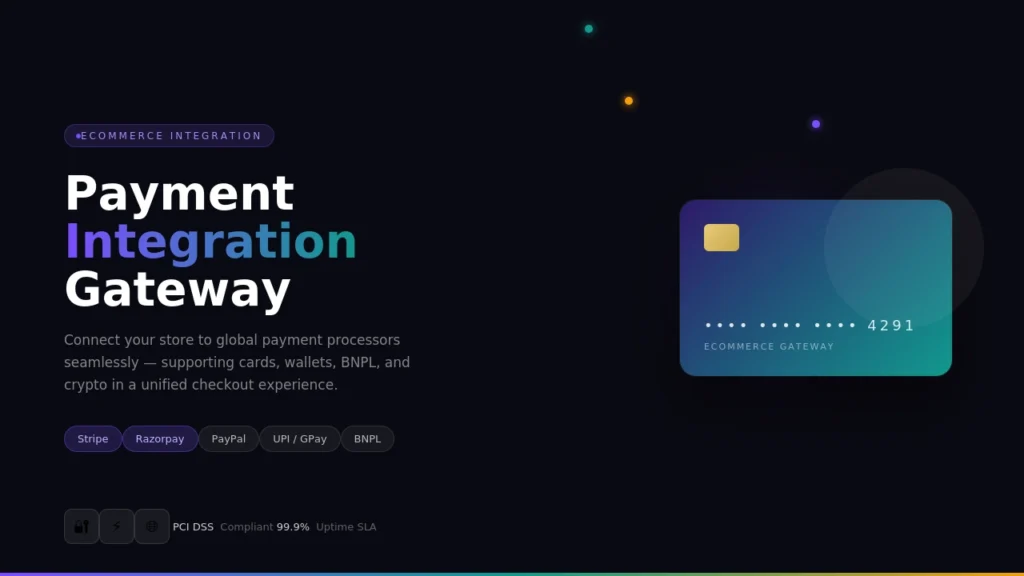
It connects your Shopify store to payment processors and gateways so transactions are processed instantly, securely, and across multiple payment methods.
Check these advanced ecommerce integration software for payment:
- Shop Pay - Shopify's native checkout accelerator with 131M+ buyers. Converts up to 36% better than standard checkouts.
- Stripe - Highly customizable, developer-friendly, global payment coverage.
- PayPal & Venmo - Still essential for buyer trust, especially with older demographics.
- Klarna / Afterpay - Buy now, pay later options that increase average order value by 30-50%.
2. Ecommerce CRM Integration
The Pain Point
You have thousands of customers but zero real insight into who they are, what they've bought, when they last engaged, or how close they are to churning. Every email blast goes to everyone. Nothing feels personal. Open rates are tanking.
What Ecommerce CRM Integration Solves
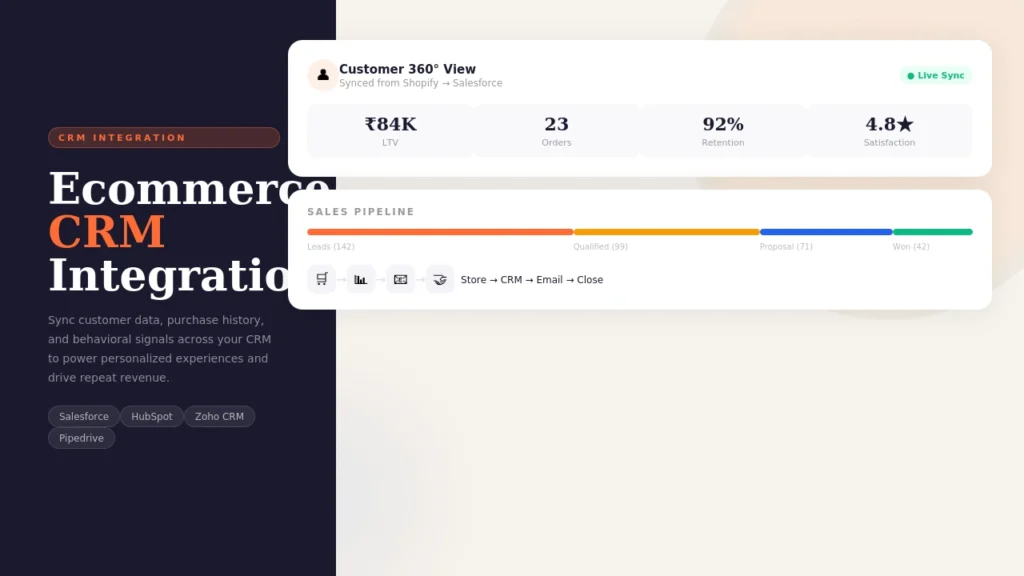
It syncs customer purchase history, behavior, and preferences directly from your store into your CRM enabling hyper-personalized marketing, proactive support, and targeted re-engagement campaigns.
Best ecommerce CRM integrations for Shopify:
- Klaviyo - Built specifically for ecommerce. Pulls real-time data for segmentation, flows, and predictive analytics. The gold standard for DTC brands.
- HubSpot - Great if you have a B2B or wholesale component. Full CRM suite with Shopify connector.
- Salesforce Commerce Cloud - Enterprise-grade ecommerce CRM integration for large Shopify Plus merchants.
3. Shipping & Logistics Integrations
The Pain Point
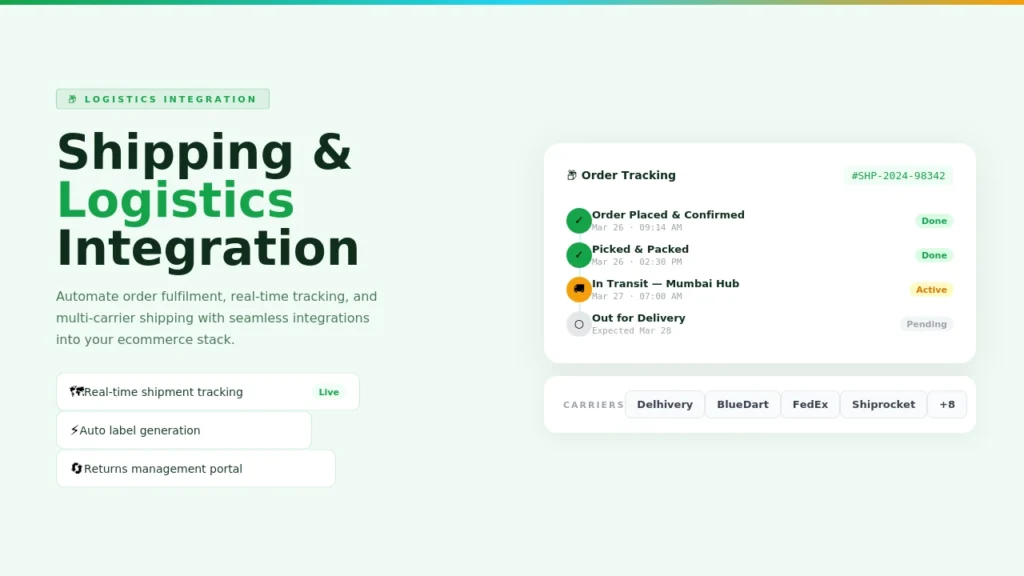
Customers expect Amazon-level shipping transparency real-time tracking, fast delivery, and instant notifications. Most small merchants are still manually printing labels and fielding "where's my order?" tickets all day.
What Shipping Integrations Solve
- ShipStation - Multi-carrier shipping management. Auto-imports Shopify orders, compares rates, prints labels in bulk.
- Easyship - Ideal for international sellers. Shows live shipping rates at checkout and handles customs documentation.
- Aftership - Branded tracking pages and proactive delivery notifications that reduce support tickets dramatically.
- Loop Returns - Automates returns and exchanges directly from your store. Saves hours of manual processing each week.
4. Inventory Management & ERP Integration
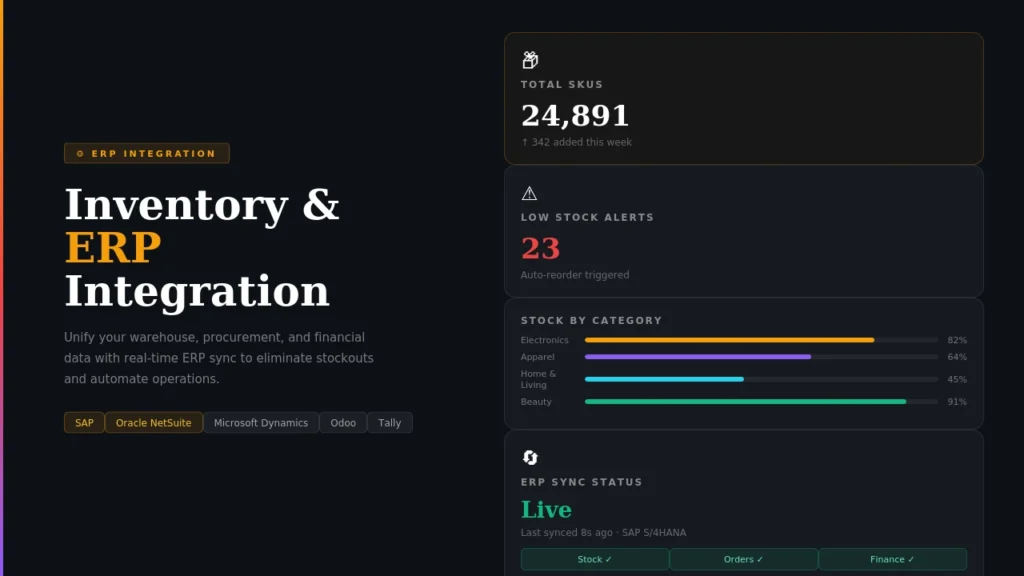
The Pain Point
Overselling out-of-stock products, manually updating inventory across your store and warehouse, reconciling purchase orders in spreadsheets, and this is the stuff that eats your weekends and destroys customer trust.
What ERP & Inventory Integration Solves
An ecommerce integration platform that syncs inventory data in real-time between Shopify and your ERP or warehouse management system means stock levels are always accurate across all your sales channels.
- Linnworks - Syncs inventory across Shopify, Amazon, eBay, and more in real time.
- Brightpearl - Covers orders, inventory, warehouse, and accounting in one system.
- NetSuite (Oracle) - Enterprise-level ERP. If you're doing serious volume, this is where services like Celigo or Boomi shine as middleware connectors.
5. Marketing Automation Integrations
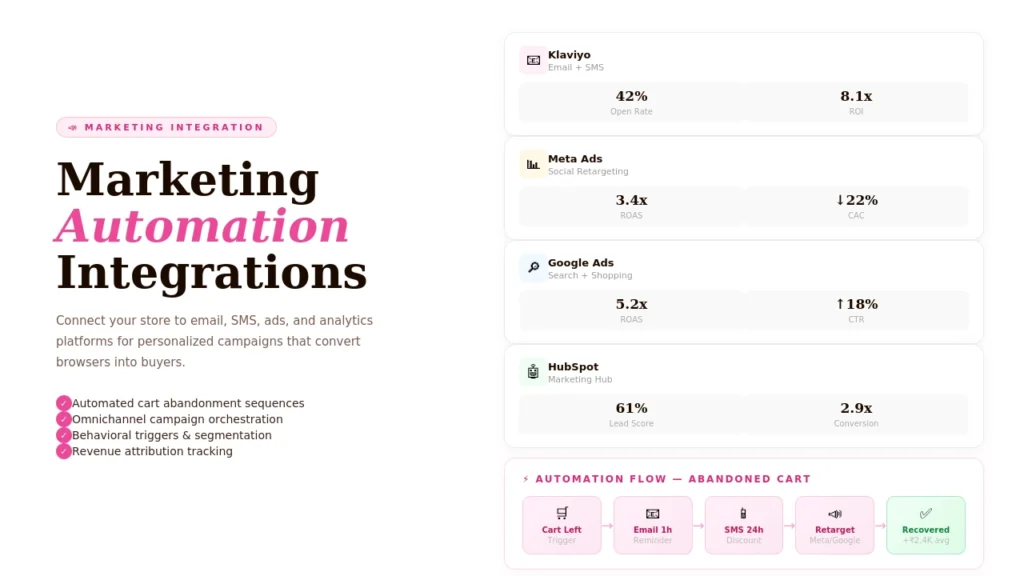
Here's what most merchants get wrong: they drive traffic, get the sale, then do nothing until the customer happens to come back.
Check these few solutions for marketing automation:
Klaviyo (Email + SMS) - Flows for abandoned cart, post-purchase upsell, win-back sequences, and VIP customer rewards.
Omnisend - Omnichannel automation (email, SMS, push notifications) built for Shopify merchants.
Postscript - SMS marketing powerhouse with deep Shopify ecommerce API integration for behavior-triggered text campaigns.
Loyalty Lion / Smile.io - Loyalty and referral programs integrated directly into your store to drive repeat purchases.
Key Benefits of Ecommerce Integration
Streamlined Operations
Integrating your eCommerce platform with other systems (like CRM, ERP, accounting software) simplifies processes, reducing manual tasks and minimizing errors. This leads to more efficient inventory management, order processing, and customer service.
Better Customer Experience
Offer seamless experiences, such as synchronized order statuses, real-time inventory updates, and faster checkouts. This increases customer satisfaction, loyalty, and retention.
Increased Accuracy
By syncing data across all systems, integration reduces the chances of data discrepancies between platforms. This leads to more accurate reporting, inventory tracking, and financial records.
Improved Decision-Making
With integrated data from various sources, businesses gain a 360-degree view of their operations. This helps make informed decisions based on real-time analytics, trends, and insights.
Cost Savings
It eliminates the need for duplicate data entry and reduces the risk of human error, saving time and money. Automation helps streamline processes, reducing overhead costs and increasing operational efficiency.
Faster Time-to-Market
You can accelerate product launches, inventory updates, and order processing, allowing businesses to be more responsive to market trends and customer demands.
Scalable Growth
Automated systems and data syncs ensure that your eCommerce platform can handle increasing traffic, sales volume, and product catalog without compromising performance.
Enhanced Marketing Opportunities
Integration helps synchronize customer data from multiple sources, enabling more personalized and targeted marketing campaigns. This leads to higher engagement and conversion rates.
Improved Inventory Management
Real-time integration between sales channels, warehouses, and suppliers allows you to monitor stock levels accurately, avoid stockouts, and reduce excess inventory. This ensures you always have the right products available for your customers.
How to Choose the Right Ecommerce Integration Software
With hundreds of apps in the Shopify App Store and dozens of integration software options on the market, the biggest mistake is adding tools without a clear strategy.
Ask yourself these questions before adding any integration:
1. What specific pain point does this solve? Don't integrate for the sake of integrating.
2. Does it have native Shopify support or require ecommerce API integration? Native = easier to set up, faster syncing, less maintenance.
3. What's the true cost? Factor in monthly fees, transaction fees, and the cost of your team's time to maintain it.
4. Do you need ecommerce integration services? For complex setups like multi-warehouse, ERP connections, custom data pipelines, professional ecommerce integration services can save you months of painful trial and error.
Best Ecommerce Integration Software by Category
| Category | Top Tools | Best For |
| Payment | Shop Pay, Stripe, Klarna | All merchants non-negotiable |
| CRM | Klaviyo, HubSpot | Email/SMS marketing, LTV growth |
| Shipping | ShipStation, Easyship, Aftership | Reducing support tickets, scaling fulfillment |
| Inventory/ERP | Brightpearl, Linnworks, NetSuite | Multi-channel, high-volume merchants |
| Marketing Automation | Omnisend, Postscript, Smile.io | Retention, re-engagement, loyalty |
| Analytics | Triple Whale, GA4, Glew.io | Data-driven scaling, ad attribution |
| Customer Support | Gorgias, Zendesk, Tidio | High ticket volume, support efficiency |
Final Word
The best integration strategy isn't about having everything it's about having what actually moves the needle for your store, your team, and your customers.Start with your biggest pain point. Add one integration. Measure the impact. Then build from there.
Frequently Asked Questions
1. What is ecommerce integration?
It is the process of connecting your online store like Shopify with other business software (CRMs, ERPs, payment gateways, shipping platforms, etc.) so they share data automatically without manual intervention.
2. Do I need a developer for ecommerce API integration?
For native app integrations - no. For custom ecommerce API integration (connecting Shopify to a custom ERP or proprietary system), you will need a developer or a Shopify Partner agency experienced in ecommerce integration services.
3. How much do integration services cost?
Costs vary widely depending on complexity, the systems being connected, and the level of ongoing maintenance required.


About the author
Sajini Annie John
Meet Sajini, a seasoned technical content writer with a passion for e-commerce and expertise in Shopify. She is committed to helping online businesses to thrive through the power of well-crafted content.