




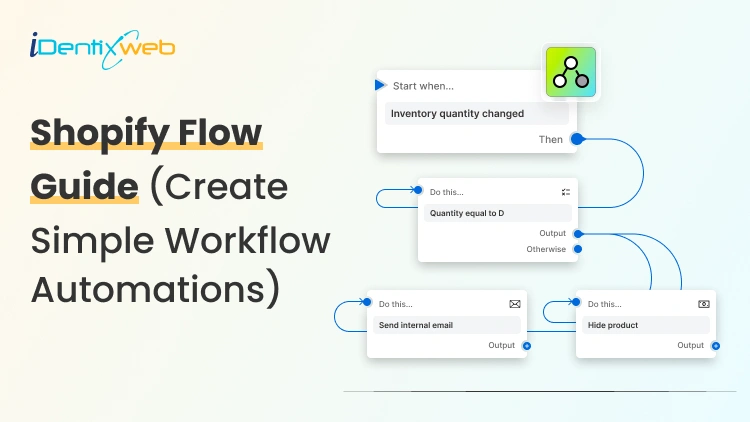

Shopify Flow AI lets merchants create automated workflows by describing what they want in plain language through Sidekick. Simply explain the trigger, condition, and action, such as tagging high-value orders or holding risky orders. Sidekick then creates a draft workflow inside Flow. Merchants should review every step, check conditions and details carefully, make any required changes, and turn on the workflow once it is ready.
If you run a Shopify store, you are probably spending time every day on tasks a free app can handle for you. This includes tagging orders, flagging risky checkouts, emailing customers, and updating inventory.
Shopify Flow is the free, built-in tool that automates all of it, and in 2026, it got a major upgrade. You can now describe a workflow in plain English and let Shopify's AI assistant build it for you.
In this guide, I'll walk you through how to use Shopify Flow AI to create workflows with Sidekick, how to build one manually when you want full control, and the most useful workflows to set up first.
I will also explain how to export, import, and manage your automations as your store grows.
What is Shopify Flow?
Shopify Flow is Shopify's native automation app. It lets you build logic-based workflows that run behind-the-scenes tasks in your store automatically, without writing a single line of code.
Flow is free and available on all standard Shopify plans, which is why it's now one of the most widely used automation tools in the Shopify ecosystem.
The idea is simple: you set up rules, and Flow carries them out for you every time the conditions are met. That means it can reject orders that look fraudulent, hide out-of-stock products, tag and reward loyal customers, and alert your team about high-risk orders.
And with the Winter '26 update, you no longer have to build these workflows by hand if you don't want to.
How to use Shopify Flow?
Every Shopify Flow workflow is built from three parts: a trigger, a condition, and an action.
The trigger is the event Flow watches for. The condition is the rule that has to be true. The action is what Flow does when that rule is met.
Here's a quick example:
- Trigger: An order is placed.
- Condition: The order total is above $200.
- Action: The customer is tagged as a VIP.
Once you understand these three building blocks, you can create almost any Shopify workflow automation you can think of, either manually or with AI.
How to use Shopify Flow AI to create workflows with Sidekick
The fastest way to build a workflow in 2026 is to skip the manual setup entirely and let Sidekick do the first draft. Instead of clicking through menus to find the right trigger, condition, and action, you describe what you want, and Sidekick creates the workflow for you.
Sidekick is available at no extra cost inside your Shopify admin. Here's how to use it to create a workflow:
How to Use Shopify Flow AI to Create Workflows (With Sidekick)
Step 1: Open Sidekick
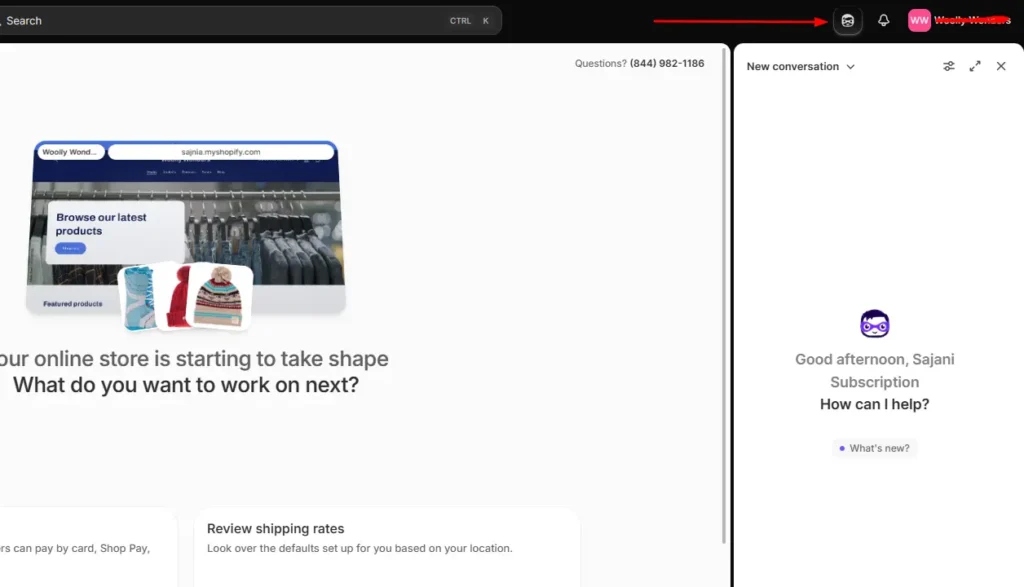
Click the Sidekick icon in your Shopify admin
Step 2: Describe the workflow
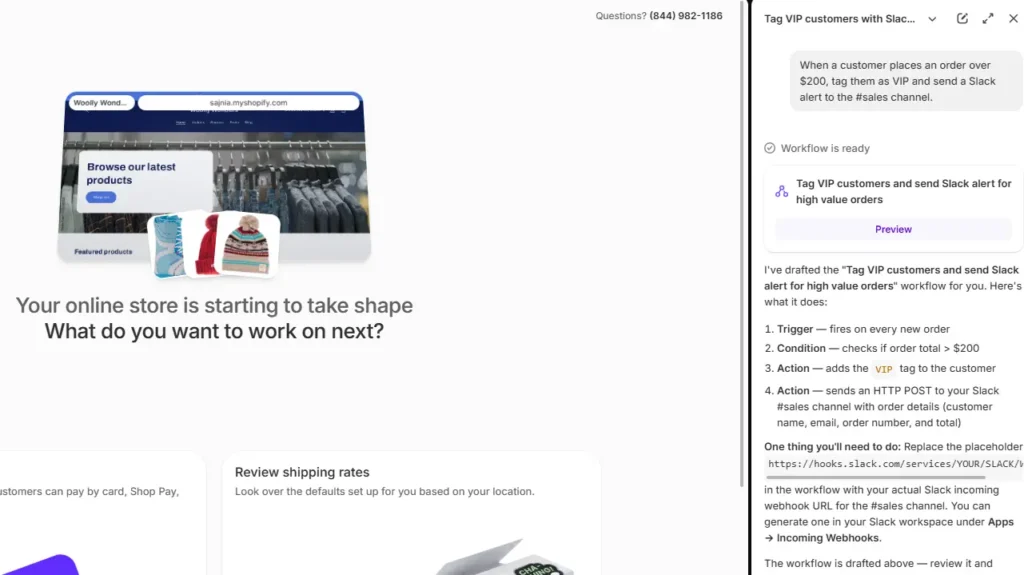
Be specific about the trigger, the condition, and the action you want.
For example: "When a customer places an order over $200, tag them as VIP and send a Slack alert to the #sales channel."
Sidekick reads your request and drafts the complete workflow, including the trigger, conditions, and actions, and opens it as a draft in the Flow editor.
You'll see each step laid out as a node on the canvas (since January 2026, workflows render top-to-bottom, so they're easy to read).
Step 3: Review every step carefully
Sidekick is an AI drafting against Shopify's data model. It can occasionally pick the wrong condition operator, misspell a tag, or reference a field that doesn't exist.
Confirm that each operator matches your intent (for example, "is equal to" vs. "is at least one of"), and check that tags, email addresses, and channel names are spelled exactly as they appear in your store.
- Adjust and activate. Tweak anything that isn't quite right, then click Turn on workflow.
A few example prompts you can copy, edit, and paste into Sidekick to get started:
- "Tag every order over $150 as high-value and add the customer to a 'VIP' segment."
- "When inventory for any product tagged 'bestseller' drops below 10 units, email me an alert."
- "When a customer completes their third order, send them a 15% discount code."
- "When an order is flagged as high risk, hold the fulfillment and notify the #orders channel."
How to use Shopify Flow to create workflows?
Step 1: Open the Shopify Flow app from your Shopify admin
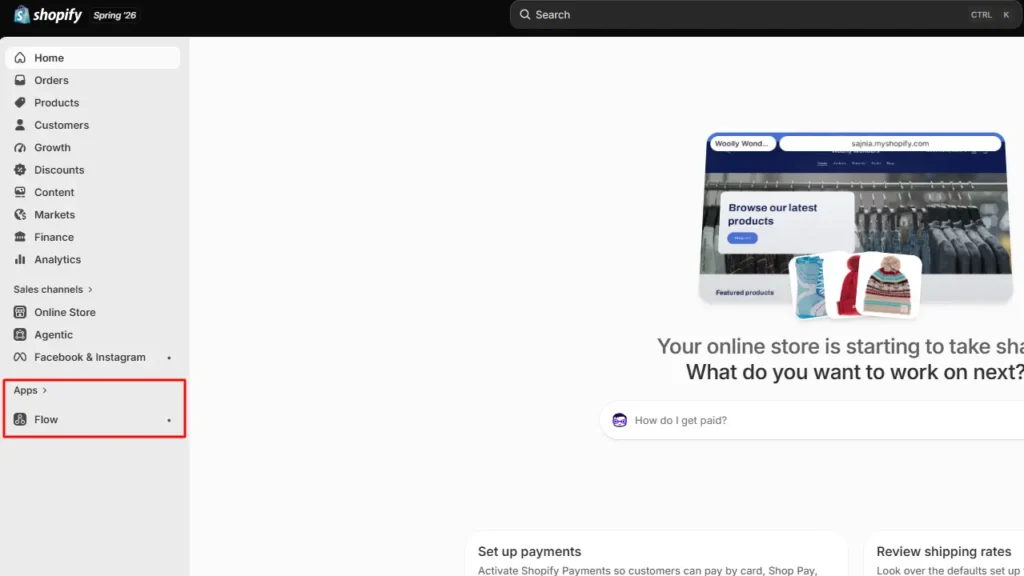
Step 2: Click on the “Create workflow” button
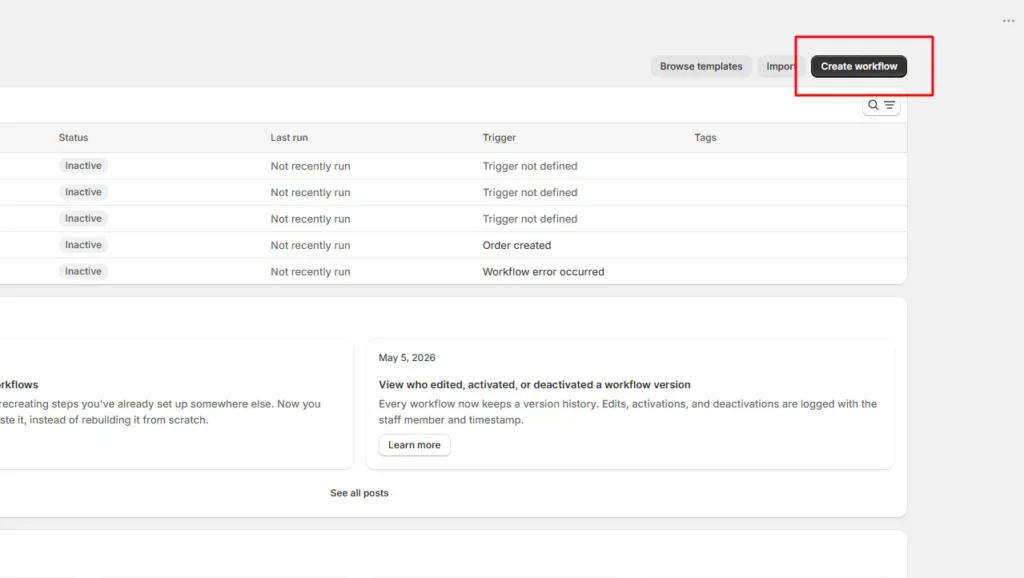
From the Apps section in your admin dashboard, go to Flow. Install the app if you haven't from the app store.
Step 3: Click on “Select a trigger” and add the trigger that you want to create
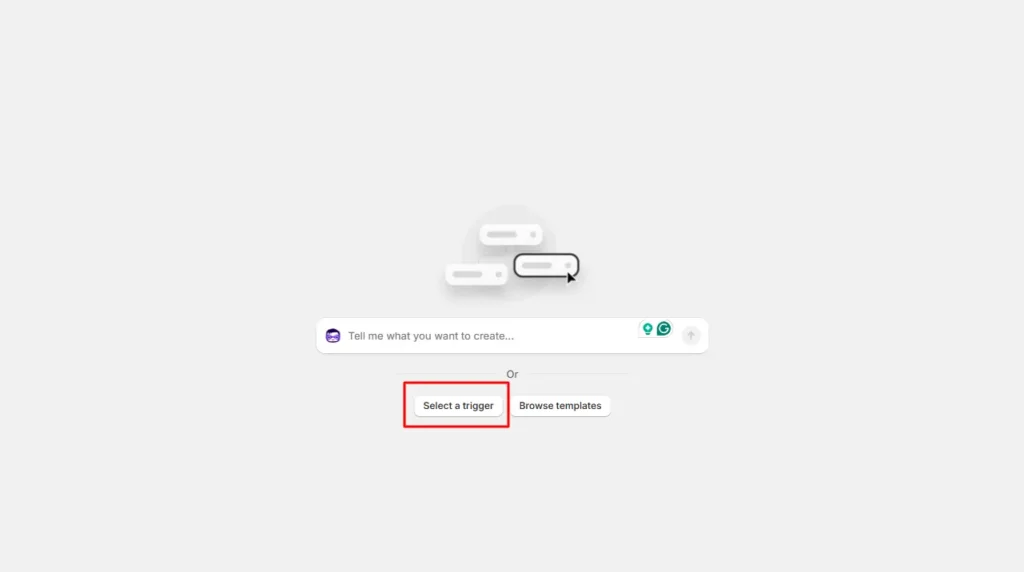
You can either select a trigger, browse templates, or tell Sidekick to create a trigger for you.
Step 4: Define the trigger
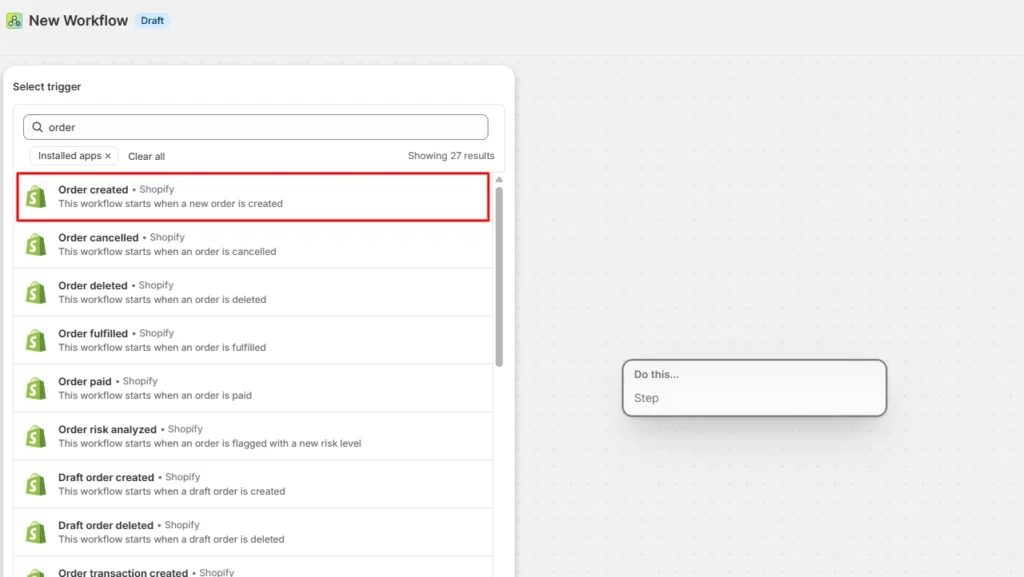
You will see a list of triggers you can activate with apps. Define what kind of trigger you want to set up. Here I have selected the ‘order created’ trigger.
Step 5: Select a condition
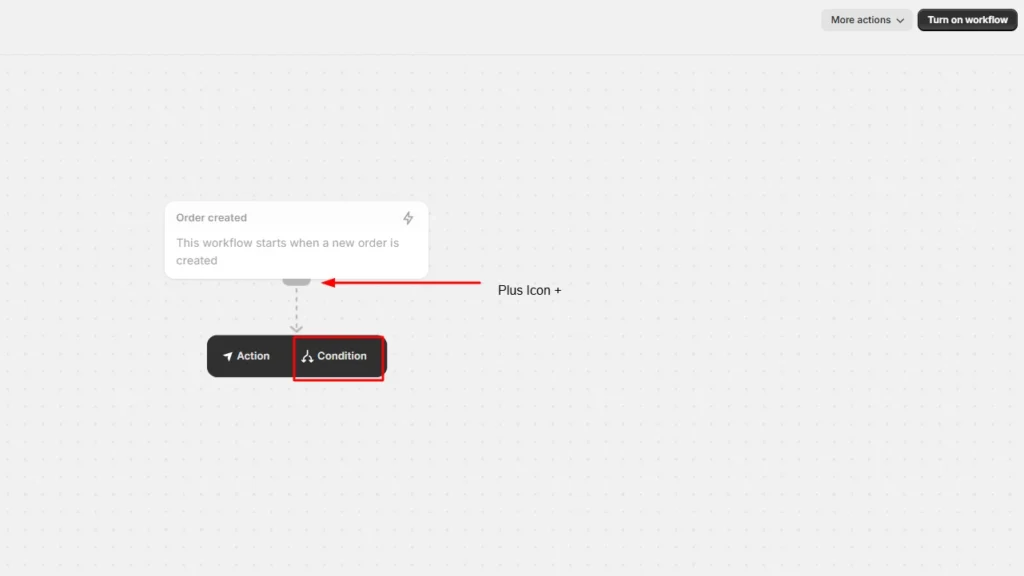
Click the ‘+’ icon and click on ‘Condition’. Here you need to select a condition for the flow to take action. For example, the order is equal to the total price.
Step 6: Take action
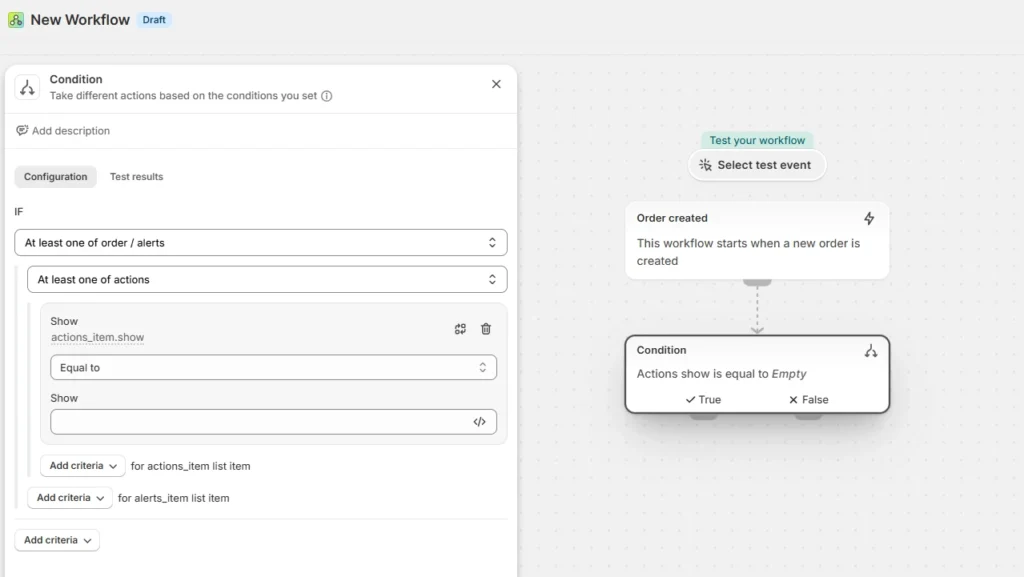
You can select the action to be taken when the conditions are met. For example, if the condition is True, you can add a High-value tag to the order.
Step 7: Turn on the workflow
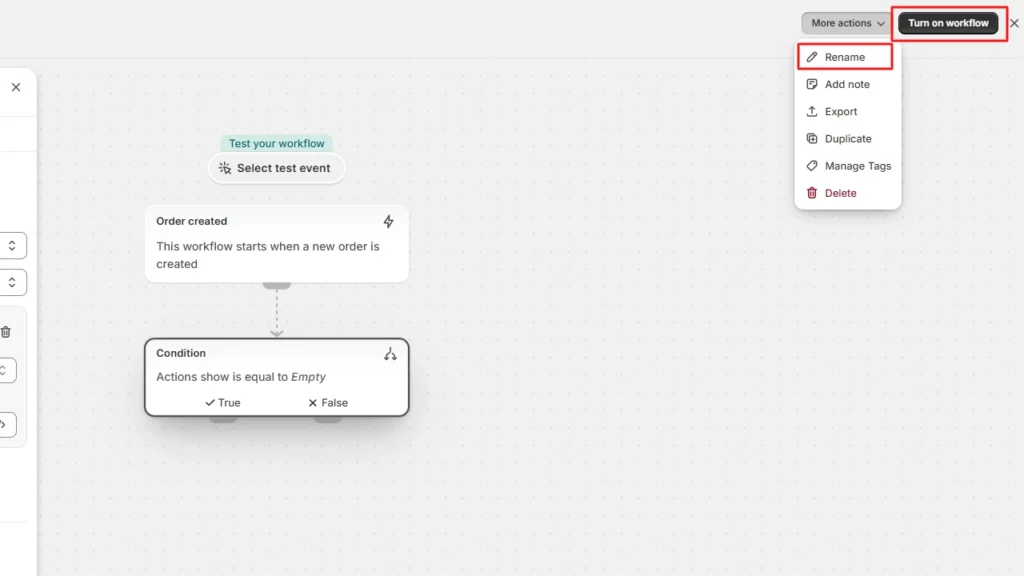
Click on ‘More actions’ and rename your workflow. For example, ‘Tag High-value Orders’ and click on Turn on Workflow. This will activate your workflow.
A simple management guide to Shopify Flow workflows
Organize workflows with tags and notes
You can add tags to any workflow to categorize and filter them. Tags appear in the Tags column on the Flow home page and in each workflow's overview, so you can quickly find what you need in a long list.
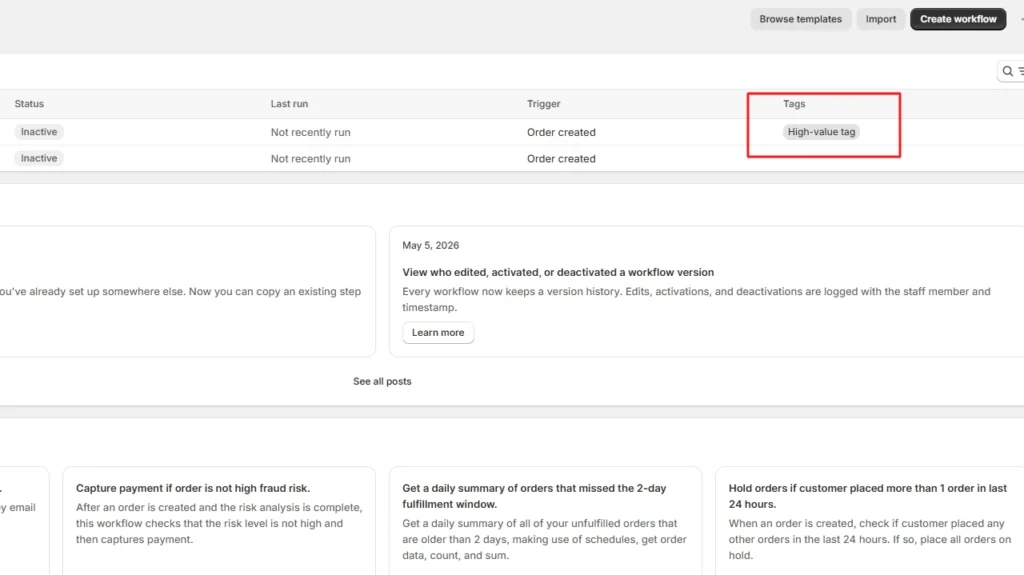
You can also add a note inside the workflow editor to explain, in your own words, what a workflow does and why.
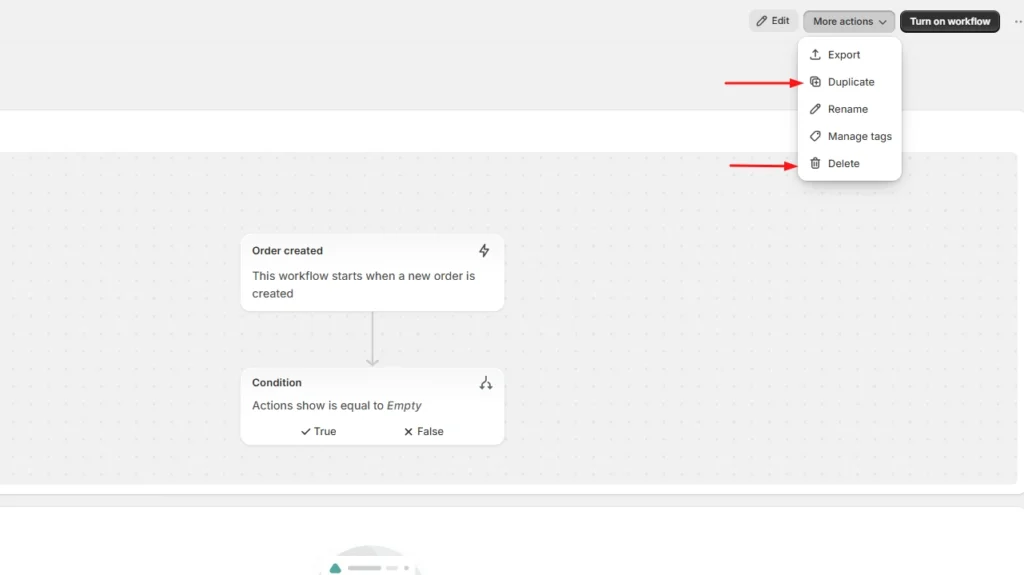
Duplicate and delete
From the Flow home page, select any workflow, and you can duplicate it or delete it when it's no longer needed.
Click on ‘More options,’ and you will find both the actions to duplicate and delete the workflow.
How to export a Shopify Flow workflow?
Step 1: From your Shopify admin, go to Apps > Flow
Step 2: Select the workflow(s) you want to export.
Step 3: Click More actions > Export
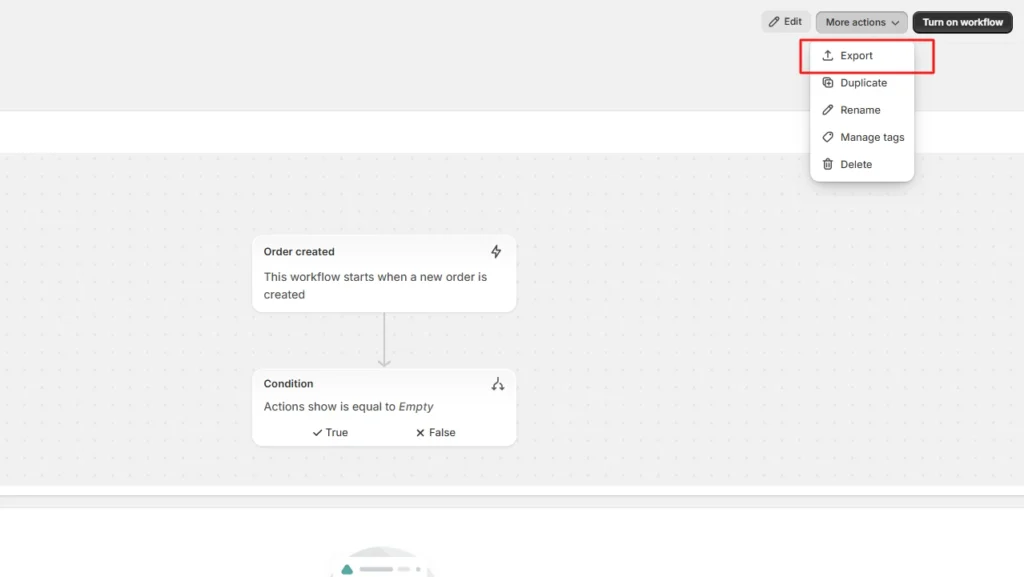
The workflow downloads through your browser as a .flow file. Before you share an exported workflow with anyone, remove any identifying or sensitive information, such as email addresses or other contact details, from it first.
How to import a Shopify Flow workflow?
You can import a .flow file from another merchant or from a backup copy.
Step 1: From your Shopify admin, go to Apps > Flow
Step 2: Click Import
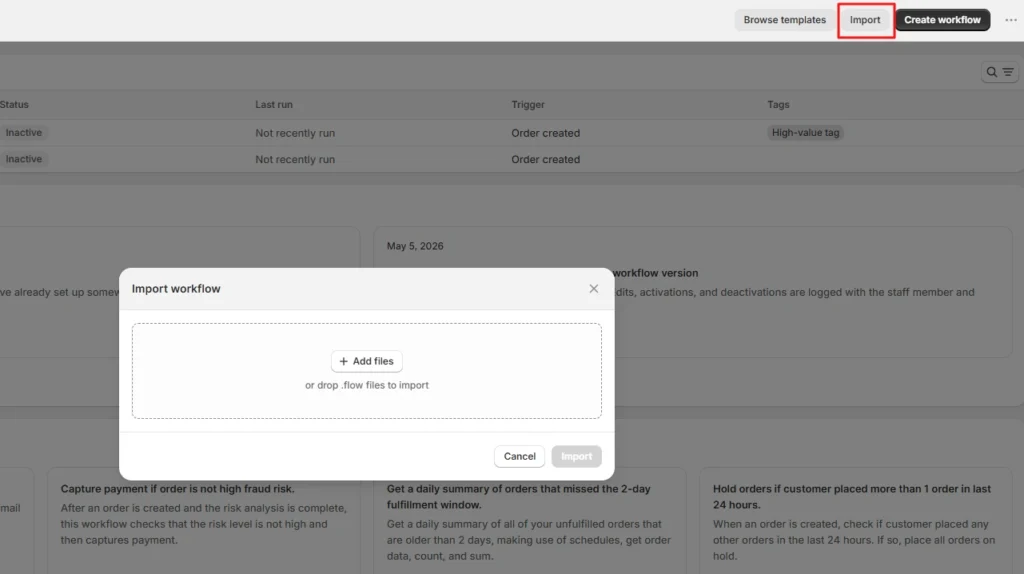
Click Import from the top-right corner. Then click on + Add files to import your .flow workflow from your system.
Flow is easy and free
Shopify Flow has gone from a simple automation app to the one every merchant should have.
With Sidekick, you can describe a workflow and have a working draft in minutes, then refine it, test it, and turn it on with confidence.
Start with one or two high-impact workflows, tagging VIPs, catching high-risk orders, and recovering abandoned checkouts, and grow from there.
Tag and note your workflows as you build, back them up with exports, and lean on AI for the first draft while you keep the final say.
FAQs
1. What is Shopify Flow?
Shopify Flow is Shopify’s automation platform for creating workflows that handle repetitive store tasks automatically. It uses triggers, conditions, and actions to automate processes such as order management, inventory, fraud prevention, customer tagging, notifications, and integrations with other apps.
2. How to use Shopify Flow AI to create workflows?
Shopify now lets merchants use Sidekick inside Shopify Flow to create workflows with simple instructions, such as “tag orders over $200 as high-value.” Sidekick builds the workflow for you, but the generated workflow stays inactive until you review, test, and manually turn it on.
3. How to export and import Shopify Flow .flow files structure?
To export a workflow, open Shopify Flow, select the workflow, and choose More actions > Export; Shopify downloads it as a .flow file that can be used as a backup or shared with another store. To import it, go to Flow’s dashboard and click Import, upload the .flow file, preview it if needed, and import it.
4. How can Shopify Flow help my business?
Shopify Flow can reduce manual work by automating tasks such as tagging customers, managing inventory, handling fulfillment, identifying risky orders, and sending team notifications. This helps merchants create consistent processes and spend less time repeating routine admin work.
5. How do actions work in Shopify Flow?
Actions are the tasks that Shopify Flow performs after a trigger occurs and any required conditions are met. For example, adding a tag, updating inventory, sending an email, holding fulfillment, or sending information to another app.
6. How to create and manage workflows in Shopify Flow?
Go to Apps > Flow > Create workflow, then build a workflow manually with a trigger, conditions, and actions, start from a Shopify template, or ask Sidekick to generate one. After reviewing and testing it, turn the workflow on.
7. How can I monitor my Shopify Flow execution?
Open Shopify Flow and go to Recent runs to see whether workflows are completed, waiting, in progress, rate-limited, canceled, or experiencing errors. You can open an individual run to see the path it followed, actions performed, errors, and step data. Completed workflow-run logs are currently retained for 14 days.


About the author
Sajini Annie John
Meet Sajini, a seasoned technical content writer with a passion for e-commerce and expertise in Shopify. She is committed to helping online businesses to thrive through the power of well-crafted content.