





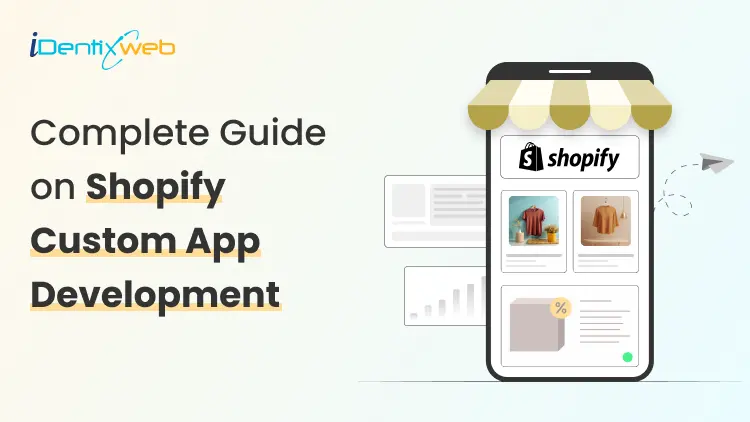
Shopify custom app development allows growing ecommerce brands to build powerful, fully customized solutions inside their Shopify store. Unlike public marketplace apps, which offer generalized features, custom shopify app development focuses on your specific workflows, integrations, and operational requirements.
As brands scale, complexity increases multiple SaaS tools, disconnected systems, subscription costs, and performance slowdowns. This is where a dedicated shopify custom app becomes critical. It centralizes processes, automates operations, and ensures your store infrastructure supports growth rather than limits it.
What Is Shopify Custom App Development
Shopify custom app development is the process of building private or custom applications specifically designed for a single Shopify store to solve unique operational, marketing, or technical requirements.
Unlike public apps, custom shopify app focuses exclusively on your business logic. A custom app is built to match your workflows instead of forcing you to adapt to generic tools. With professional shopify custom app development services, brands can eliminate technical bottlenecks and unlock growth faster.
When Do You Actually Need Shopify Custom App Development?
You need custom app development when:
- Your store uses 5+ apps for connected workflows
- You need ERP, CRM, or 3PL integration
- You want custom checkout logic
- You require complex discount structures
- You manage multi-location or B2B pricing rules
- You want automation beyond Shopify Flow
Shopify Custom App vs Shopify Public App: What’s the Difference?
| Feature | Shopify Public App | Shopify Custom App |
| Customization | Limited | Unlimited |
| Scalability | Moderate | High |
| Ownership | Third-party | Full |
| Integration Depth | Basic | Advanced |
| Cost Structure | Monthly subscription | One-time + maintenance |
Types of Shopify Custom Apps You Can Build
1. Private Admin Apps
Internal dashboards, automation tools, analytics engines.
2. Integration Apps
ERP, CRM, accounting, fulfillment connections.
3. Checkout Extensions
Custom validation rules, payment logic, discount engines.
4. Customer Experience Apps
Product customizers, advanced search filters, loyalty logic.
5. Automation Apps
Order routing, tagging systems, advanced workflows.
Cost of Shopify Custom App Development in 2026
Pricing depends on:
- Feature complexity
- Integration depth
- Security requirements
- Hosting infrastructure
- Ongoing maintenance
Benefits of Shopify Custom App Development
It gives growing brands full operational control, scalability, and long-term efficiency that public apps cannot provide. When your store complexity increases, tailored development becomes a strategic infrastructure investment rather than a technical add-on.
1. Full Control Over Features and Business Logic
With shopify custom app development, every feature is built around your exact requirements.
Public apps force you to adjust your processes. A custom solution adapts to you.
Why this matters:
- Custom pricing rules
- Complex discount engines
- B2B-specific workflows
- Unique checkout conditions
2. Seamless Integration With Existing Systems
A properly built shopify custom app becomes the bridge between Shopify and your entire tech stack. Reliable shopify custom app development services ensure API limits, webhooks, and data structures are handled efficiently.
Growing brands often rely on:
- ERP systems
- CRM platforms
- Accounting software
- Warehouse management tools
- 3PL providers
3. Reduced Dependency on Multiple Apps
Many growing stores use 8–15 public apps simultaneously.
This creates:
- Higher monthly costs
- App conflicts
- Slower load times
- Complicated troubleshooting
Custom app allows you to consolidate multiple functionalities into a single optimized application. Through strategic app development, brands often replace 5–7 apps with one centralized solution.
4. Improved Store Performance and Speed
Every additional third-party app adds scripts and API calls.
This can result in:
- Slower page load times
- Checkout friction
- Lower conversion rates
5. Advanced Automation Capabilities
Automation is a key growth driver.
It allows brands to automate complex workflows such as:
- Order tagging and routing
- Customer segmentation
- Fraud detection logic
- Tiered loyalty programs
- Dynamic pricing adjustments
Public apps provide limited automation rules. Through expert custom shopify app development, automation can reflect real business intelligence.
How to Validate Your Custom App Idea
Shopify custom app development should only begin after validating that your idea solves a real business problem, delivers measurable ROI, and justifies development investment.
1. Clearly Define the Problem
Ask:
- What specific workflow is broken?
- How much time is being lost weekly?
- What revenue impact does this create?
- Are current apps insufficient or just misconfigured?
2. Calculate Financial Impact
Estimate:
- Time saved per month
- Reduced app subscription costs
- Increased conversion rate
- Reduced operational errors
- Improved order processing speed
3. Check Existing App Marketplace Gaps
Ask:
- Are current apps 70–80% close to your needs?
- Can multiple apps be combined?
- Are limitations technical or strategic?
4. Create a Low-Cost Prototype First
Before committing to full shopify custom app development, build a lightweight validation model.
Options include:
- Manual simulation of workflow
- Spreadsheet-based logic testing
- Shopify Flow automation prototype
- Limited-scope MVP (Minimum Viable Product)
5. Assess Technical Feasibility
Not all ideas are technically viable within Shopify’s ecosystem.
Validate:
- API limitations
- Rate limits
- Checkout extensibility constraints
- Shopify plan compatibility
- Webhook reliability
Conclusion
Shopify custom app development is not just a technical upgrade it is a strategic growth decision for brands that have outgrown generic solutions. When workflows become complex, integrations multiply, and operational inefficiencies start affecting revenue, investing in structured custom app development becomes the logical next step.
Throughout this guide, we’ve established one core principle: validate first, build second. Effective app development is rooted in clearly defined problems, measurable ROI, stakeholder alignment, and technical feasibility. Skipping validation leads to unnecessary costs. Following a structured approach turns your idea into scalable infrastructure.
Frequently Asked Questions
1. What is Shopify custom app development?
Shopify custom app development is the process of building a private, tailor-made application specifically for your Shopify store to solve unique operational, marketing, or integration needs.
2. How much does Shopify custom app development cost?
The cost depends on complexity, integrations, and feature scope.
3. Do Shopify custom apps require ongoing maintenance?
Yes. it’s not a one-time activity. Shopify frequently updates APIs and platform capabilities.
![How to Create Upsell in Shopify Without an App [2026 Tested]](https://www.identixweb.com/wp-content/uploads/2026/02/27-02-Fri-Blog-How-to-Create-Upsells-in-Shopify-Without-an-App_.webp "How to Create Upsell in Shopify Without an App [2026 Tested]")

About the author
Sajini Annie John
Meet Sajini, a seasoned technical content writer with a passion for e-commerce and expertise in Shopify. She is committed to helping online businesses to thrive through the power of well-crafted content.