


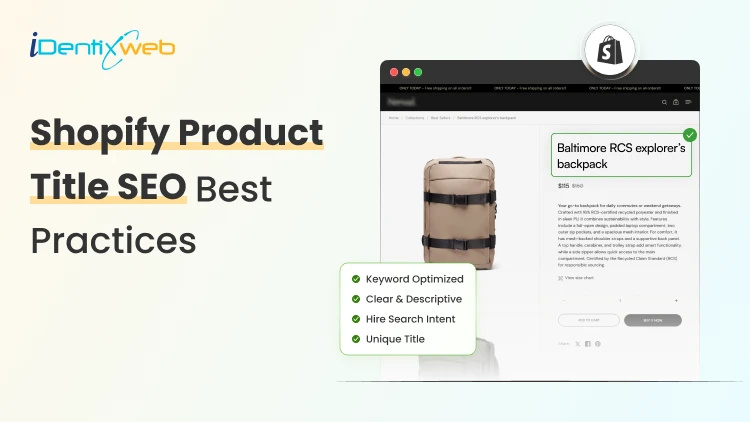
]When it comes to driving traffic and increasing sales on Shopify, most store owners focus on product images, pricing, and marketing campaigns. While these elements are important, one often-overlooked factor can significantly impact your visibility and click-through rates: Shopify Product Title SEO.
Your product title is one of the first things customers and search engines notice. A well-optimized product title can improve your rankings in search results, attract the right audience, and encourage more shoppers to click on your products.
In this guide, we will explore the most effective Shopify Product Title SEO best practices that can help you gain more visibility, increase organic traffic, and ultimately generate more sales.
Why Shopify Product Titles Matter for SEO
Product titles serve two important purposes:
- They help search engines understand what your product is.
- They convince potential customers to click on your listing.
Whether your products appear in Google Search, Google Shopping, Shopify search results, or marketplace integrations, the title often plays a critical role in determining whether a user clicks or scrolls past.
How Search Engines Evaluate Product Titles
Search engines use product titles to determine relevance for user queries. When someone searches for a specific product, Google analyzes various factors, including:
- Keywords in the title
- Product relevance
- User search intent
- Product category
- Brand information
- Click-through rates
A product title that accurately describes the item and matches what users are searching for has a much better chance of ranking higher.
For example:
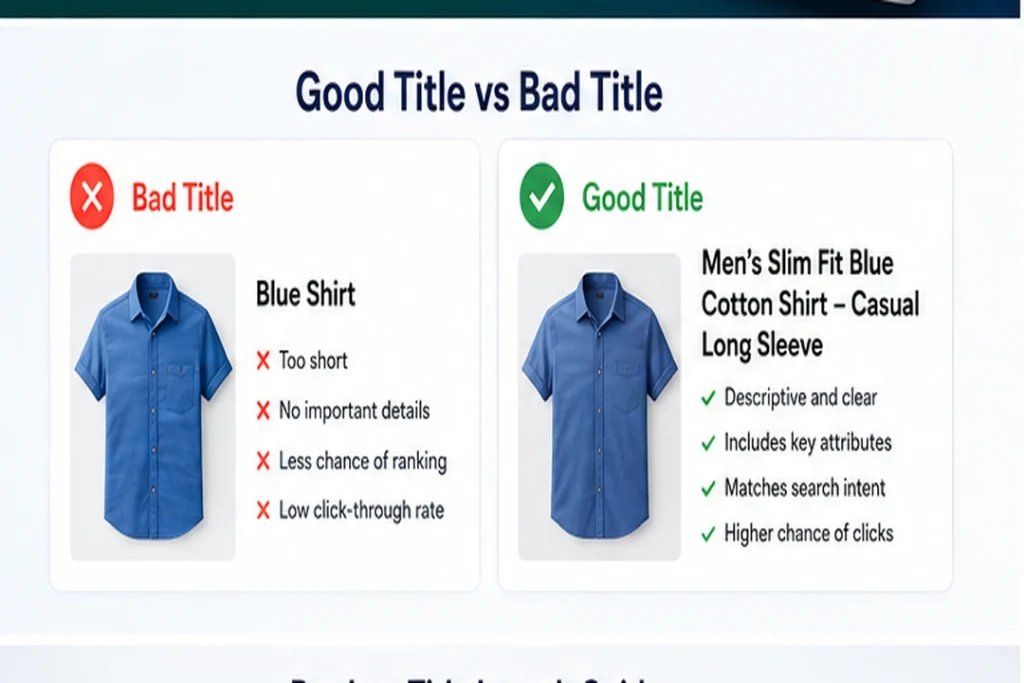
Poor Product Title
Blue Shirt
Better Product Title
Men's Slim Fit Blue Cotton Shirt - Casual Long Sleeve
The second title provides significantly more information and includes terms customers are likely to search for.
Best Practices for Shopify Product Title SEO
1. Start with Your Primary Keyword
The most important keyword should appear as close to the beginning of the title as possible.
Search engines give more weight to words placed near the start of a title. Customers also tend to scan the first few words before deciding whether to click.
For example:
Instead of:
Premium Leather Handbag for Women
Try:
Women's Leather Handbag - Premium Genuine Leather Tote
This structure improves relevance while keeping the title readable. When implementing Shopify Product Title SEO, always prioritize your most valuable keyword placement.
2. Match Search Intent
Understanding what your customers are actually searching for is crucial.
Ask yourself:
- Are they searching by product type?
- Are they searching by brand?
- Are they searching by color or size?
- Are they searching for a specific feature?
For example, if customers frequently search for:
"waterproof hiking boots"
Your title should clearly include those exact terms.
Example:
Men's Waterproof Hiking Boots - Lightweight Outdoor Trekking Shoes
The closer your title aligns with search intent, the better your chances of attracting qualified traffic.
3. Include Relevant Product Attributes
Attributes help search engines and customers quickly understand the product.
Useful attributes include:
- Size
- Color
- Material
- Gender
- Style
- Compatibility
- Feature
Example:
Women's Black Leather Ankle Boots - Waterproof Winter Fashion Shoes
This title provides multiple data points that improve both SEO and user experience.
4. Keep Titles Clear and Readable
One common mistake is keyword stuffing.
Avoid titles like:
Blue Shirt Men's Blue Shirt Cotton Blue Casual Shirt Slim Fit Blue
This looks unnatural and may reduce click-through rates.
Instead, create titles that sound natural:
Men's Slim Fit Blue Cotton Casual Shirt
Good Shopify Product Title SEO balances keyword optimization with readability.
Remember: you're writing for humans first and search engines second.
5. Use Brand Names Strategically
If your brand is recognized within your niche, including it in product titles can improve credibility and clicks.
Example:
Nike Men's Air Running Shoes - Lightweight Athletic Sneakers
Brand names often increase trust and can attract shoppers specifically searching for that brand.
However, avoid placing your brand first unless brand searches represent a significant portion of your traffic.
6. Stay Within Optimal Length Limits
Product titles that are too long may get truncated in search results.
A good rule of thumb is:
- 50-70 characters for most products
- Up to 100 characters if additional details provide value
Example:
Good:
Women's Yoga Leggings - High Waist Workout Pants
Too Long:
Women's Premium High Waist Stretch Fitness Workout Yoga Gym Running Casual Activewear Leggings with Pocket
While descriptive, the second example may be cut off in search results.
Keep titles concise while maintaining important keywords.
7. Analyze Competitor Product Titles
Your competitors can provide valuable insights.
Search for your target keywords and review:
- Top-ranking product titles
- Google Shopping listings
- Marketplace product names
- Category leaders
Look for patterns such as:
- Common keyword placement
- Frequently used attributes
- Length of titles
- Brand positioning
Then create titles that are equally relevant but more compelling.
Competitive analysis is an important component of successful Shopify Product Title SEO.
8. Use Product Type Keywords
Always identify the core product type.
Examples:
- Running Shoes
- Coffee Mug
- Wireless Earbuds
- Office Chair
- Protein Powder
Customers frequently search using these exact product categories.
Example:
Wireless Bluetooth Earbuds - Noise Cancelling Sports Headphones
The product type should never be ambiguous.
9. Avoid Unnecessary Words
Many store owners add promotional language that provides little SEO value.
Avoid:
- Best
- Amazing
- Top Quality
- Cheap
- Sale
- Must Have
Instead, focus on factual product information.
Bad Example:
Best Premium Amazing Leather Wallet for Men
Good Example:
Men's Genuine Leather Wallet - RFID Blocking Card Holder
The second title is clearer and more search-friendly.
10. Optimize for Google Shopping
Google Shopping often displays product titles directly.
A strong title can significantly improve clicks.
Consider including:
- Brand
- Product type
- Key feature
- Size or color
Example:
Samsung 27-Inch Curved Gaming Monitor - 144Hz Full HD
This format helps shoppers quickly identify relevant products.
Because Google Shopping relies heavily on titles, Shopify Product Title SEO becomes even more important for paid and organic visibility.
How to Conduct Product Keyword Research
To create effective titles, start with keyword research.
Popular tools include:
- Google Keyword Planner
- Ahrefs
- SEMrush
- Ubersuggest
- Google Search Console
Look for:
- High-volume keywords
- Long-tail variations
- Buyer-intent phrases
- Competitor keywords
Example:
Primary Keyword:
Running Shoes
Long-Tail Variations:
- Men's Running Shoes
- Lightweight Running Shoes
- Trail Running Shoes
- Waterproof Running Shoes
Incorporating these naturally into titles can improve rankings and clicks.
Final Thoughts
Product titles may seem like a small detail, but they have a major impact on visibility, click-through rates, and conversions.
By following these Shopify Product Title SEO best practices, you can create titles that appeal to both search engines and potential customers. Start reviewing your product catalog today, implement these recommendations, and you'll be well-positioned to attract more qualified traffic and generate more sales through effective Shopify Product Title SEO.
Post Tags

About the author
Sajini Annie John
Meet Sajini, a seasoned technical content writer with a passion for e-commerce and expertise in Shopify. She is committed to helping online businesses to thrive through the power of well-crafted content.