





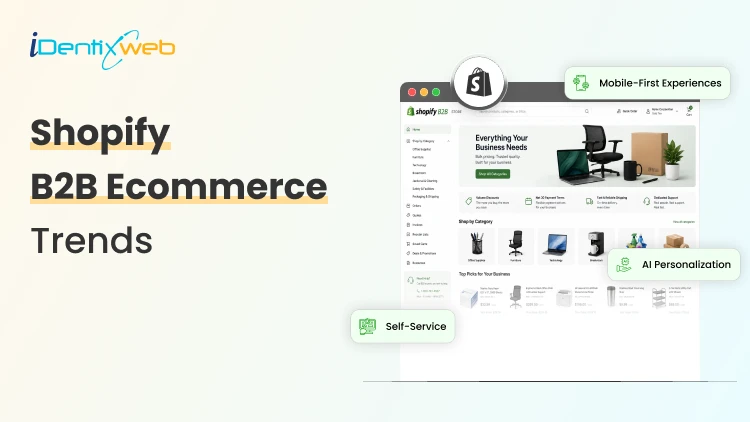
The landscape of wholesale commerce is undergoing a profound shift, and at the center of this transformation is Shopify B2B Ecommerce. Once considered a platform primarily for direct-to-consumer brands, Shopify has evolved into a powerful ecosystem capable of supporting complex B2B operations. From customized pricing models to seamless integrations and automation, businesses are leveraging Shopify to modernize their wholesale strategies.
In this blog, we’ll explore nine major trends shaping the future of wholesale selling and how Shopify B2B Ecommerce is enabling businesses to stay competitive, scalable, and customer-centric.
Major Shopify B2B Ecommerce Trends
1. Rise of Hybrid Commerce Models
One of the most significant trends in Shopify B2B Ecommerce is the emergence of hybrid models, where businesses serve both B2C and B2B customers from a single platform. Instead of managing separate systems, merchants now operate unified storefronts that cater to different buyer personas.
Shopify allows businesses to segment customers and offer tailored experiences such as custom pricing, product catalogs, and payment terms based on whether the buyer is retail or wholesale. This reduces operational complexity while improving efficiency and customer satisfaction.
Hybrid commerce is especially valuable for growing brands that want to expand into wholesale without building a separate infrastructure from scratch.
2. Personalized Pricing and Catalogs
Traditional wholesale relied heavily on static pricing and manual negotiation. In contrast, Shopify B2B Ecommerce introduces dynamic pricing capabilities that allow businesses to customize offers at scale.
Merchants can:
- Set tiered pricing based on order volume
- Offer customer-specific discounts
- Create exclusive product catalogs for different buyers
This level of personalization enhances buyer relationships and encourages repeat purchases. It also aligns with modern B2B buyer expectations, which increasingly mirror B2C experiences.
3. Self-Service Portals for Buyers
Today’s B2B buyers expect autonomy. They don’t want to rely on sales reps for every transaction. This is where Shopify B2B Ecommerce excels by enabling self-service portals.
Buyers can:
- Place and track orders
- View past purchases
- Manage accounts
- Reorder products
This reduces the workload on sales teams and accelerates the purchasing process. It also improves accuracy, as customers directly input their requirements without intermediary errors.
Self-service functionality is quickly becoming a baseline expectation in modern wholesale environments.
4. Integration with ERP and CRM Systems
Efficiency in B2B operations depends heavily on system integration. A major trend in Shopify B2B Ecommerce is seamless connectivity with enterprise tools like ERP and CRM platforms.
By integrating Shopify with backend systems, businesses can:
- Sync inventory in real time
- Automate order processing
- Maintain accurate financial records
- Improve customer data management
This eliminates data silos and reduces manual intervention. The result is faster operations, fewer errors, and better decision-making capabilities.
5. Flexible Payment Terms and Options
Unlike B2C transactions, B2B purchases often involve complex payment structures. Shopify B2B Ecommerce supports flexible payment options tailored to wholesale needs.
These include:
- Net payment terms (Net 15, Net 30, etc.)
- Partial payments
- Credit limits for customers
- Multiple payment methods
Offering flexible payment options builds trust and strengthens long-term relationships with buyers. It also makes it easier for customers to manage cash flow, which is a critical factor in wholesale purchasing decisions.
6. Mobile-First B2B Experiences
Mobile commerce is no longer limited to retail consumers. B2B buyers are increasingly using mobile devices to browse catalogs, place orders, and communicate with suppliers.
Shopify B2B Ecommerce is optimized for mobile responsiveness, ensuring that wholesale platforms function seamlessly across devices. This trend is particularly important for:
- Field sales representatives
- Small business buyers
- On-the-go decision-makers
A mobile-first approach ensures accessibility and convenience, which directly impacts conversion rates and customer satisfaction.
7. Automation and Workflow Optimization
Automation is redefining efficiency in wholesale operations. With Shopify B2B Ecommerce, businesses can automate repetitive tasks and streamline workflows.
Examples include:
- Automatic order approvals
- Inventory updates
- Customer segmentation
- Email notifications
Automation reduces operational overhead and allows teams to focus on strategic activities like relationship building and market expansion. It also ensures consistency and minimizes human error.
8. Data-Driven Decision Making
Data is becoming a cornerstone of successful B2B strategies. Shopify B2B Ecommerce provides powerful analytics and reporting tools that help businesses gain actionable insights.
Merchants can track:
- Customer purchasing behavior
- Product performance
- Sales trends
- Inventory turnover
With these insights, businesses can:
- Optimize pricing strategies
- Forecast demand
- Identify high-value customers
Data-driven decision-making allows companies to stay agile and responsive in a competitive market.
9. Enhanced Customer Experience (CX)
Perhaps the most transformative trend in Shopify B2B Ecommerce is the focus on customer experience. B2B buyers now expect the same level of convenience and personalization they receive in B2C environments.
Shopify enables:
- Intuitive user interfaces
- Fast checkout processes
- Personalized recommendations
- Transparent order tracking
A superior customer experience not only increases satisfaction but also drives loyalty and long-term partnerships. In wholesale, where relationships are critical, CX can be a major differentiator.
Why Shopify is Leading the B2B Transformation
The reason Shopify B2B Ecommerce is gaining traction lies in its flexibility and scalability. Unlike traditional B2B platforms that are often rigid and expensive to maintain, Shopify offers a modern, cloud-based solution that adapts to evolving business needs.
Key advantages include:
- Easy customization
- Extensive app ecosystem
- Scalable infrastructure
- User-friendly interface
These features make Shopify an attractive option for both small businesses entering wholesale and large enterprises seeking digital transformation.
Conclusion
Wholesale selling is no longer confined to traditional methods. The rise of Shopify B2B Ecommerce has introduced a new era of efficiency, personalization, and scalability. From hybrid commerce models to data-driven insights and enhanced customer experiences, the trends discussed in this blog highlight how Shopify is transforming the B2B landscape.
For businesses looking to modernize their wholesale operations, adopting Shopify B2B Ecommerce is not just an option, it’s a strategic move toward future-ready commerce.
By staying aligned with these trends, companies can unlock new growth opportunities, strengthen customer relationships, and build a more resilient and adaptable business model.
Frequently Asked Questions
1. What is Shopify B2B Ecommerce?
Shopify B2B Ecommerce refers to using Shopify’s platform to manage and scale wholesale operations. It enables businesses to sell products in bulk, offer custom pricing, set payment terms, and create tailored experiences for business buyers.
2. Can Shopify handle both B2B and B2C selling?
Yes, Shopify B2B Ecommerce supports hybrid selling models. Businesses can manage both wholesale (B2B) and retail (B2C) customers from a single store using customer segmentation, custom catalogs, and pricing rules.
3. Does Shopify B2B Ecommerce support automation?
Yes, automation is a key advantage of Shopify B2B Ecommerce. Businesses can automate workflows like order processing, inventory updates, customer segmentation, and email notifications to save time and reduce errors.
4. How does Shopify integrate with other business systems?
Shopify B2B Ecommerce integrates with various ERP, CRM, and third-party tools. These integrations help synchronize inventory, manage customer data, and streamline backend operations efficiently.
Post Tags

About the author
Sajini Annie John
Meet Sajini, a seasoned technical content writer with a passion for e-commerce and expertise in Shopify. She is committed to helping online businesses to thrive through the power of well-crafted content.